
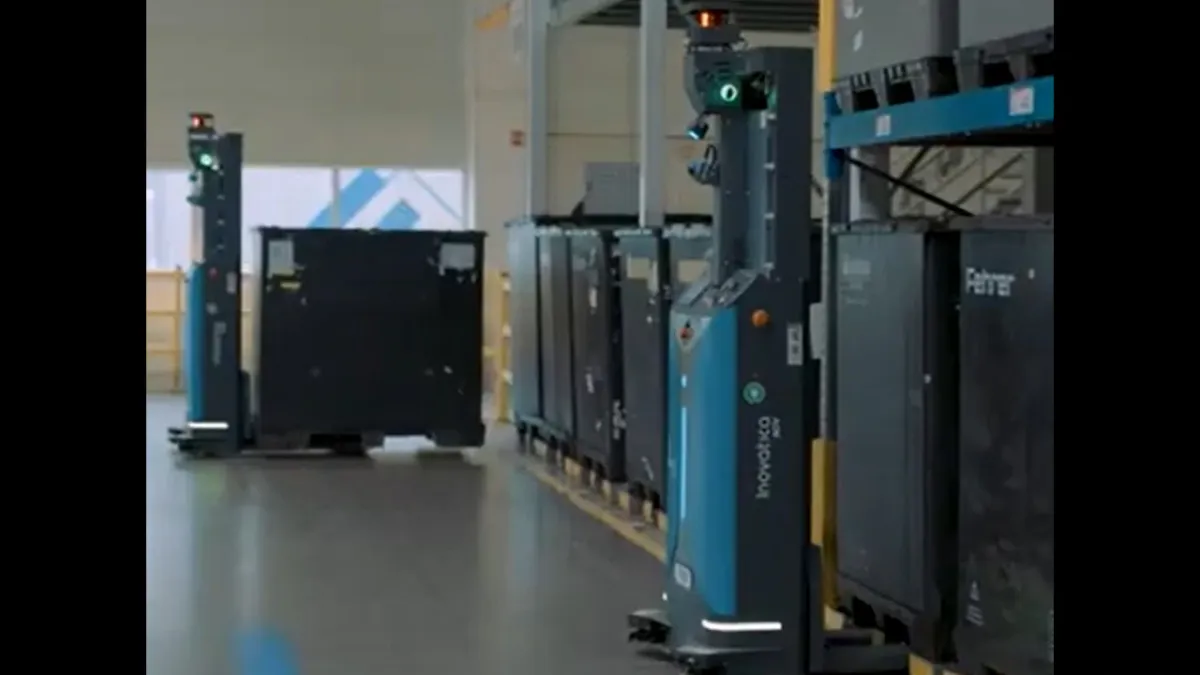
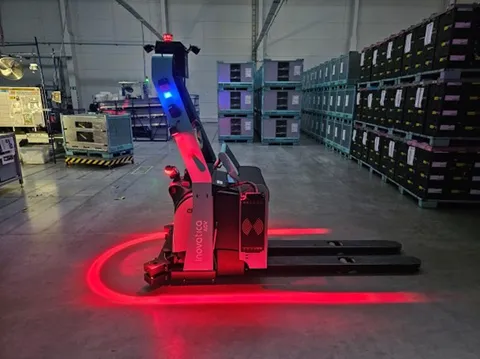
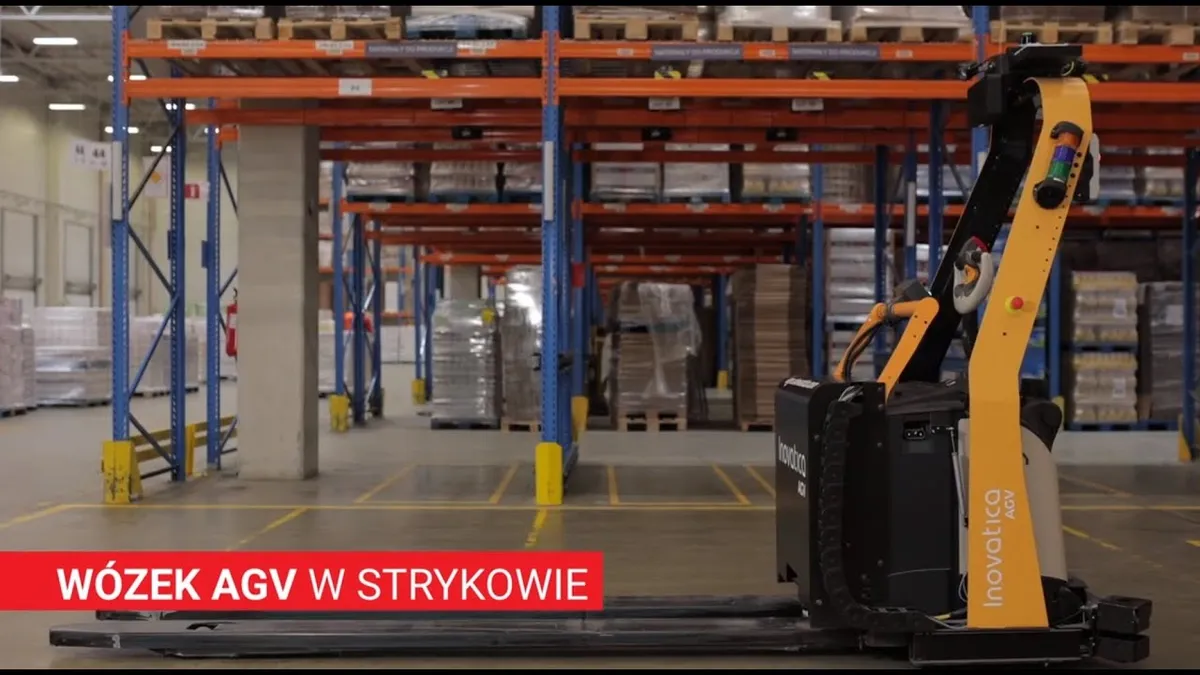
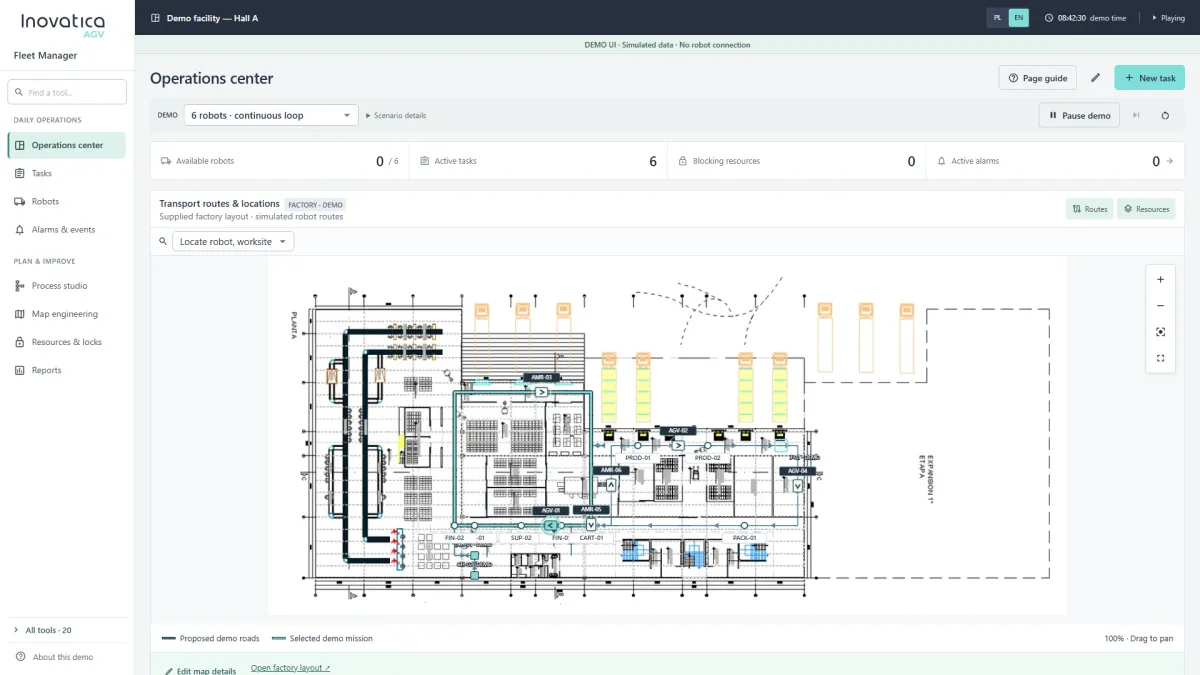
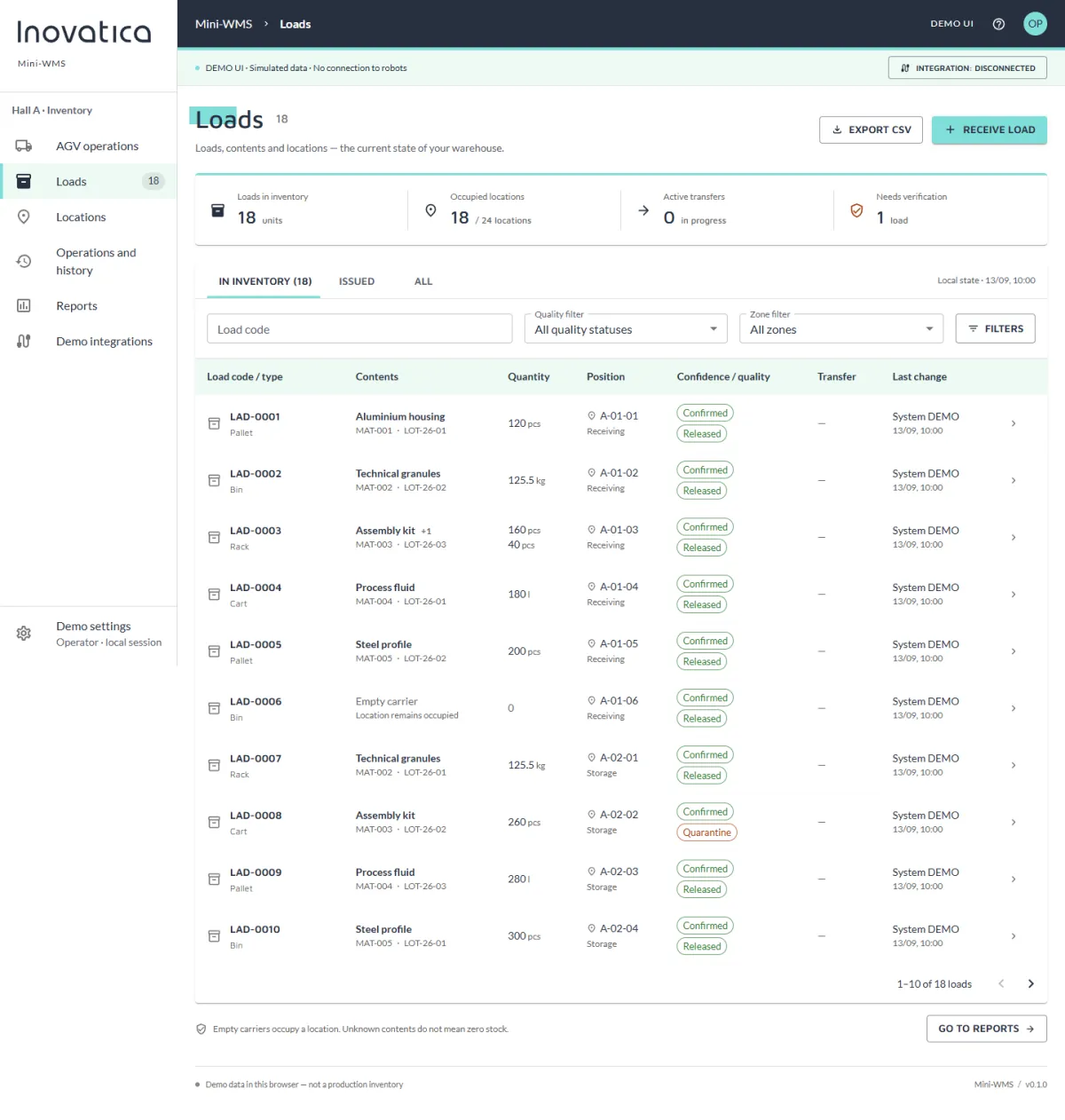
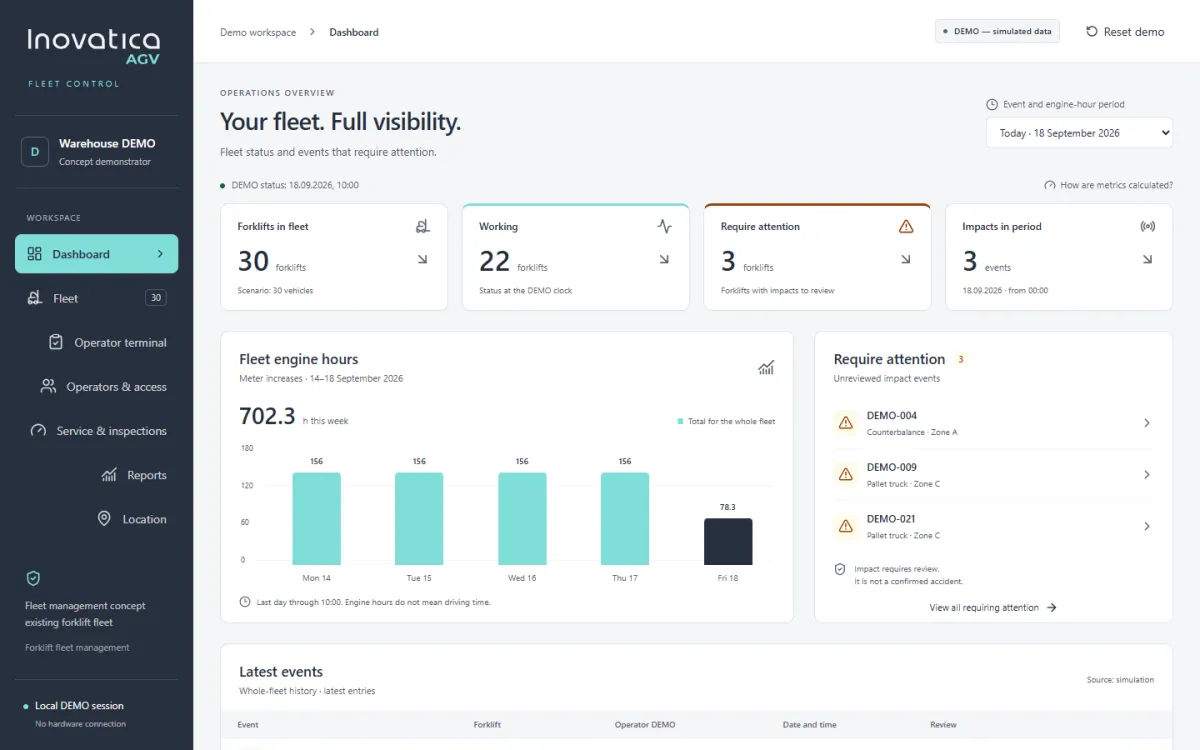
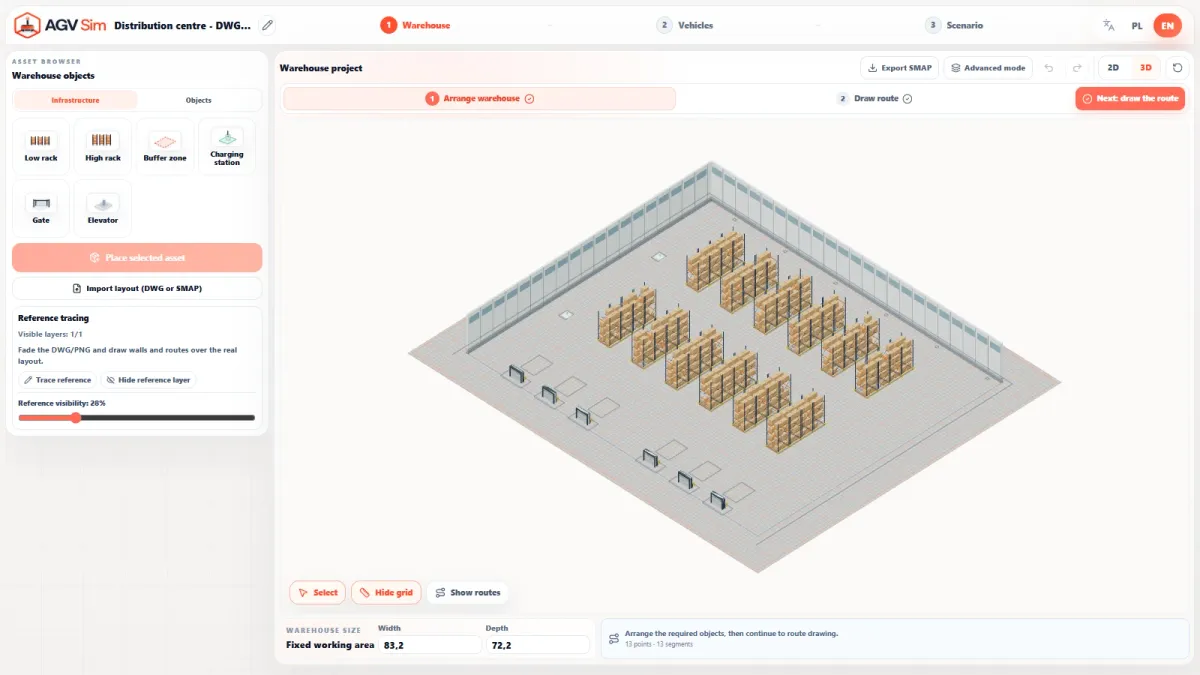

Mobile robots bring the highest value in warehouse intralogistics when they take over repetitive movement that is expensive, measurable and tightly connected to process continuity. The key is to distinguish those flows from the areas that still require high manual flexibility.
That is why an expert assessment should always cover process rhythm, task variability, site readiness and integration expectations. Without that, even a well-selected robot may fail to deliver the business effect expected by the operation.
Mobile robots are also becoming an important way to organize internal transport in warehouses and manufacturing plants where pressure on throughput coincides with labour shortages and the need to maintain material-flow service quality.
Start with a transport process you can measure
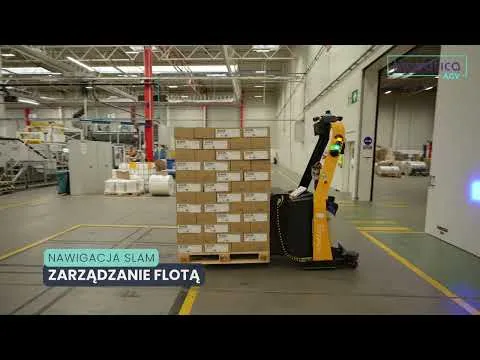
Good candidates include moving pallets between receiving and storage, replenishing picking areas, supplying production lines, collecting finished goods and returning empty carriers. Define the start and end of each task, who requests it and what confirms completion.
Measure demand across the shift rather than relying only on a daily average. Record the busiest hour, the load types, pick-up and drop-off times, empty return trips and waiting at shared resources. A flow that looks easy at midday may create a queue during a shift change.
Goods-to-person, sorting and inventory workflows can also use mobile robots, but they require their own equipment, identification and software design. A vehicle chosen for pallet transport is not automatically suitable for those applications.
Use the first study to answer a practical question: which repeatable movement can be automated without transferring an unresolved bottleneck to the next station?
Buffer handling is another repeatable application. For goods-to-person, sorting and inventory, the organisation must also prepare reliable location data and interfaces to supervisory systems.
Match the robot to the load and the handover
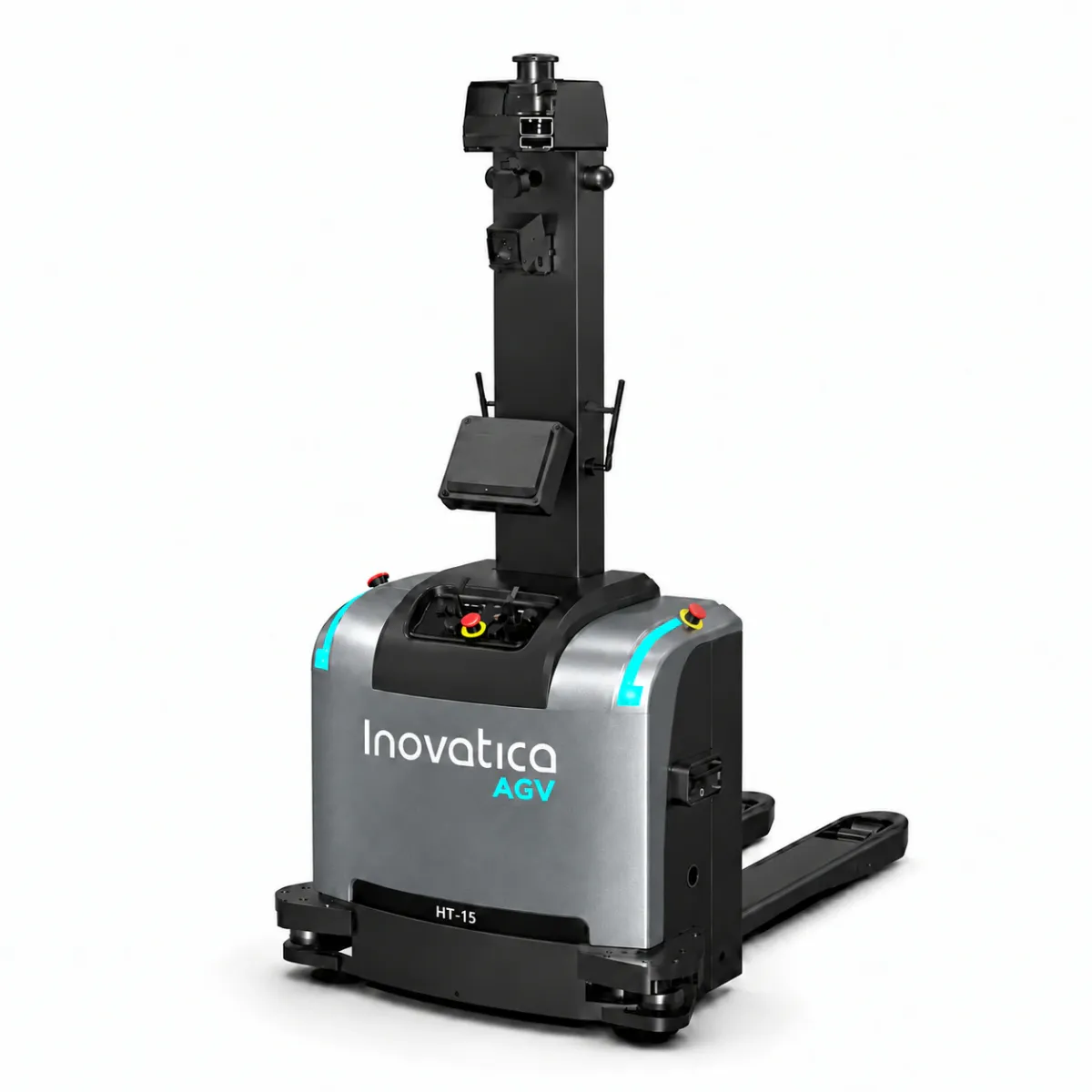
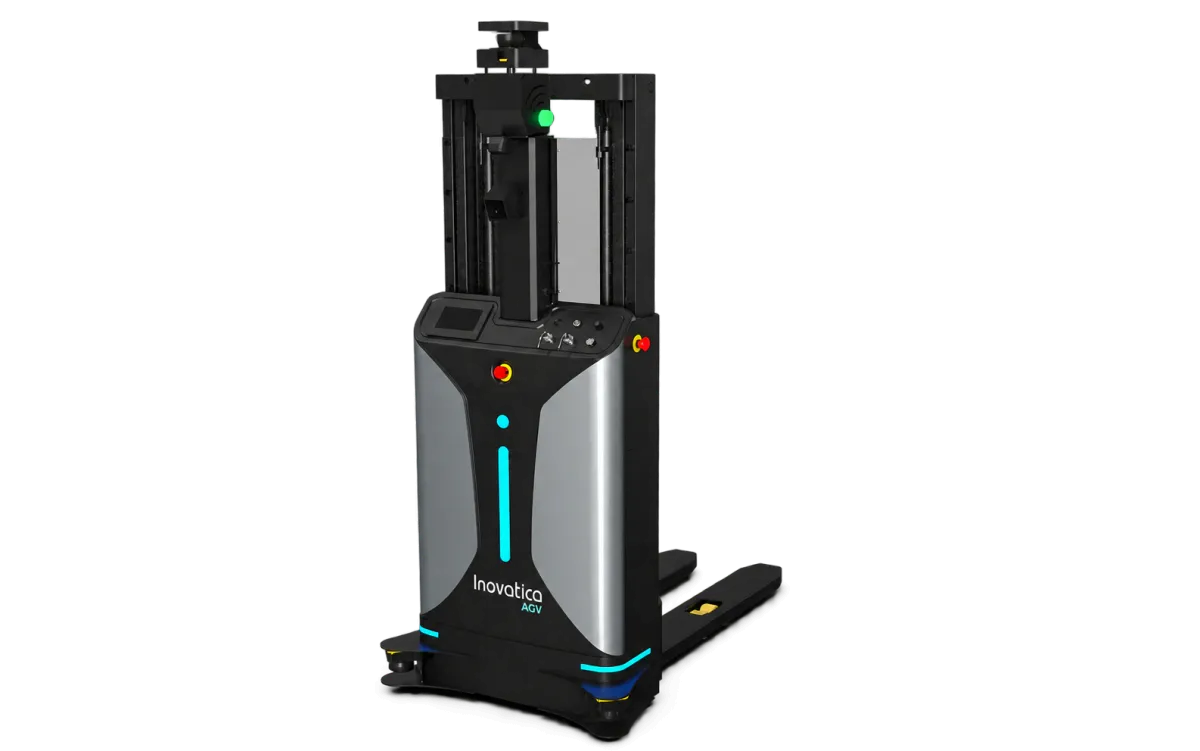
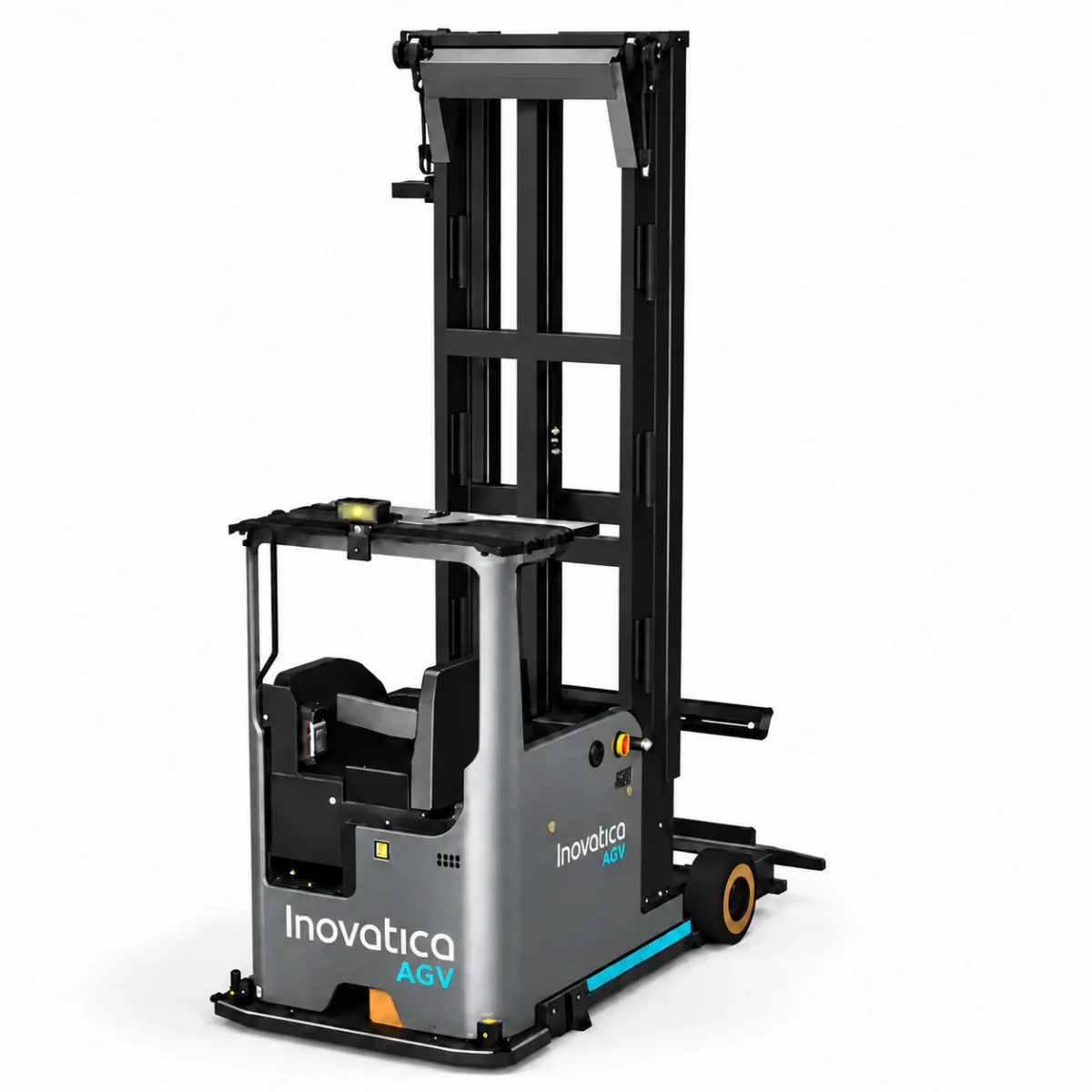
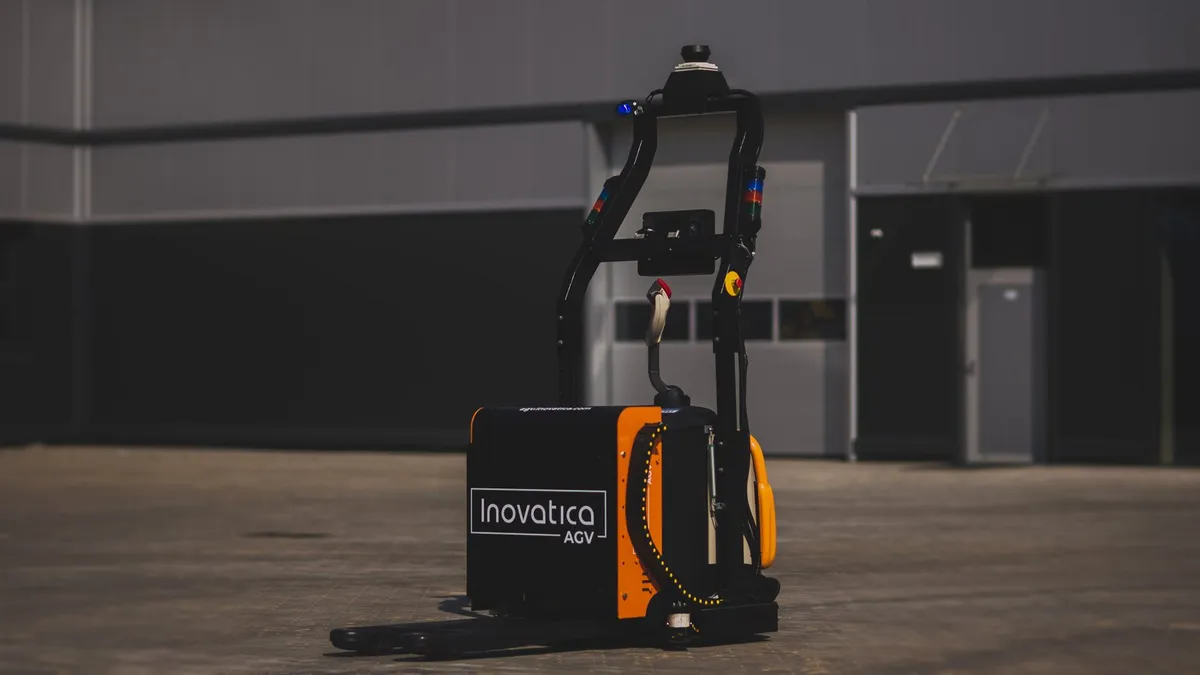
Start with the carrier and transfer method. Check dimensions, total weight, load stability, fork access, pallet condition, lifting height and the accuracy required at the destination. A platform, a towing vehicle and an autonomous forklift solve different handling problems.
Also check the work around the movement. Someone or something must make the load ready, identify it and ensure that the destination can accept it. Manual preparation may remain part of the process even when travel is automated.
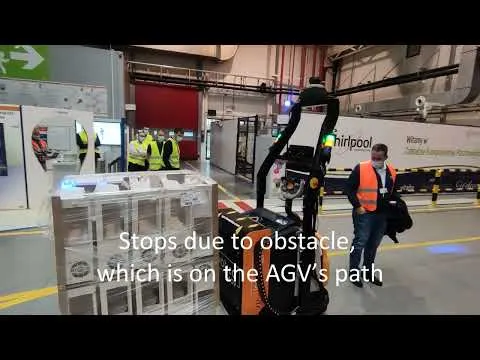
Compare navigation and behaviour in the actual environment rather than choosing on the AGV or AMR label alone. Ask how the proposed system reacts to blocked routes, changed layouts, missing loads and occupied destinations. An alternative route helps only if a suitable path is available and permitted.
The AGV and AMR comparison explains these selection questions. The horizontal transport catalogue shows different load-handling options.
Check the site before estimating fleet capacity
Assess the routes with the proposed vehicle, load and operating conditions in mind:
- Aisle width, turning space and clearance at transfer points.
- Floor condition, transitions, slopes and the equipment’s specified operating limits.
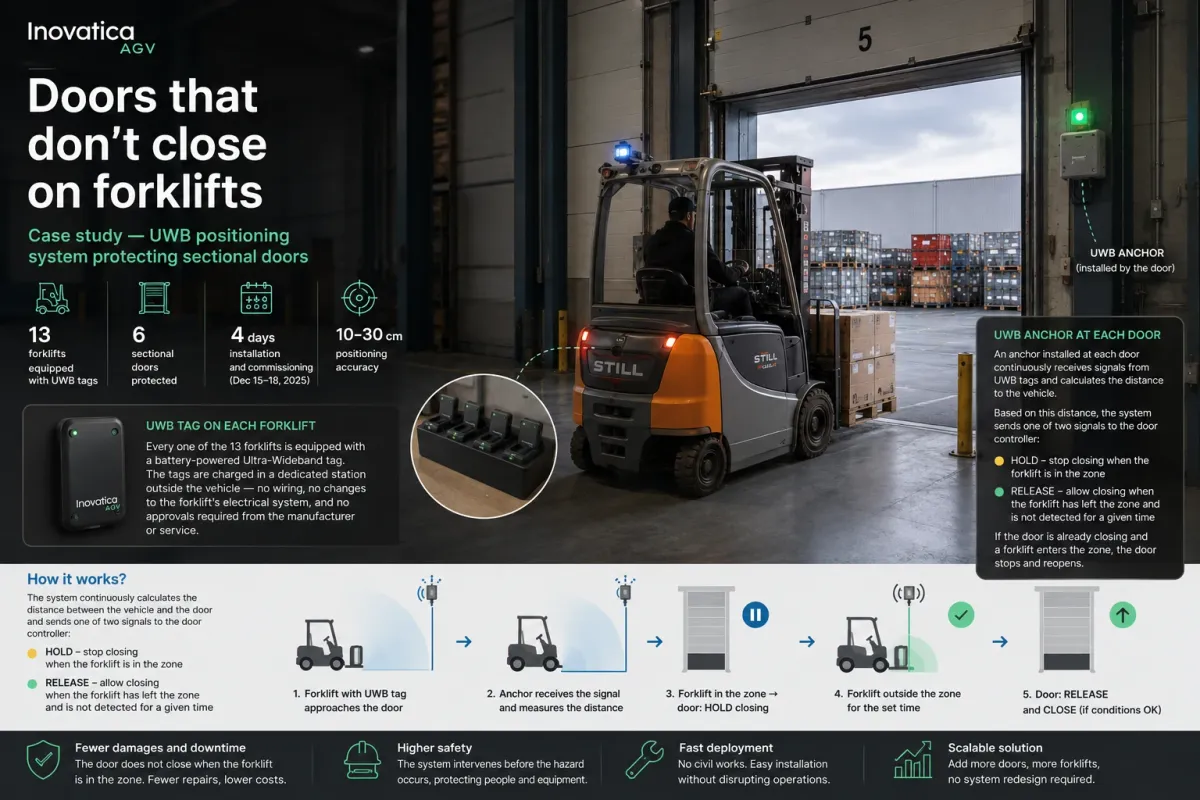
- Intersections, doors, lifts and spaces shared with pedestrians or manual trucks.
- Network coverage where the selected system requires communication.
- Charging locations, access for recovery and space for queues.
Plan a site-specific risk assessment with the responsible safety team and integrator. Robot safeguards do not settle every question about the combined load, workstation and traffic layout. Define traffic rules, access arrangements, operator training and the procedure for recovering a stopped vehicle.
Do not use maximum travel speed as the transport capacity. A cycle also includes loading, unloading, waiting, empty travel and charging. Review those assumptions in the throughput calculator and confirm them during the site assessment.
Connect transport requests with confirmed results
Agree which system creates the request: a WMS, MES, ERP, workstation or operator interface. Define the order identifier, carrier, source, destination, priority and conditions that must be met before a mission starts.
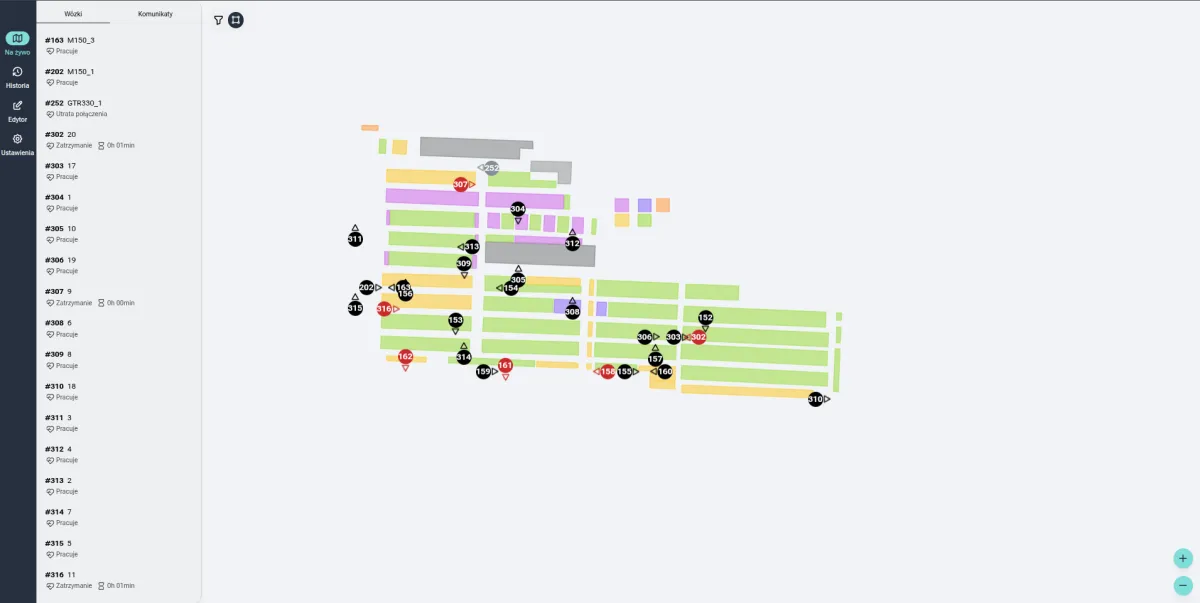
The fleet layer then coordinates execution and reports what happened. Design the exception cases alongside the normal task: a pallet is absent, a destination is occupied, a door is unavailable or a connection is interrupted. Decide who can retry, cancel or release the task and how duplicate requests will be recognised.
Keep the business confirmation tied to the agreed physical event. Accepting a request is different from picking up a load or completing delivery. That distinction helps the warehouse system and the actual material flow stay consistent.
As a manufacturer example, MiR’s fleet scaling guidance discusses the role of fleet software, connections to ERP/WMS and suitable load-handling modules. The interfaces available in a particular project still depend on the selected products and configuration. Our Fleet Manager overview describes the coordination layer in the Inovatica offer.
Run a pilot with agreed acceptance criteria
Choose a bounded flow that matters to operations, with stable transfer points and a measurable baseline. Define acceptance criteria before commissioning so the pilot evaluates the process as well as the vehicle.
Useful measures include completed transports per hour, on-time deliveries, waiting time at stations, manual interventions and time needed to recover from a fault. Agree how each metric is calculated and which demand levels the test must represent.
Include peak demand, blocked routes, unavailable destinations and charging in the test plan. A successful demonstration of one unobstructed trip does not establish sustained capacity. Record unresolved exceptions, their owners and the conditions for moving from the pilot into regular operation.
Train the people who will request tasks, supervise the fleet and provide maintenance. Make the support and escalation procedure part of the handover, so a recoverable issue does not leave the process stopped because nobody knows the next step.
Scale from evidence and recognise when to wait
Before expanding, compare measured cycle times and interventions with the original model. Identify whether the next constraint is vehicle availability, a shared aisle, a transfer station, charging or the rate at which another system releases tasks.
Adding vehicles can increase contention for shared resources. Review traffic and task allocation for the larger fleet, and check whether service coverage and spare-part arrangements support the required operating hours.
If load positions change unpredictably, carriers are inconsistent or nobody owns exception handling, stabilise those parts of the process first. Automation needs an agreed operating method and usable location data. More flexible navigation cannot compensate for every upstream problem.
Use the AGV ROI guide to connect the operational findings with the investment decision. The strongest starting point is a process map, load specification, peak-hour demand and a clear account of what the current flow costs.