
Context and objective
FicoMirrors Polska, an automotive Tier-1 plant within the Ficosa group, introduced internal transport automation in response to growing expectations around process stability, safety and predictability. The project focused on making repetitive logistics tasks part of the plant operating model rather than a manual support activity.
The plant needed a transport model that would remain stable in a dynamic production environment and support a regular flow of pallets between key process areas. The critical point was reliable execution in mixed traffic with people and manual vehicles.
The project was prepared for FicoMirrors Polska Sp. z o.o., part of Ficosa International, in a serial-production environment. Line continuity and synchronization with the production rhythm were central requirements, together with the ability to expand without reorganizing the hall.
The aim was to stabilize movement between production lines, warehouse areas and quality control, reduce manual pallet transport and make the process less dependent on the availability of logistics operators. AGVs were integrated into daily production logic rather than introduced as an isolated technology.
Solution and scope
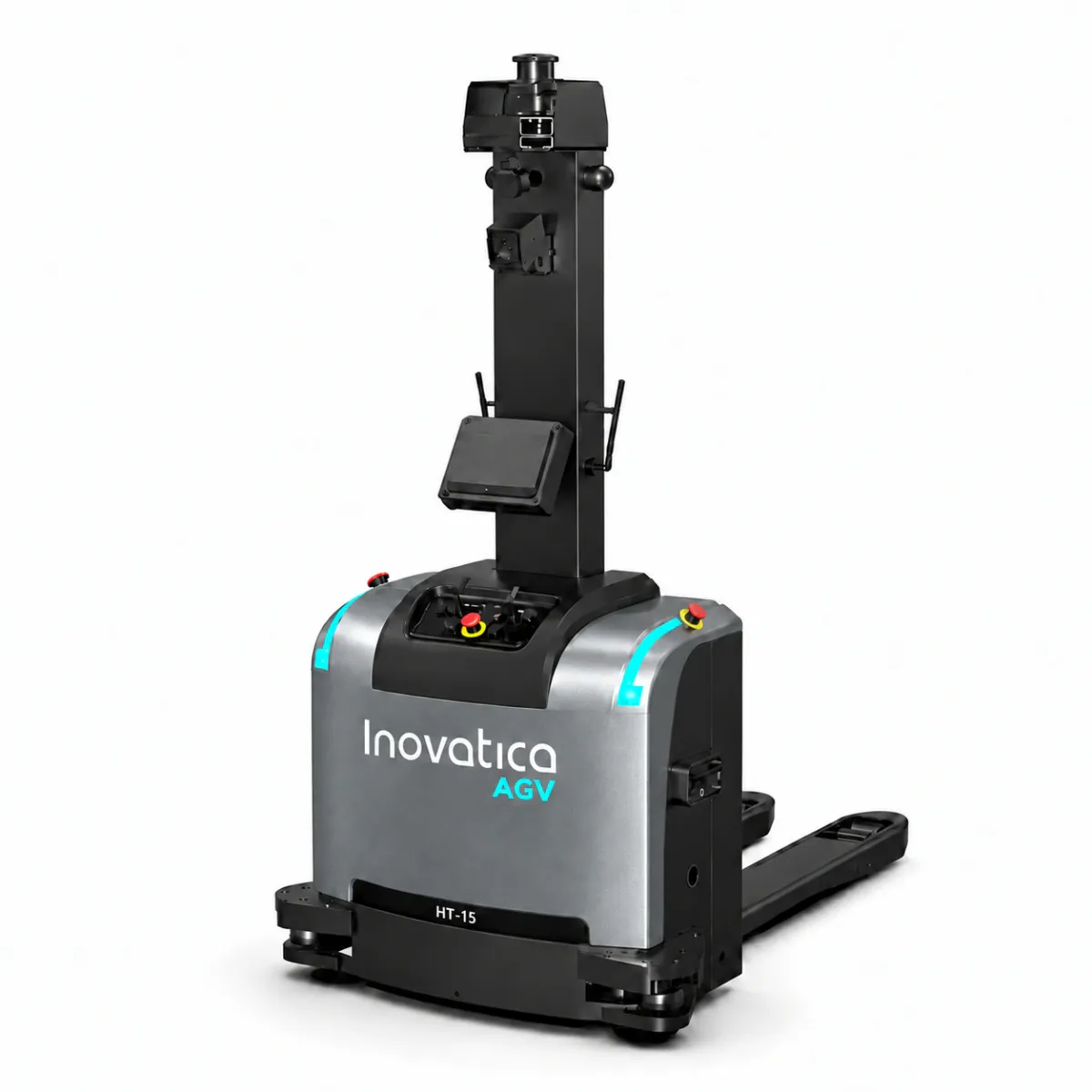
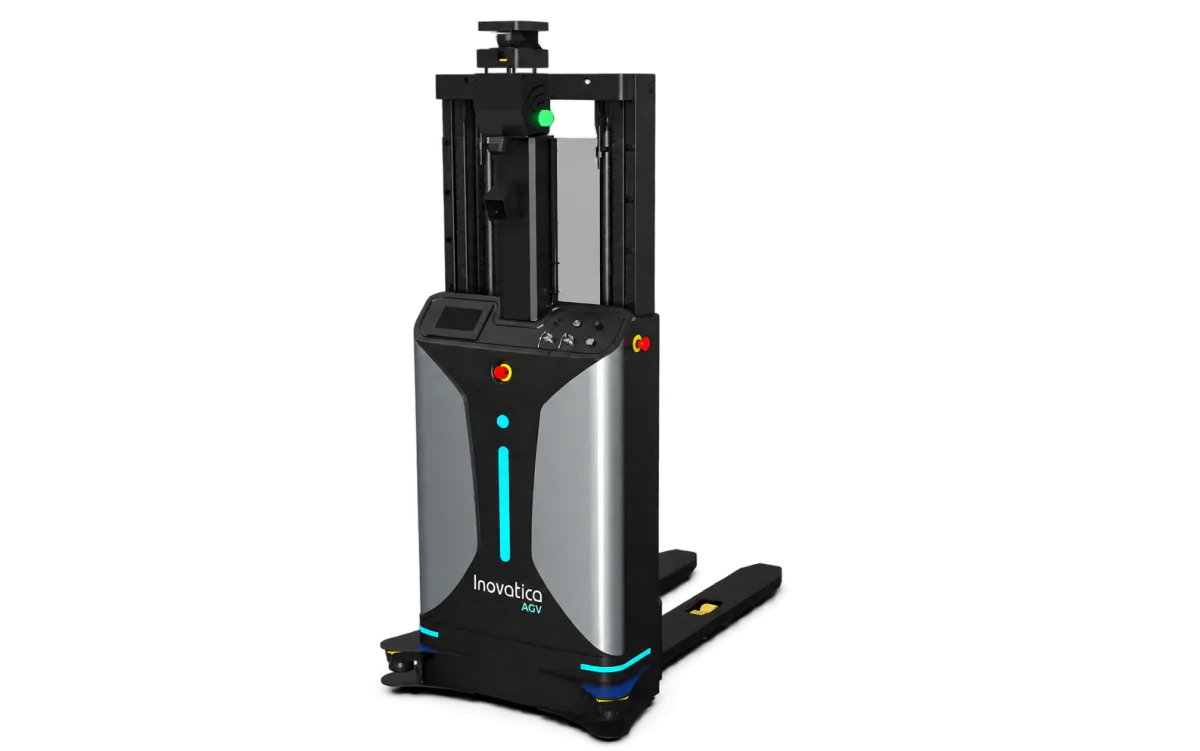
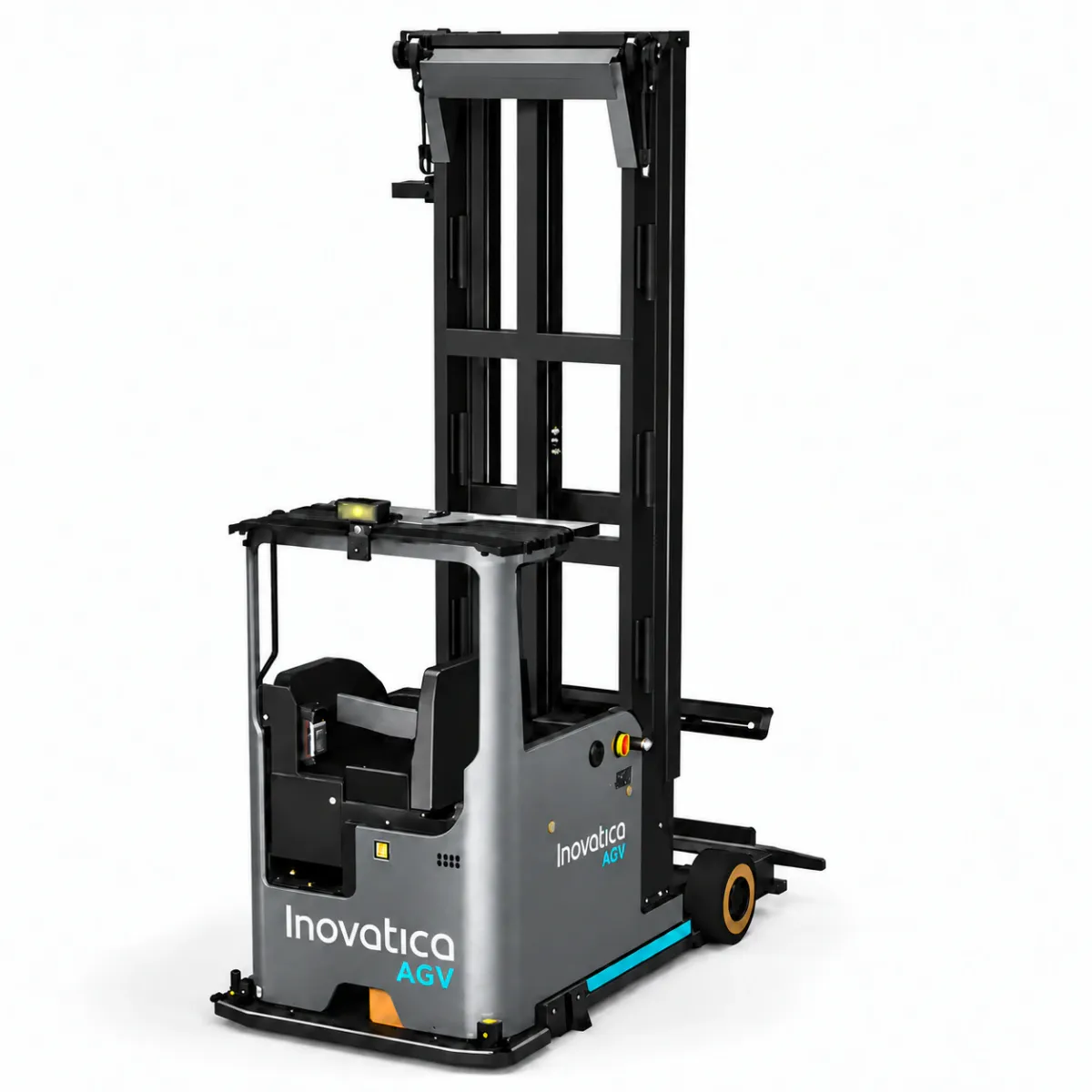
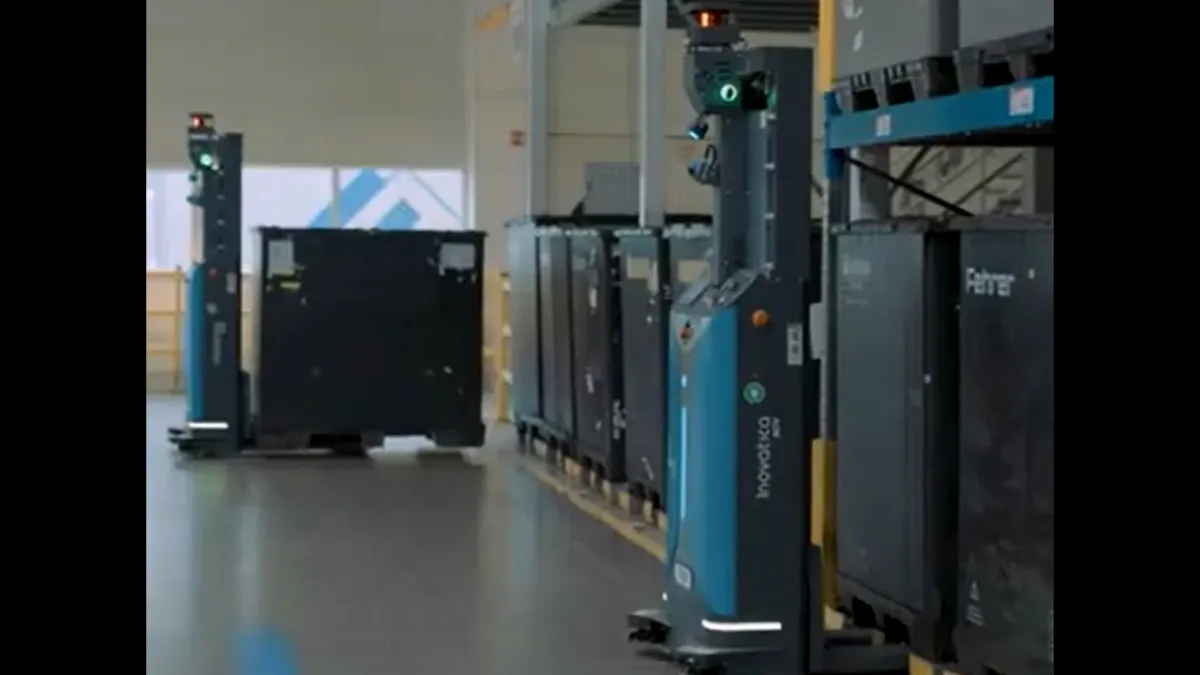
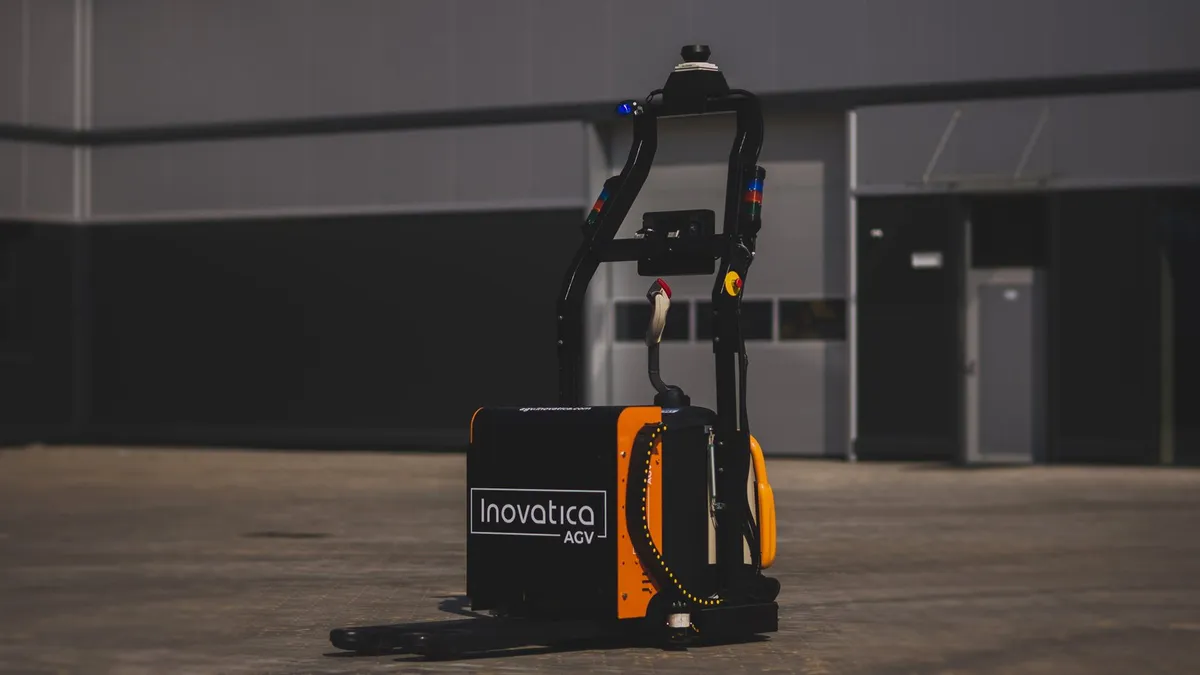
The rollout used two AGV forklifts and a task logic matched to the plant rhythm, transfer points and operator interaction model. Additional process rules, site preparation and infrastructure support were included to make the automated flow predictable in everyday operation.
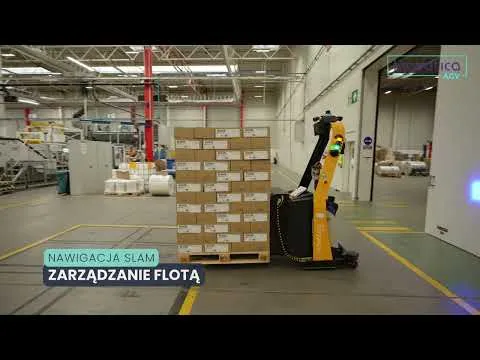
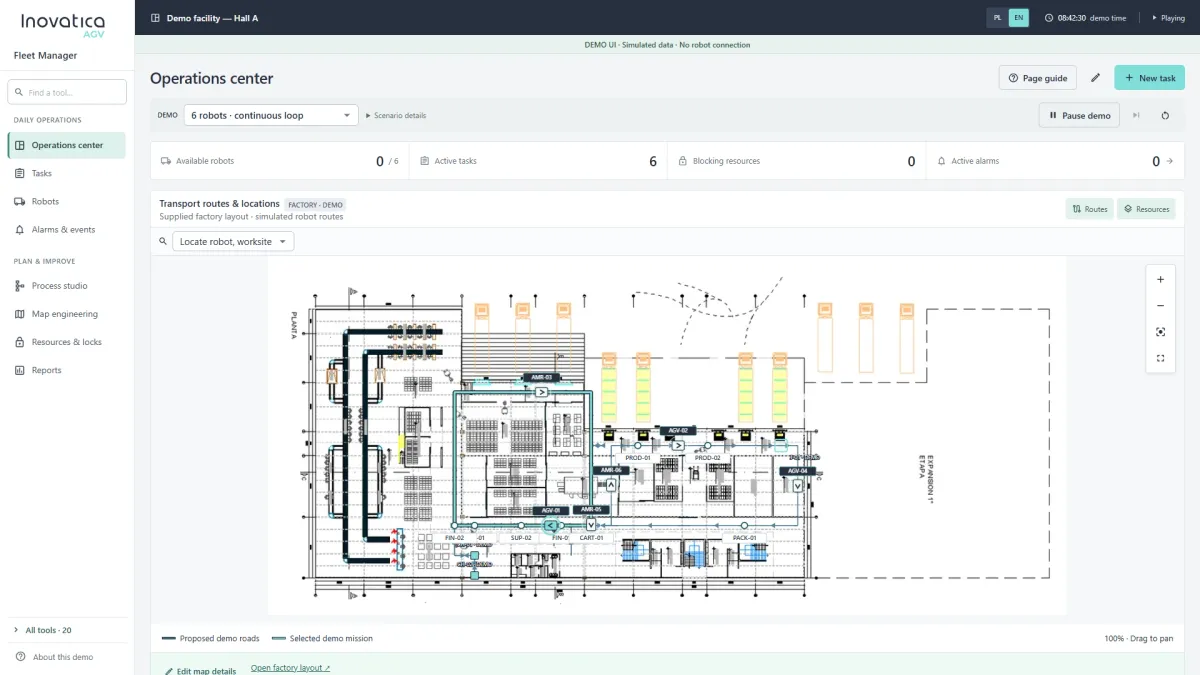
The two AGVs transport pallets weighing up to 250 kg. The process covers four production lines, finished-goods drop-off points, empty packaging, quality control and polishing, plus parking and charging stations.
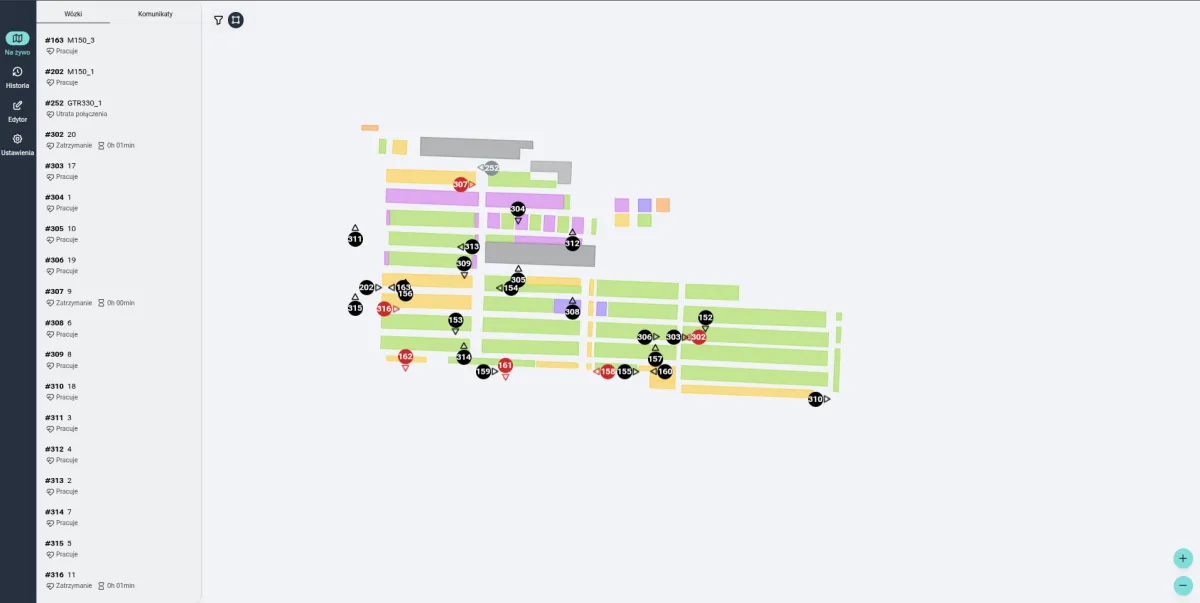
The vehicles operate continuously with automatic task allocation and no need for staff to coordinate every journey. The end-to-end logistics design also included starting positions and an ongoing task sequence, so production would not have to wait for transport and pallet circulation would remain predictable.
Integration with operators’ work
Requests from line-side tablets and quality-control push-button panels are linked to current occupancy of logistics positions. The system manages vehicle movement according to the process state, removing the need for staff to find an available truck or coordinate each transport request manually.
Infrastructure and safety
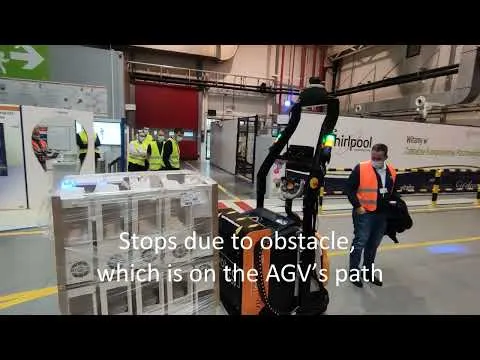
The central fleet-management server and industrial LAN/Wi-Fi form the communication backbone. Routes, speeds and traffic logic were designed for areas shared by people and machines. The project description states conformity with the applicable CE requirements and PN-EN standards in this automotive deployment.
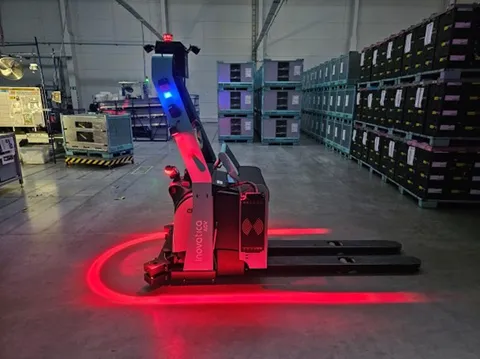
Visual projection of safety zones, vehicle-status signalling and protective fields adapted to the current manoeuvre help make AGV behaviour easier to understand and anticipate. The operating arrangement was designed to support shared working space without unnecessarily restricting production.
Deployment
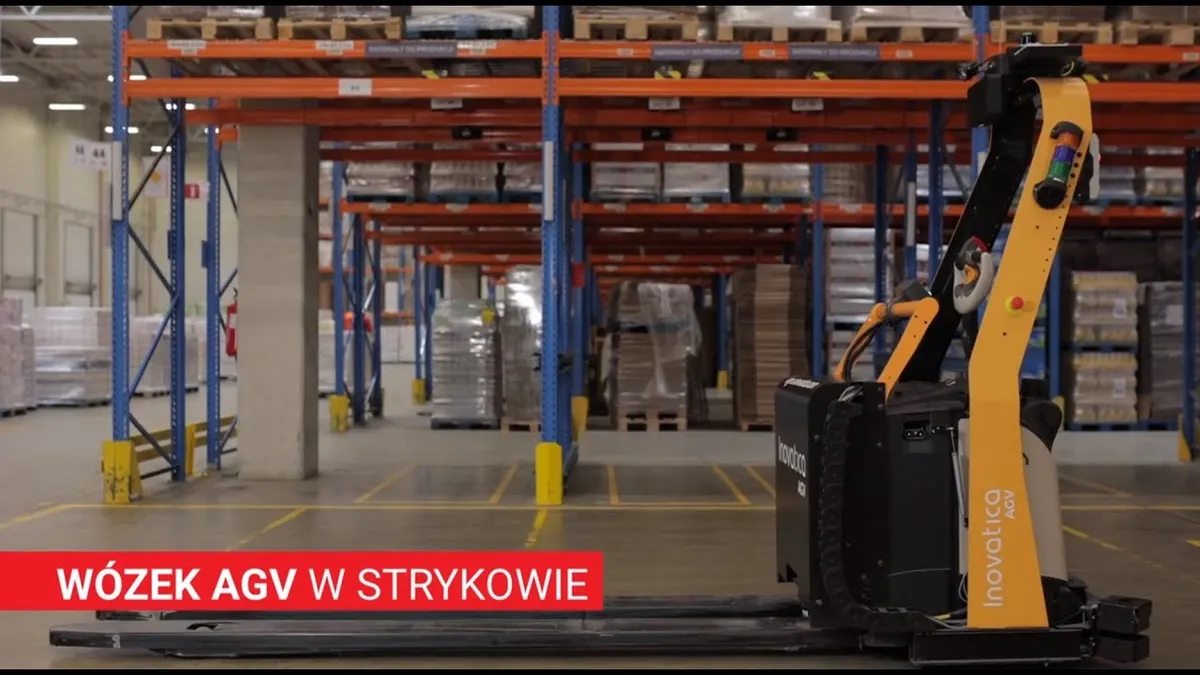
Inovatica AGV delivered the project from process analysis and logistics design through systems integration and production commissioning to ongoing service support.
Outcomes
The deployment description reports stable handling of up to 13 pallets per hour without stoppages caused by internal transport. It also reports removal of logistics bottlenecks, an organized automatic return flow for empty packaging and a faster response when packing is completed.
The business outcomes included:
- less dependence on the availability of logistics operators;
- greater resilience to staff absence and organizational changes;
- improved timeliness and quality of internal service;
- more orderly transport movement in the hall;
- relief for employees from repetitive physical tasks;
- readiness to add further production lines and AGVs.
The more orderly transport process also improved operational visibility and made the internal flow easier to measure.