
How AGV works
An AGV system starts by receiving a task, calculating its priority and assigning it to the right vehicle based on availability, location, carrier type and current process state.
AGV works well only when task logic, route planning and handover points are designed as one control model.
How tasks are sent to the AGV fleet
Three independent dispatch channels can work in parallel: manual panel input, automatic sensor signals and integrations with external systems. All of them feed the same supervisory layer and the same AGV fleet.
Button panel
Tasks can be issued manually by an operator using hardware button panels installed in agreed process points across the facility.
The operator presses the required button on the panel
The signal is sent over LAN to the supervisory system
The system selects an available AGV and dispatches the task
Sensors
External sensors can issue transport orders automatically, for example from a conveyor end, a pallet slot or a monitored handover point.
The sensor detects a defined state such as a free or occupied place
The signal is passed to the system
The transport task starts automatically for the fleet
External systems
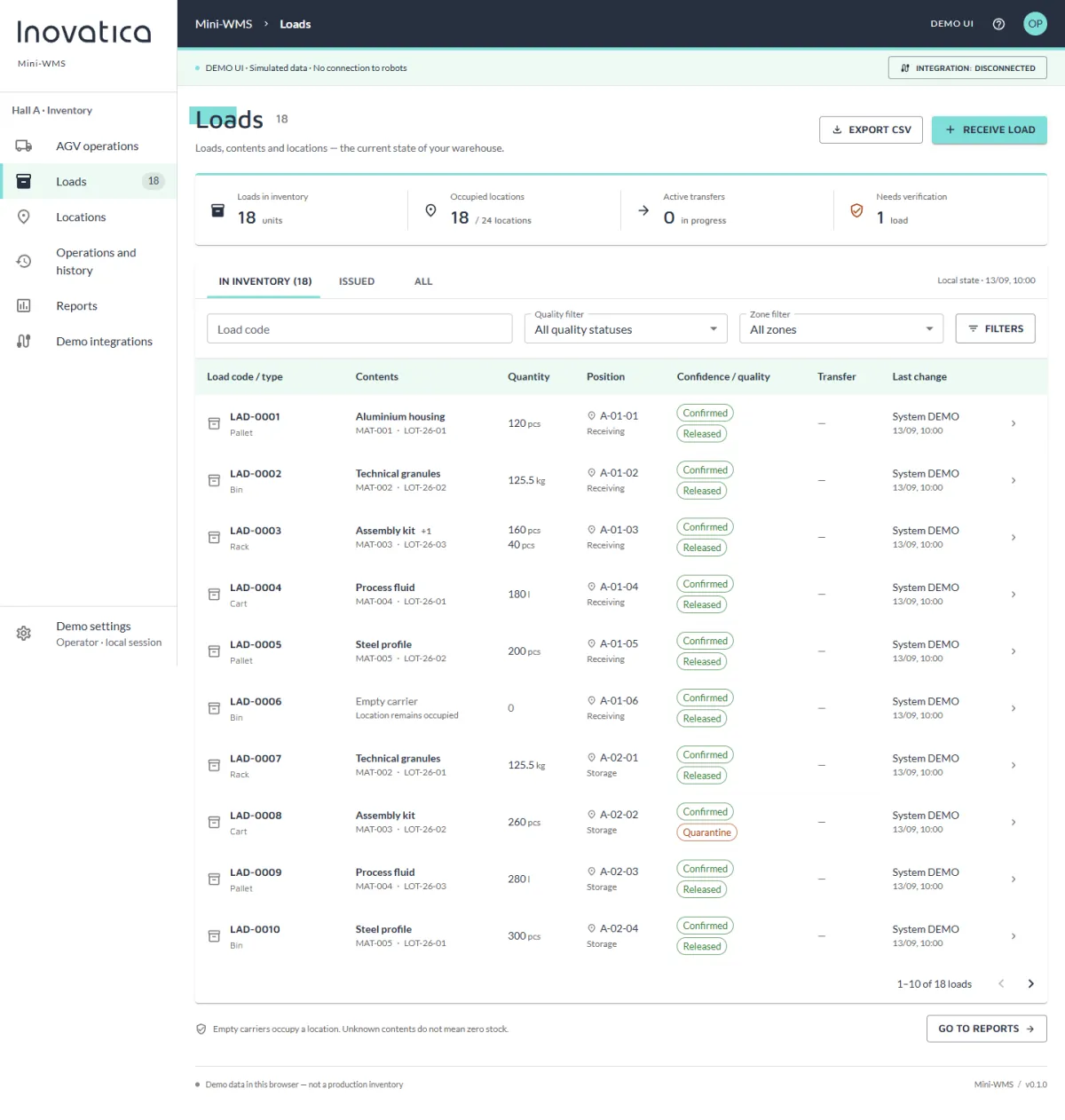
The platform can integrate with ERP, MES and WMS so external software becomes the source of tasks and receives execution feedback from AGV operations.
An external system generates the task
The task data is transferred to the supervisory layer
The AGV fleet executes it and the result returns to ERP, MES or WMS
Different task sources, one orchestration model
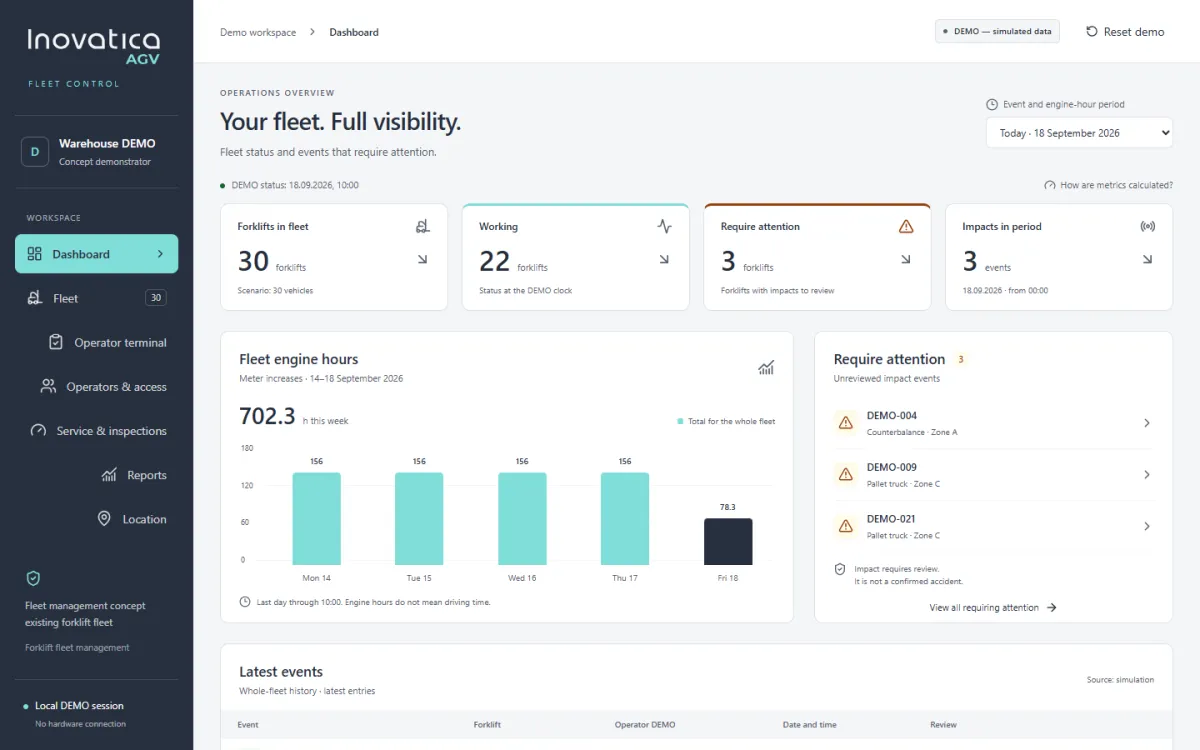
No matter where the signal comes from, the supervisory layer validates the request, selects the right vehicle and sends the task to the fleet with one consistent logic.
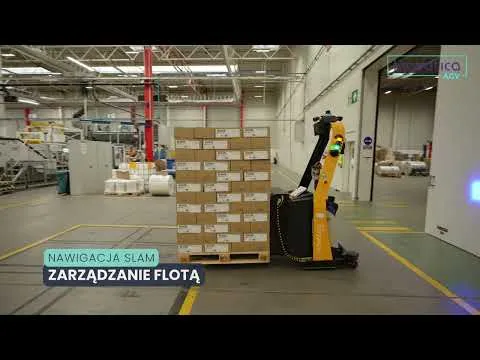
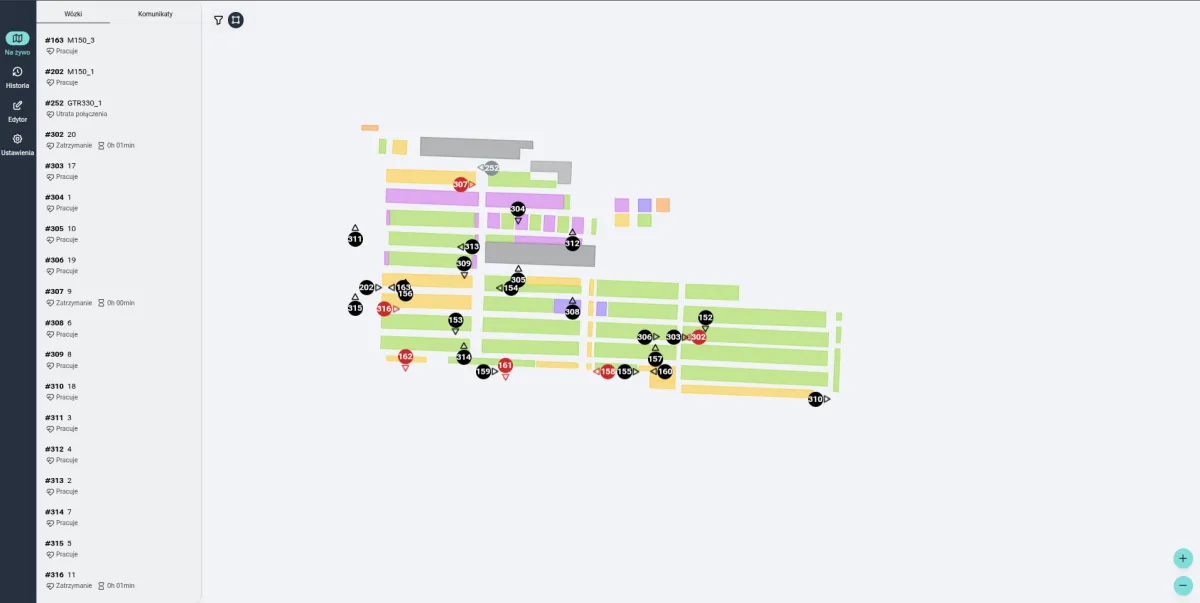
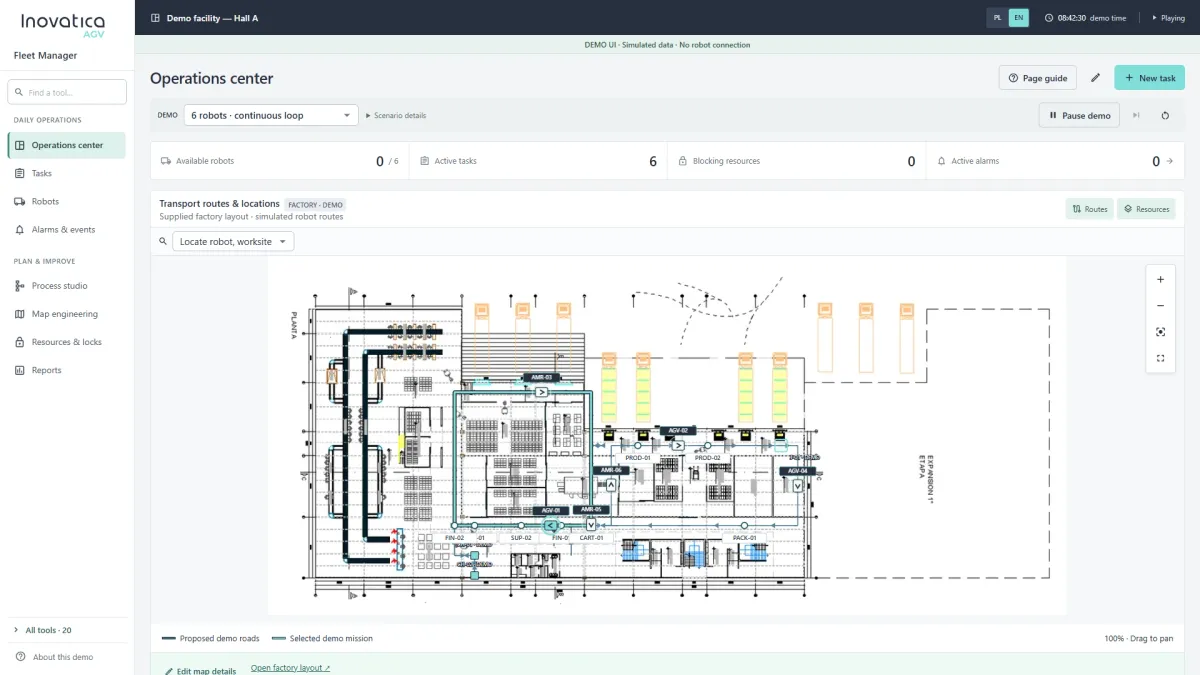
Inovatica AGV Fleet Manager
Read the full explanation
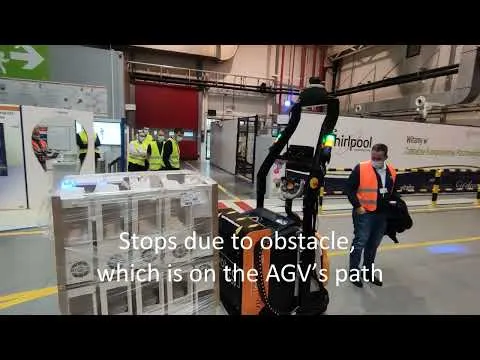
In practice this means several layers work together at the same time: the vehicle, localization, traffic control and task logic. The trip itself is only the final result of earlier decisions about orchestration, route planning and reaction to events in the environment.
A good rollout is not about launching a single robot. It is about building a stable operating model. That is why we analyse not only the route, but also pick-up and drop-off points, priority rules, human interaction and the conditions under which the system must stay predictable when the load grows.
real-time task intake and queueing
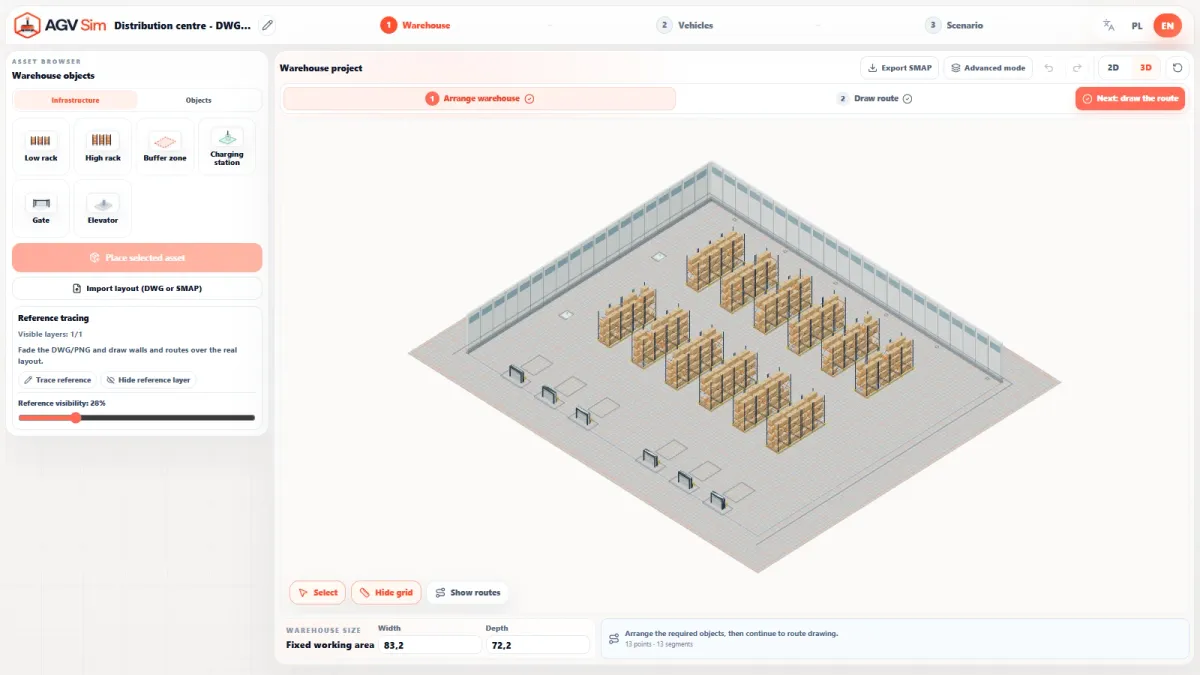
dynamic route planning based on traffic and priorities
control of pick-up, drop-off and task confirmation points