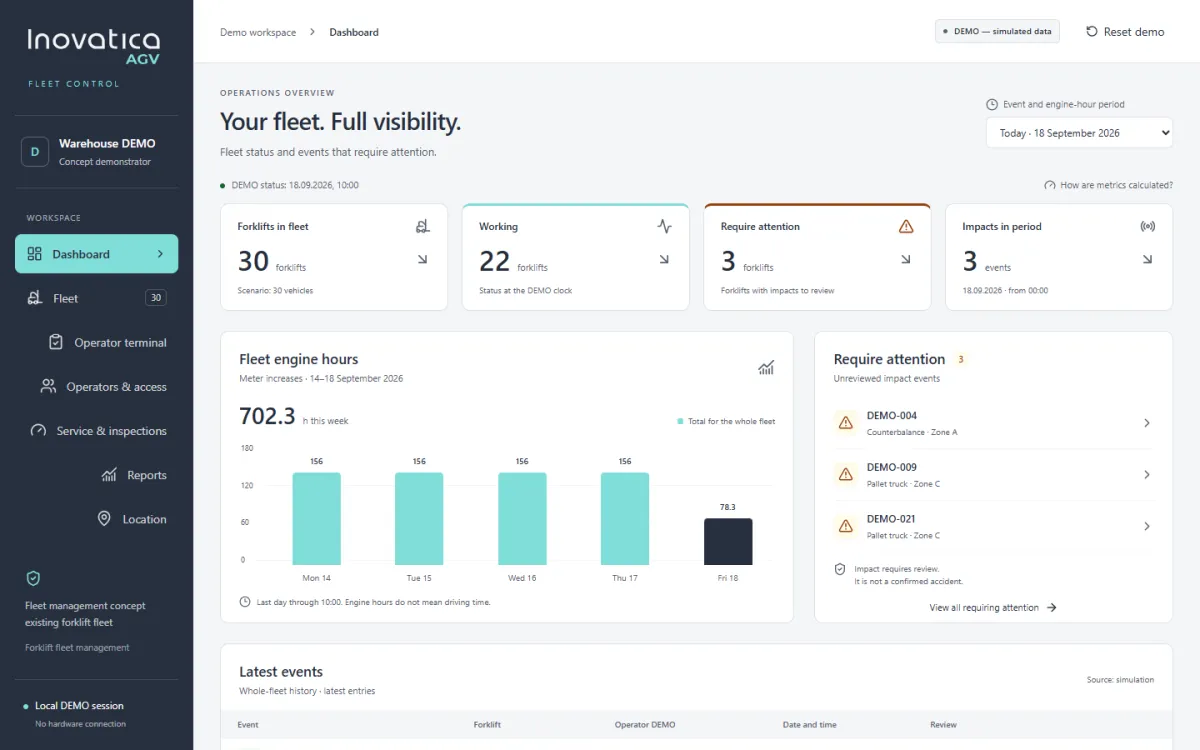
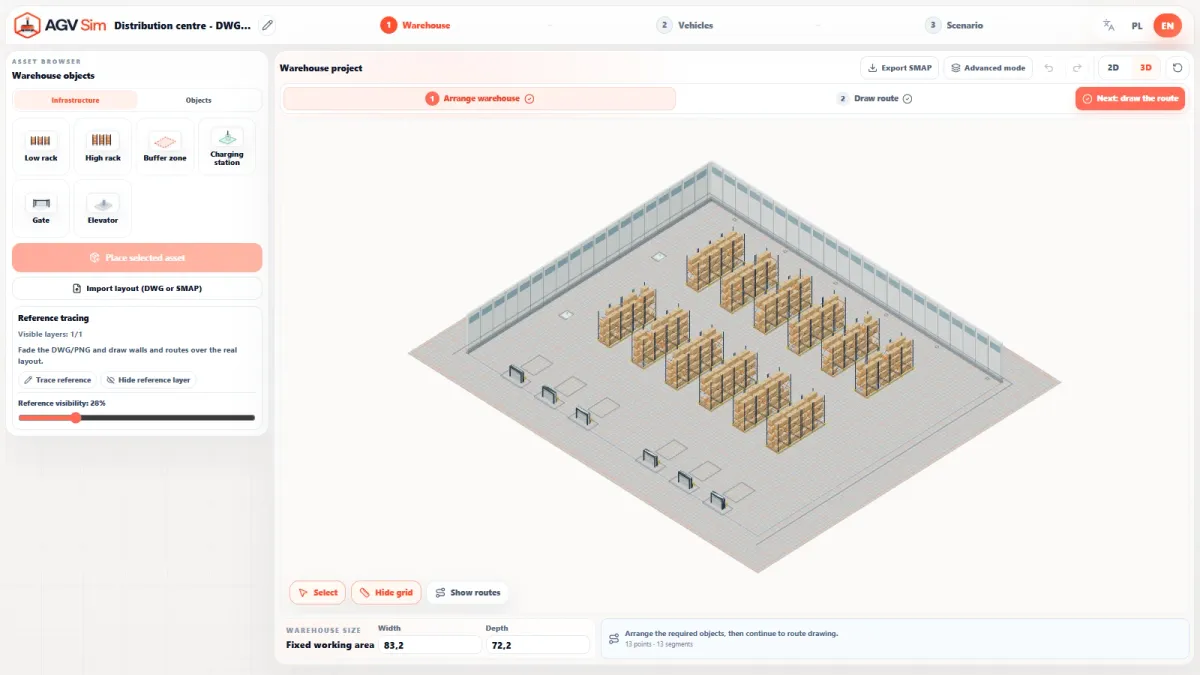
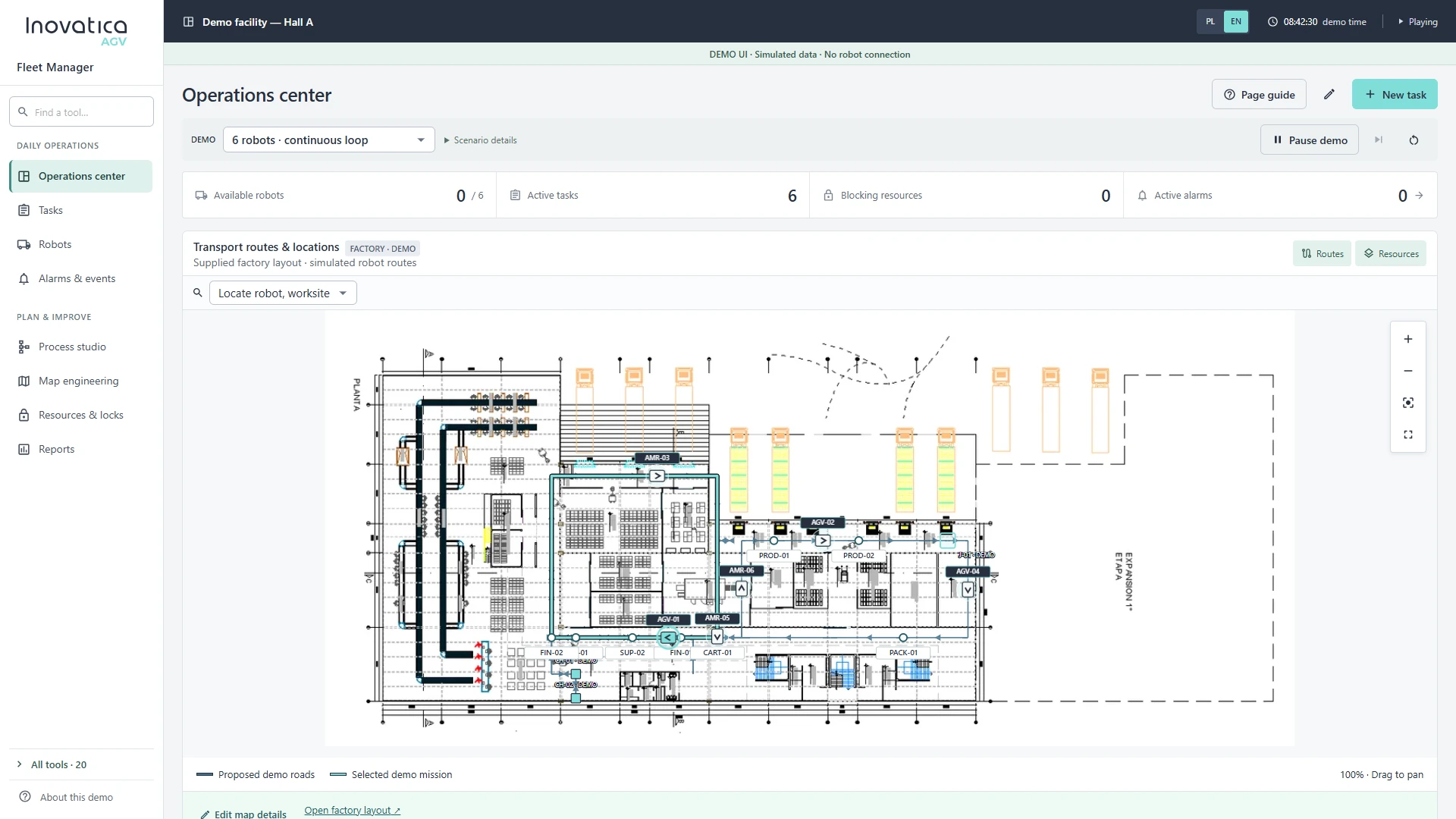
Fleet management system
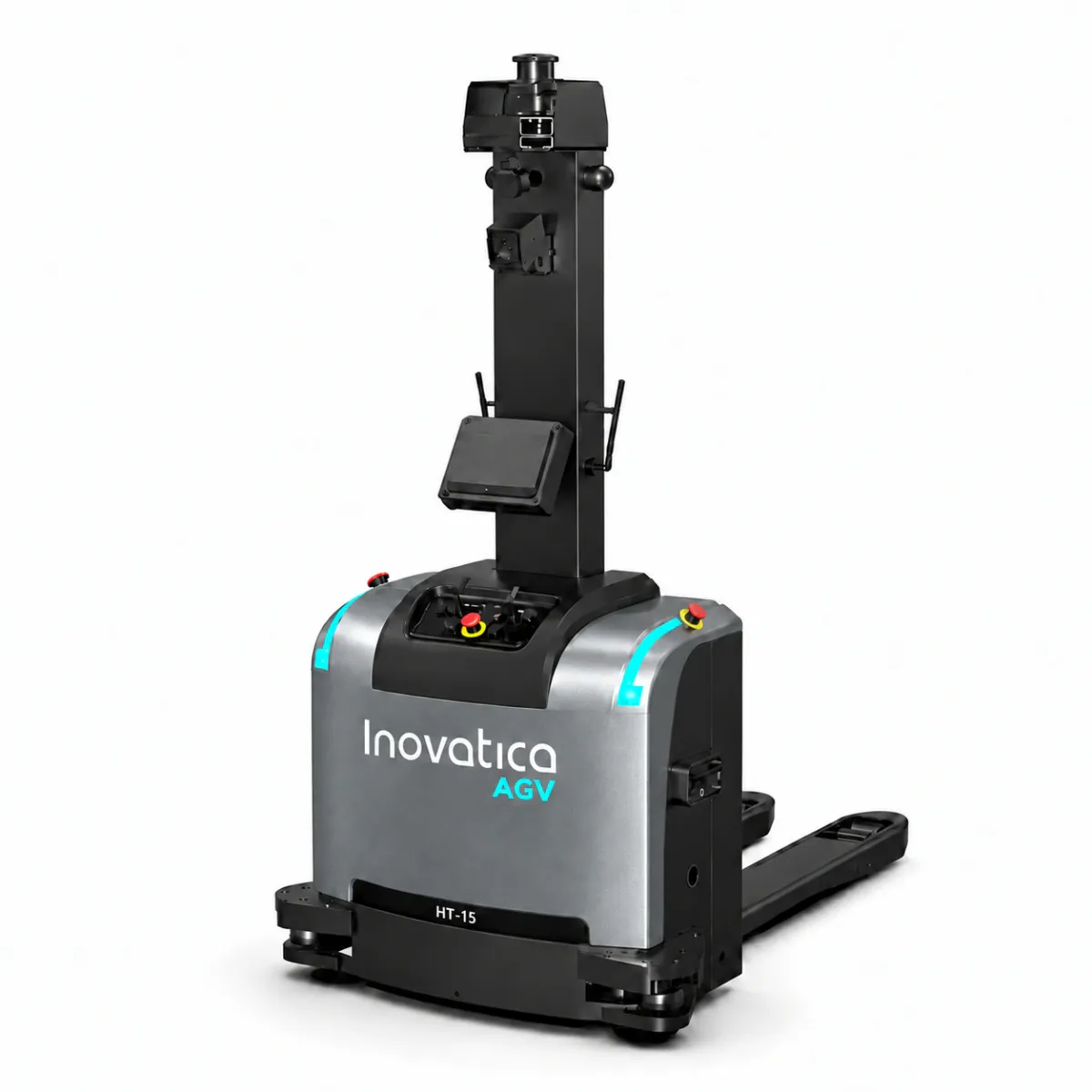
RDS (Robot Dispatch System) is the software layer that manages AGV / AMR fleets, traffic and tasks across the whole site. Instead of separate rules for each device, it provides one operating environment for material flow control.
For the customer, this means more predictable fleet performance, cleaner WMS / MES / ERP integration and staged system growth without rebuilding process logic from scratch.
Priorities, queues and route conflicts are managed in one system instead of through separate local workarounds.
RDS connects task sources, work points and infrastructure without splitting the process into disconnected islands.
The software can grow with the fleet and new plant areas without rebuilding process logic from scratch.
How RDS works
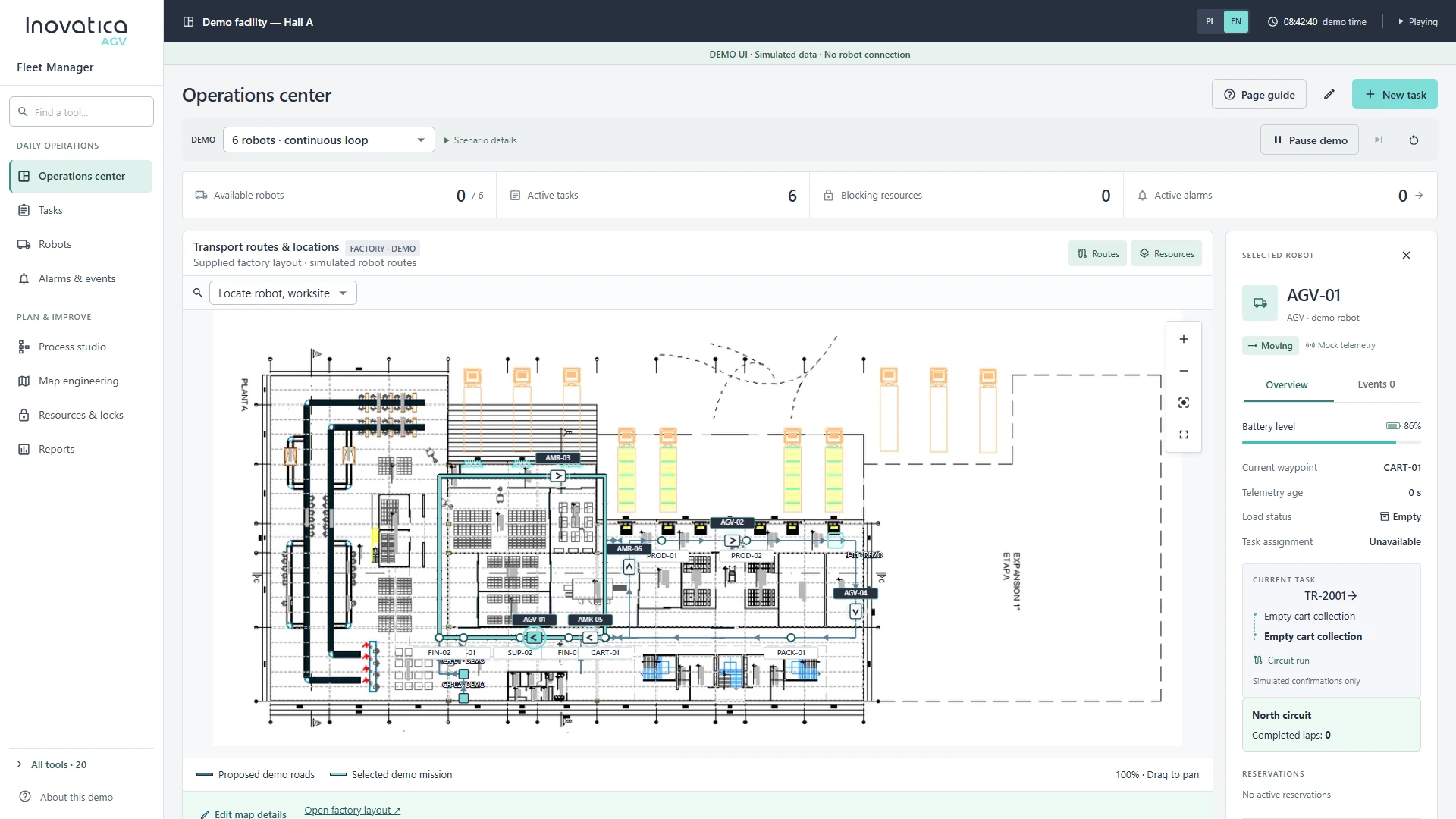
RDS acts as the orchestration layer for intralogistics. It collects events from upstream systems, recalculates priorities, assigns tasks to robots, manages traffic at intersections and controls queue logic at pick-up and drop-off points.
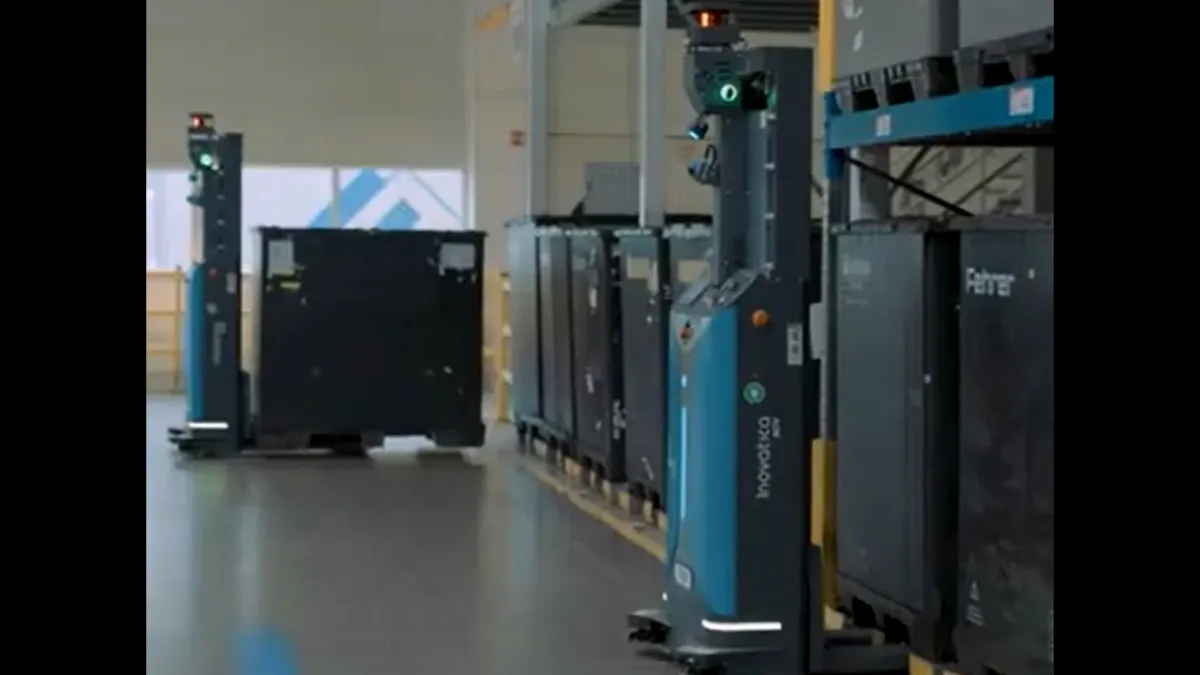
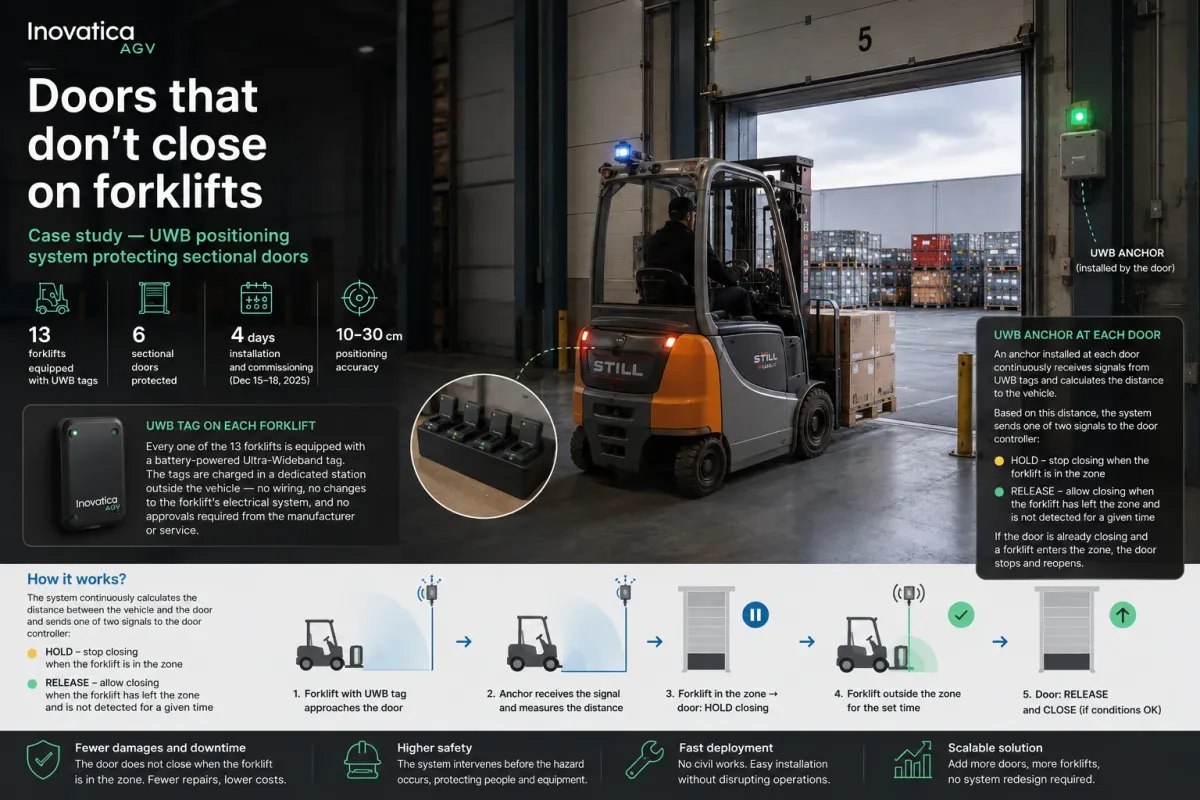
In practice this means one environment for controlling robots, workstations, lifts, automatic doors and other process elements that must cooperate in real time.
Core pillars of the system
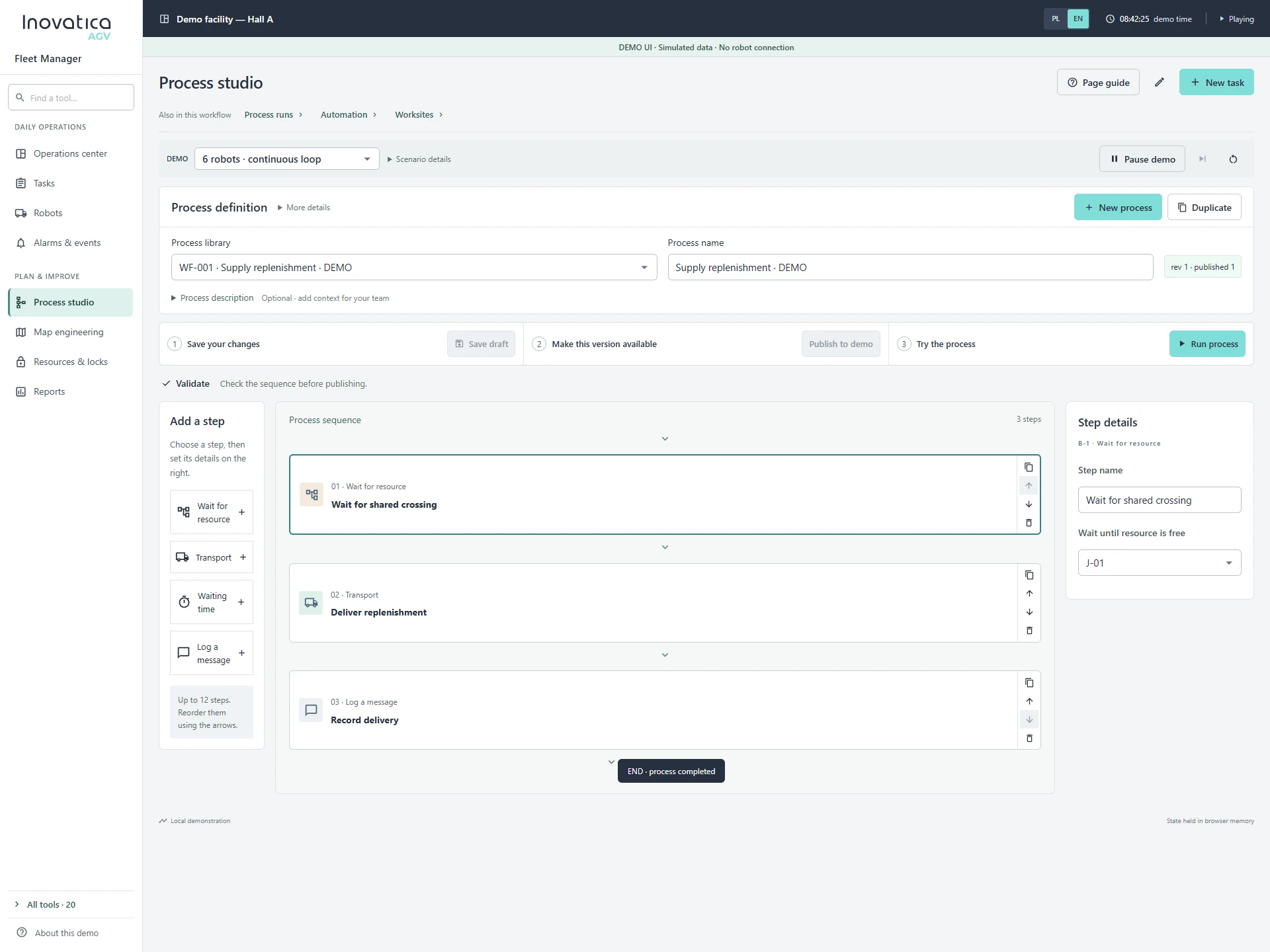
- Fast deployment with low-code workflow design: complex task logic can be built without heavy custom coding by combining reusable workflow blocks.
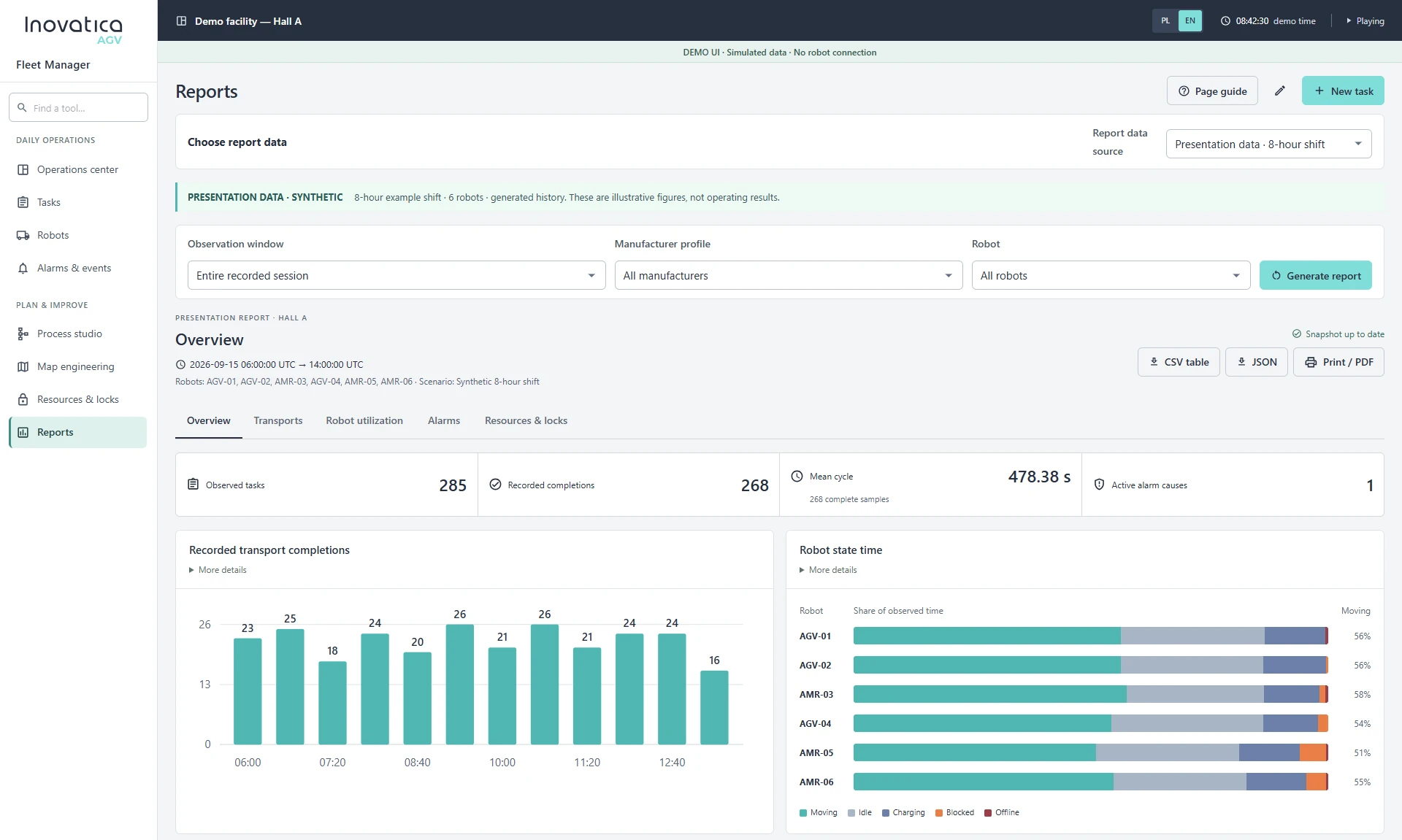
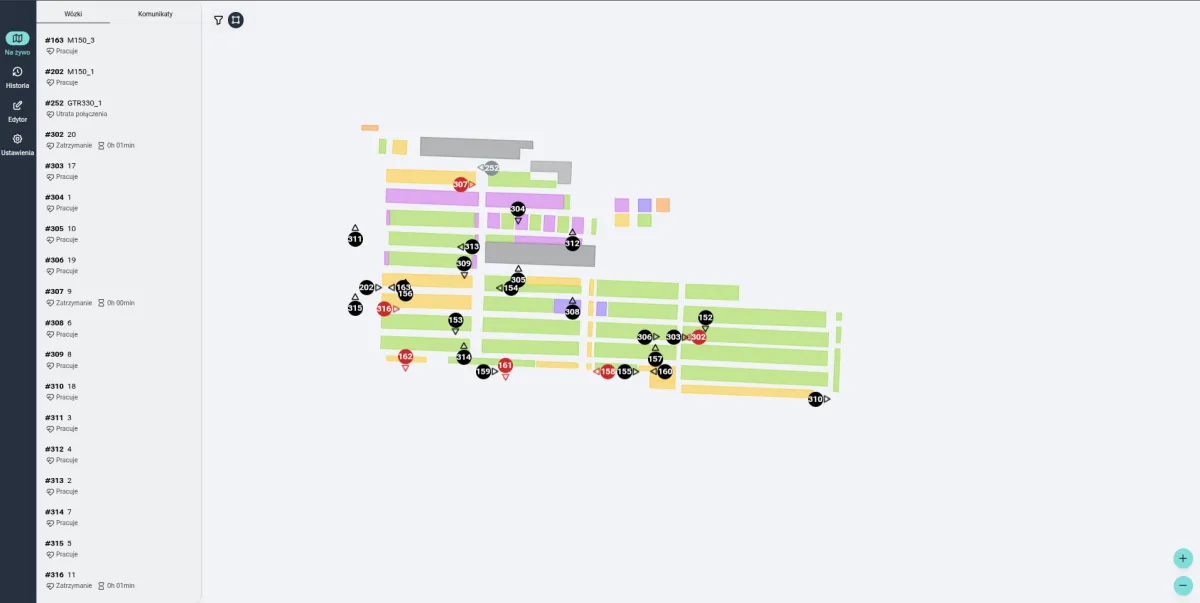
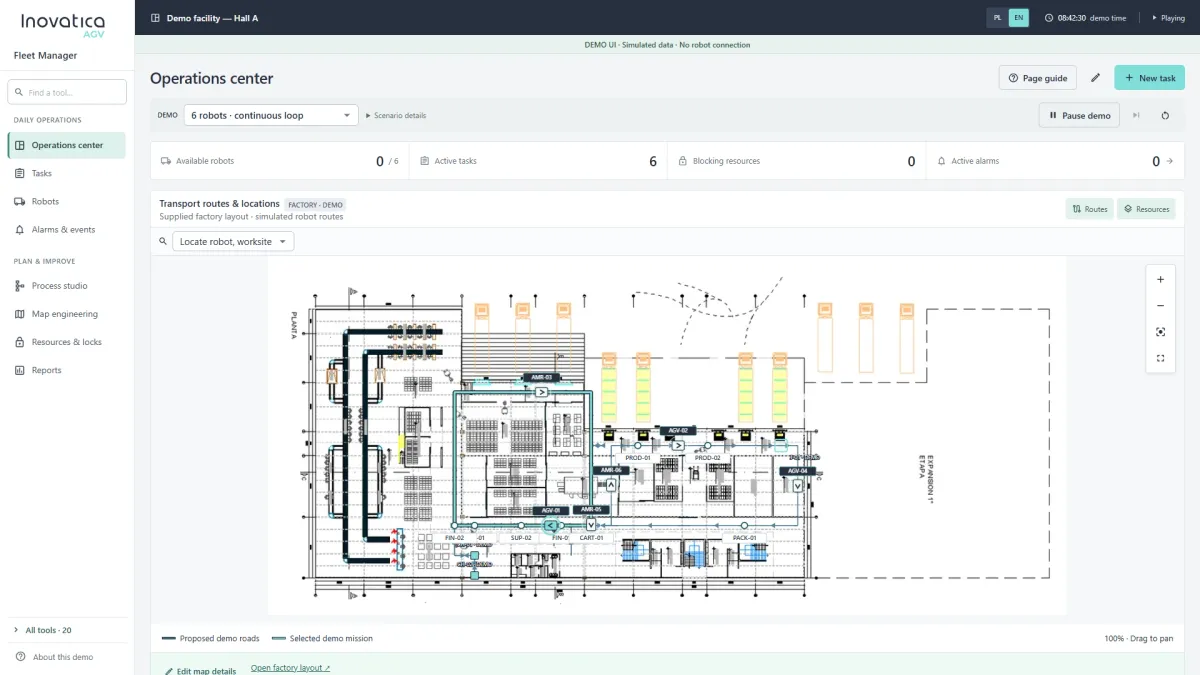
- Real-time visualization and control: operators get live insight into robot positions, routes, point statuses and the condition of connected infrastructure.
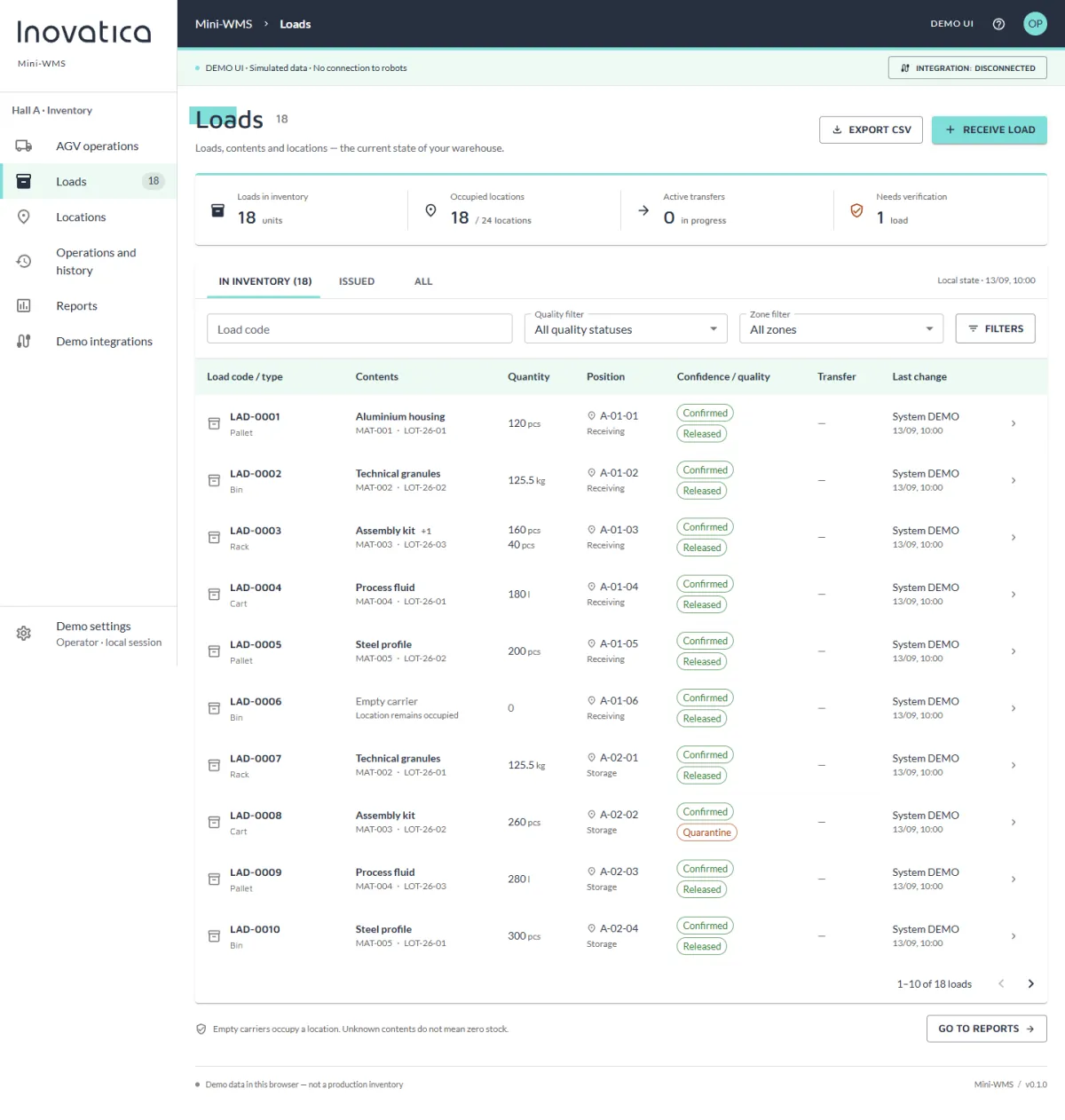
- Open integrations: the system can connect with MES, WMS, ERP and SCADA through REST API, OPC-UA, Modbus TCP and WebSockets.
- High flexibility: scripting and configuration options make it possible to match the rollout to local operating rules instead of forcing a generic template.
- Traffic control: dispatching and routing logic help prevent congestion, reduce deadlocks and keep flow stable through process bottlenecks.
Why this matters operationally
RDS is not just software for sending vehicles from point A to point B. It is a scalable operating environment where complex intralogistics processes can be designed, integrated and automated in a warehouse or plant.
That makes staged deployment possible. The system can grow with the process and match real operating rules without forcing unnecessary compromises on the business side.