Load carrier and load
The load carrier’s design, dimensions and condition, plus the load’s weight and centre of gravity.

Find the right robot for your process.
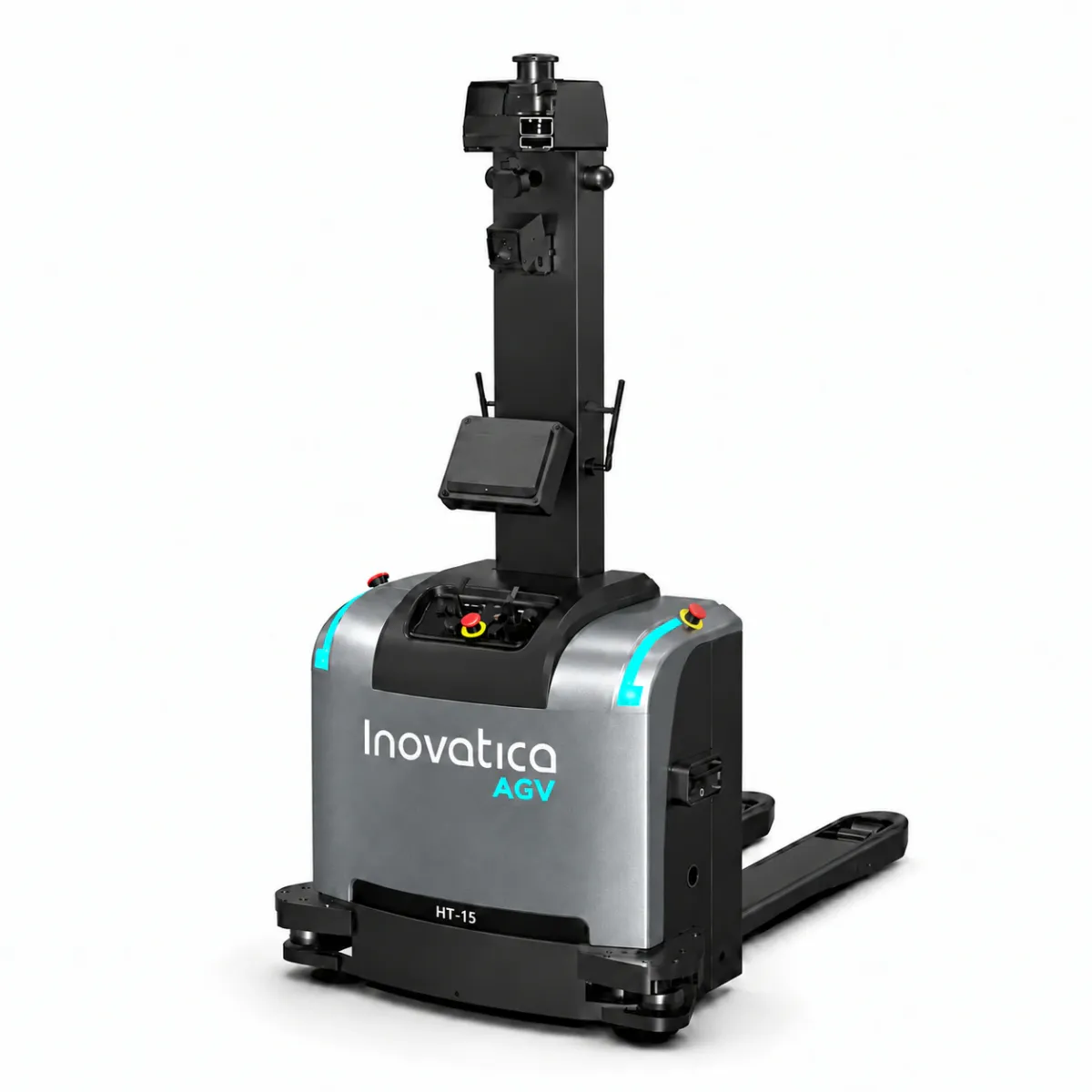
Pallets, containers and load carriers moved
between production and warehouse areas.
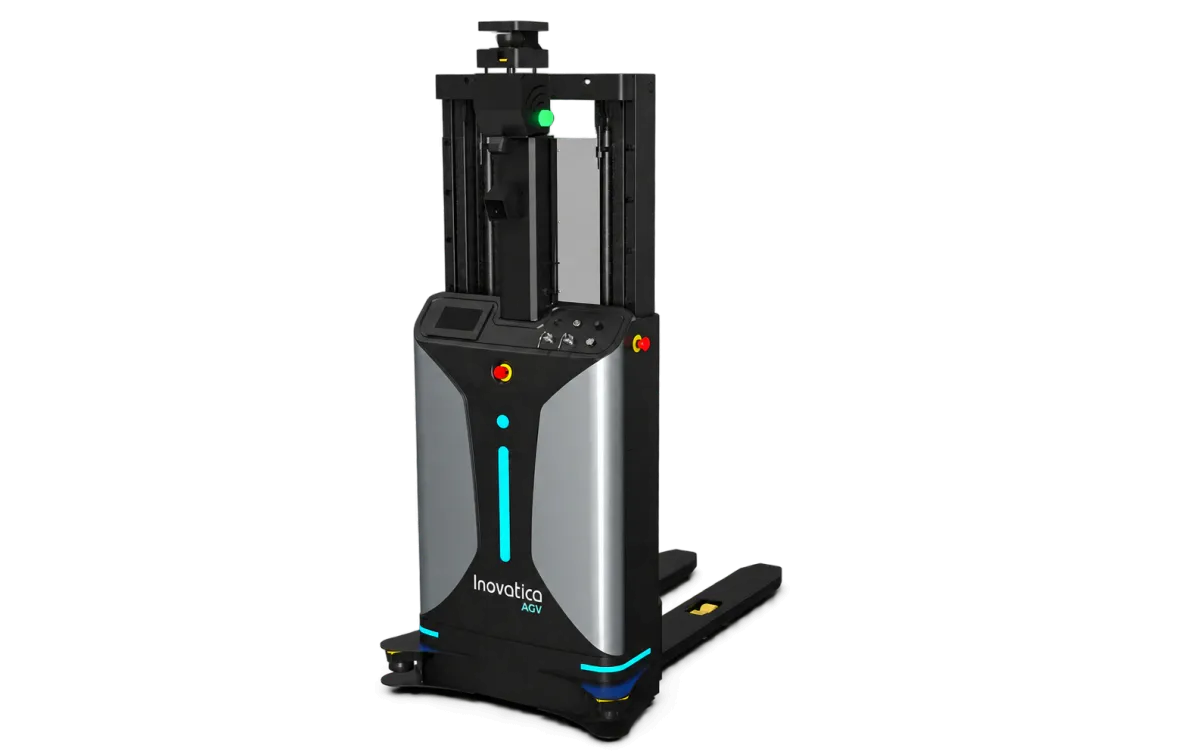
Pallet pickup and placement.
Matched to the load carrier and transfer height.
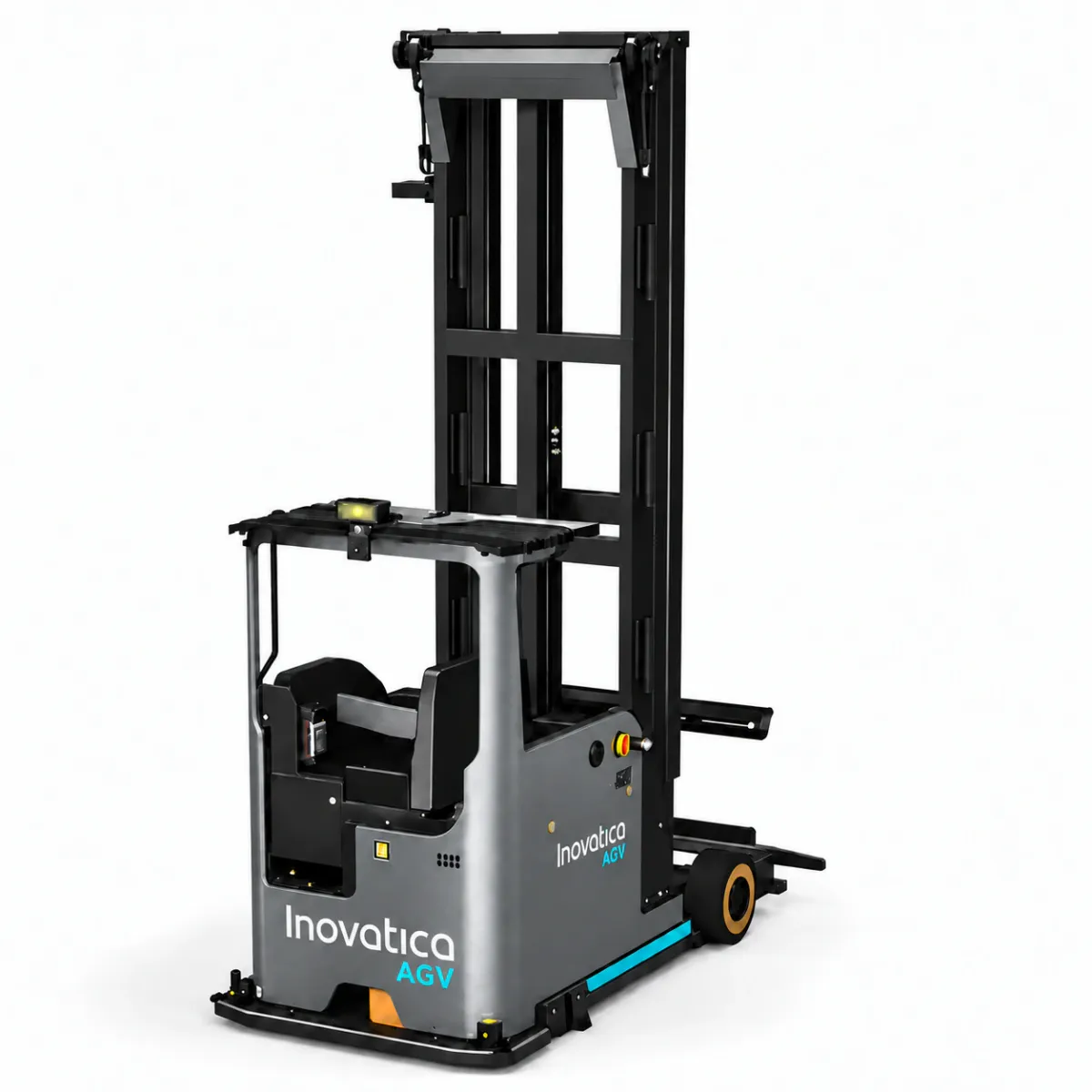
Handling higher rack levels
and warehouses with narrow aisles.
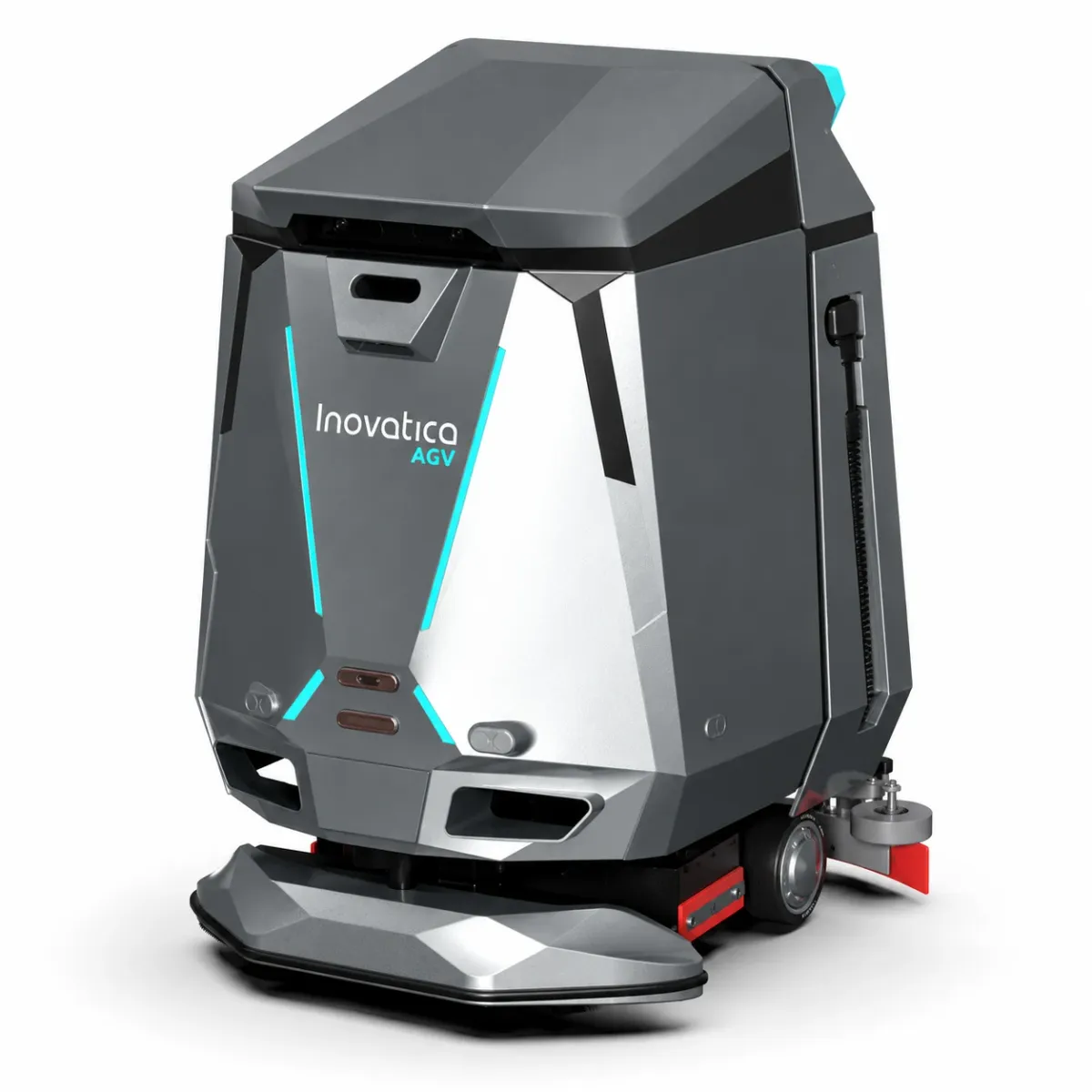
Automated floor care in warehouses and factories.
Projects across industries.
Plan, connect and manage.
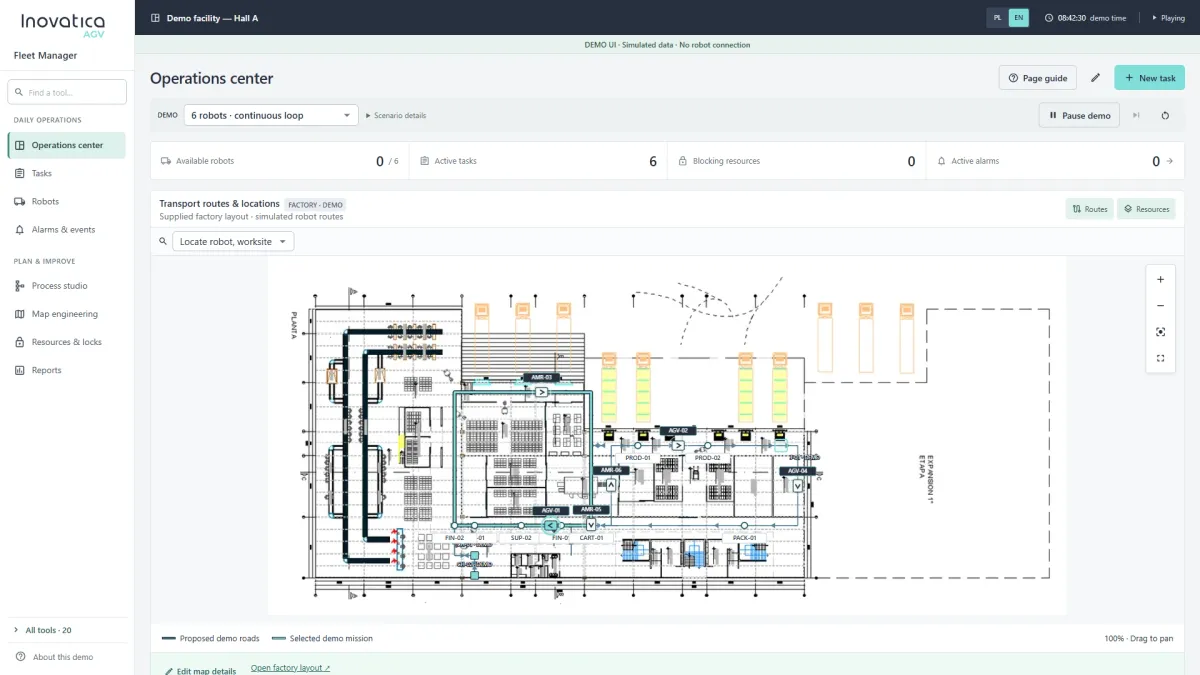
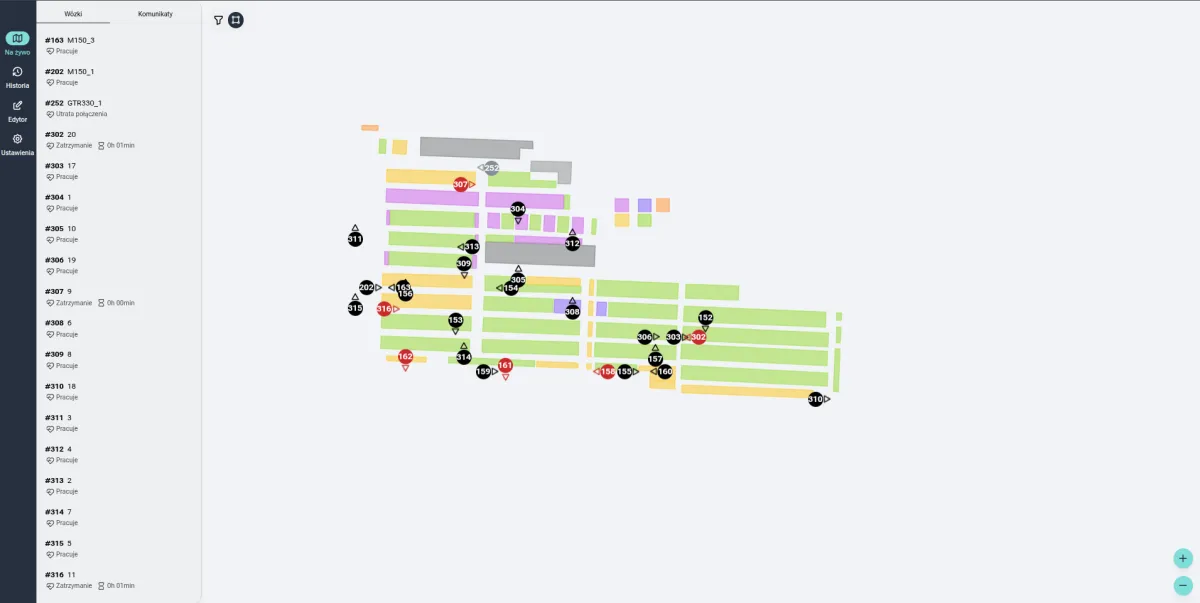
AGV tasks, vehicle assignment, traffic and fleet monitoring.
Explore the system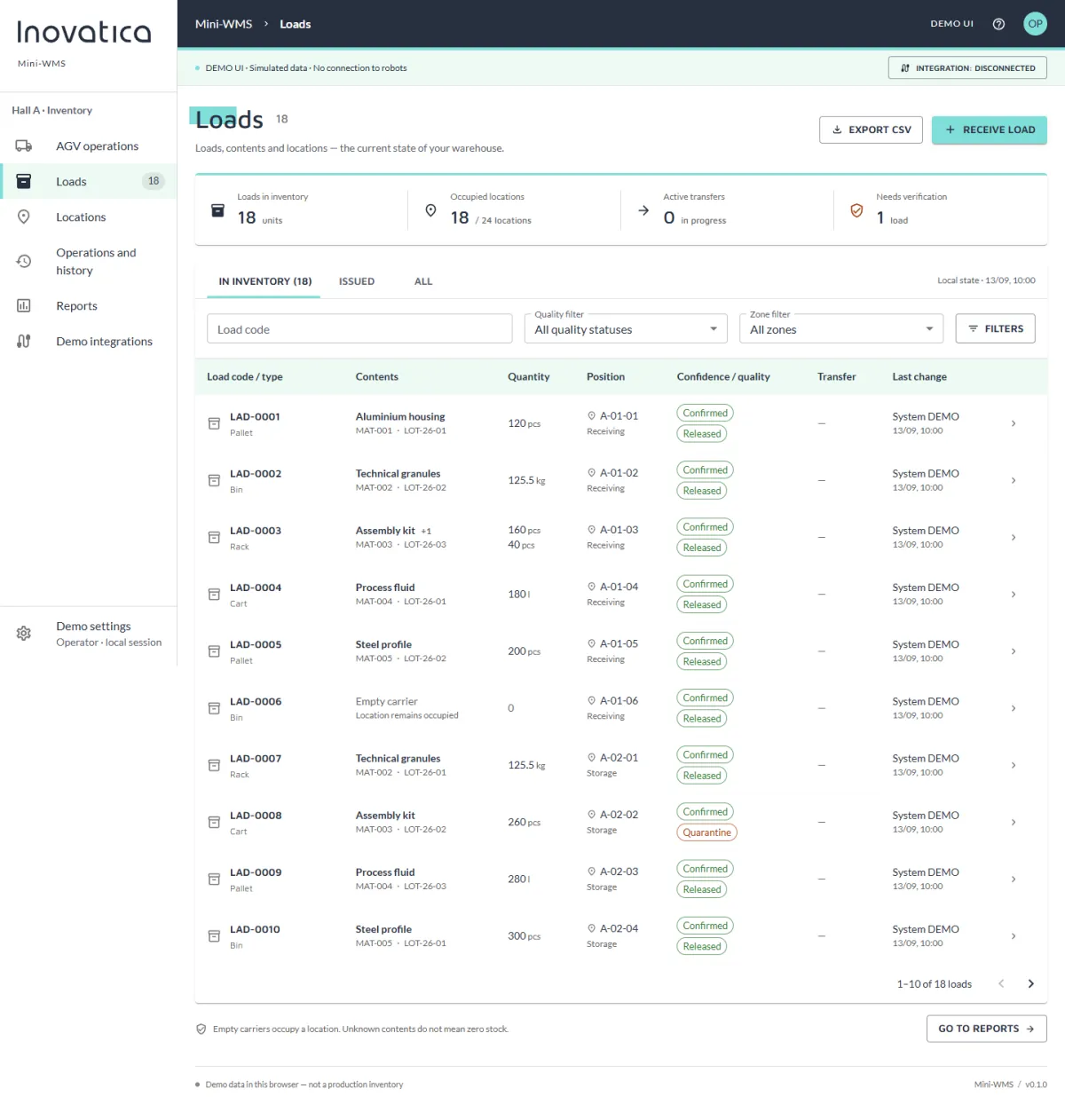
Loads, locations, transport requests and warehouse reports.
Explore the system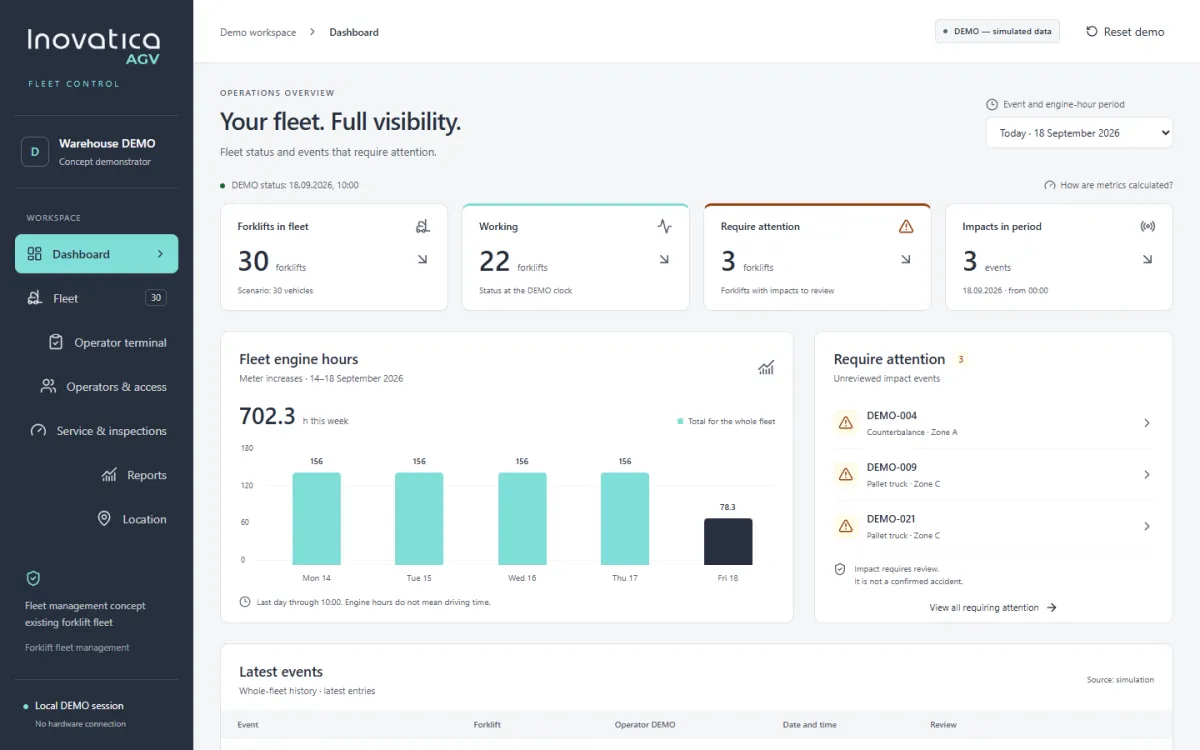
Fleet visibility, operators, checks, service and reporting.
Explore the system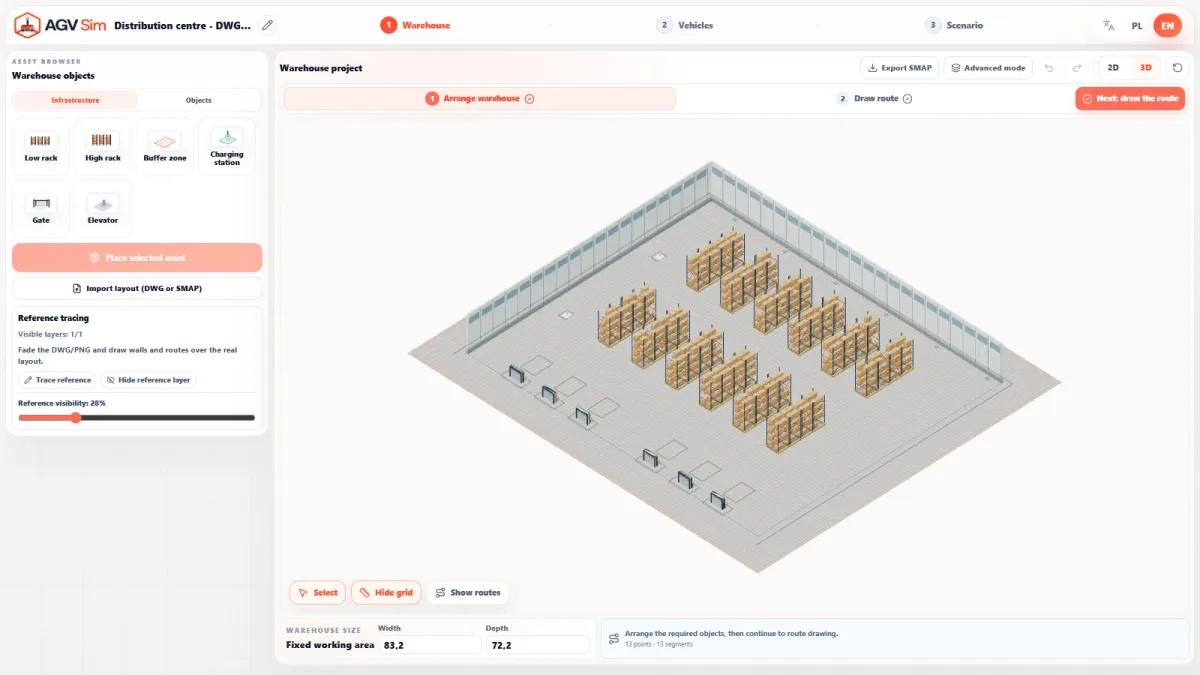
Simulate your warehouse, transport flow and AGV fleet scenarios.
Explore the system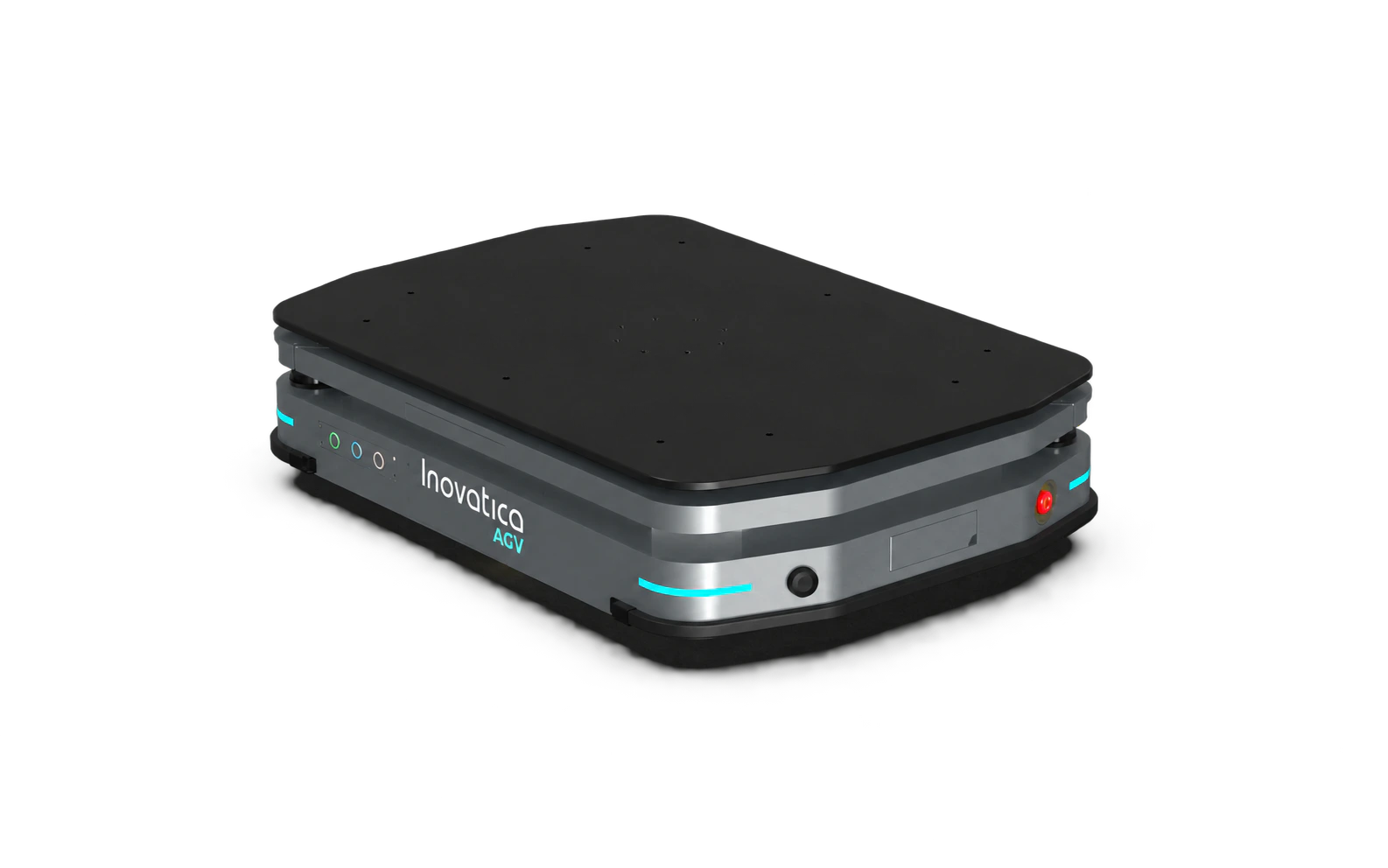 1 / 6
1 / 6  Loading 3D model…
 The load carrier’s design, dimensions and condition, plus the load’s weight and centre of gravity.
Passage widths, pickup and placement geometry, and traffic inside the facility.
The number of transport tasks, available charging periods and how tasks are requested.
| Product name | Autonomous mobile robot |
|---|---|
| Operating mode | Autonomous |
| Load carrier type | Platform on supports |
| Maximum load capacity | 500 / 1000 kg |
| Ground clearance | 30.5 mm |
| Maximum lifting height | 60±1 mm |
| Travel speed | Up to 1.5 m/s |
| Basic functions | Standard |
| Safety bumper | Standard |
| MD | Standard |
| Weight (including battery) | 265 kg |
|---|---|
| Mobile robot dimensions (L × W × H) | 1330 × 952 × 290.5 mm |
| Platform dimensions (L × W) | 1300 × 920 mm |
| Minimum aisle width | 1092 mm |
| Ambient temperature range | 0°C to 50°C |
| Ambient humidity range | 10% to 90%, normal pressure, non-condensing |
| Floor conditions (gradient / step / gap) | Not specified |
| Navigation type | Laser SLAM |
|---|---|
| Navigation laser scanning height | 185 mm |
| Turning diameter | 1457.4 mm |
| Navigation positioning accuracy | ±5 mm |
| Navigation angle accuracy | ±1° |
| Number of lidars | 2x SICK |
| Wi-Fi roaming | Standard |
| Load carrier platform recognition | Standard |
| Pallet recognition in racking | Standard |
| Reflector navigation | Optional |
| Emergency stop button (E-stop) | Standard |
| Audible signalling | Standard |
| Visual signalling | Standard |
| EMC / ESD | Standard |
| UN38.3 | Standard |
| RED | Standard |
| Battery specification | 48 V / 40 Ah (LiFePO4) |
|---|---|
| Battery runtime | Up to 7 h |
| Charging time (10% to 80%) | ≤2 h |
| Charging method | Manual / Automatic |
| Automatic charging support | Standard |
Nominal ground clearance: 30.5 mm; the drawing label is rounded to 30 mm.
The budget includes vehicles, process integration, software, infrastructure preparation and support. A quotation requires information about load carriers, routes and throughput. What affects AGV pricing?
Start with a description of your transport tasks and load carriers. Together, we will define the requirements for workstations, routes, safety and integration. Describe your process
This site uses cookies for core functionality and basic analytics. By clicking "Got it", you accept their use.
Privacy policy