Goods receipt → production
Delivering materials to designated pickup points.

Find the right robot for your process.
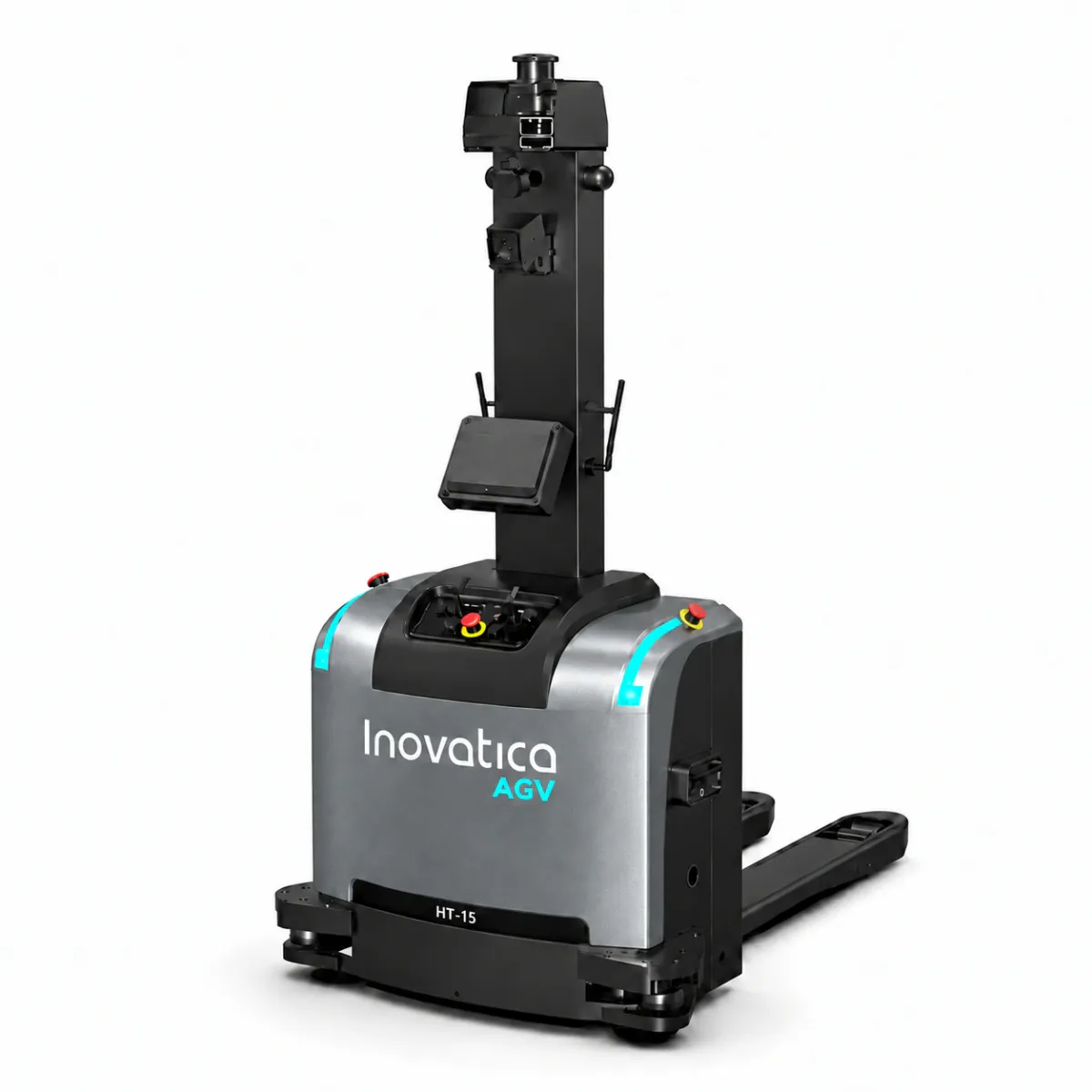
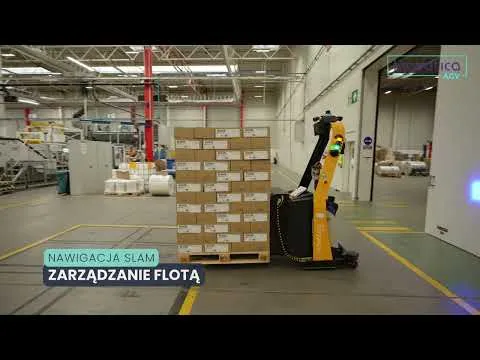
Pallets, containers and load carriers moved
between production and warehouse areas.
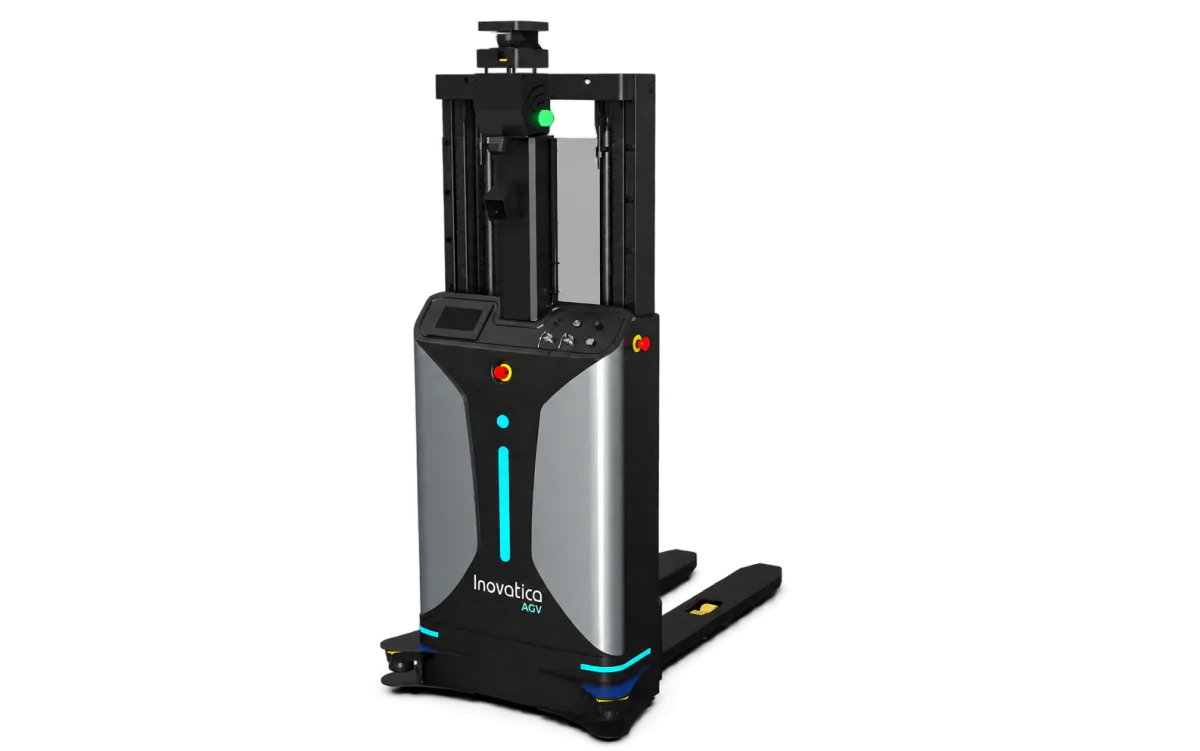
Pallet pickup and placement.
Matched to the load carrier and transfer height.
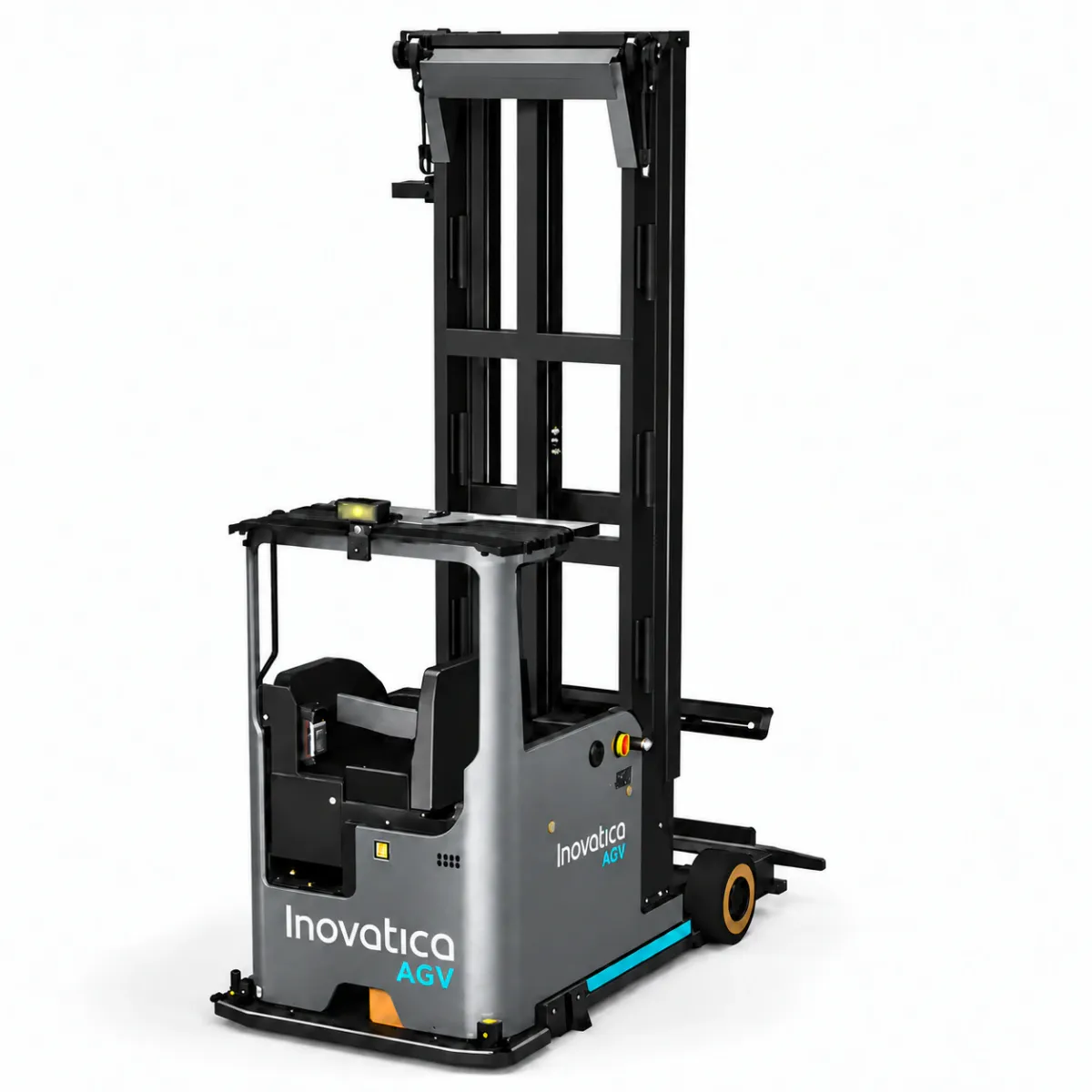
Handling higher rack levels
and warehouses with narrow aisles.
Projects across industries.
Plan, connect and manage.
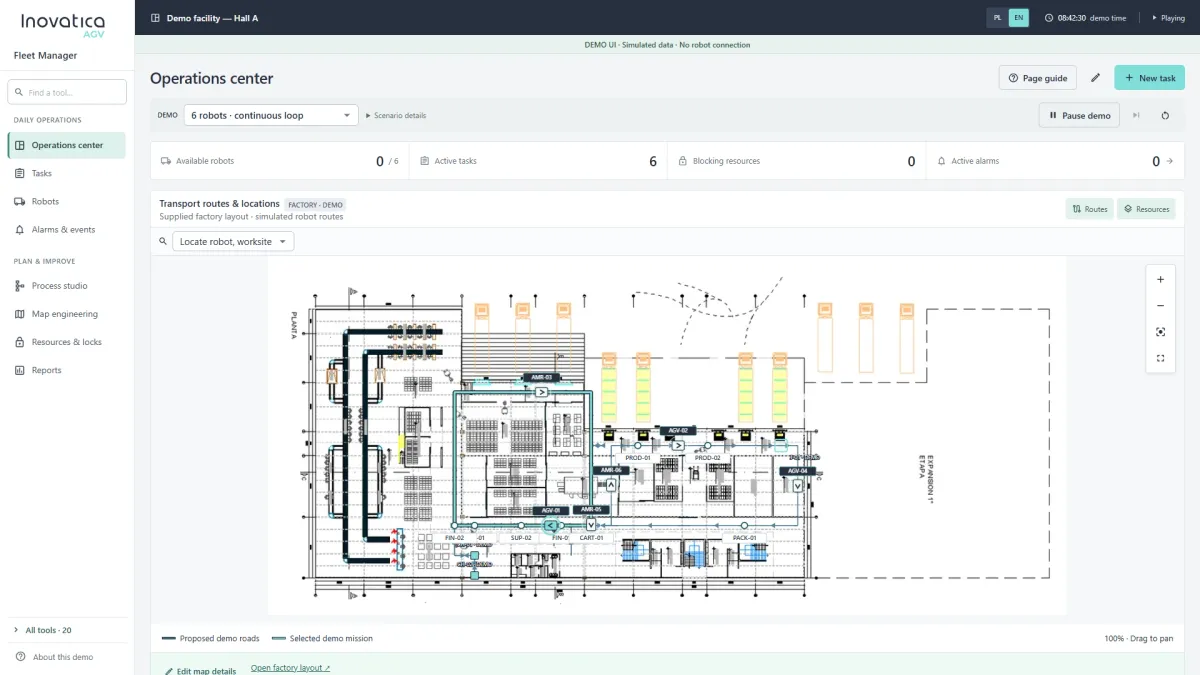
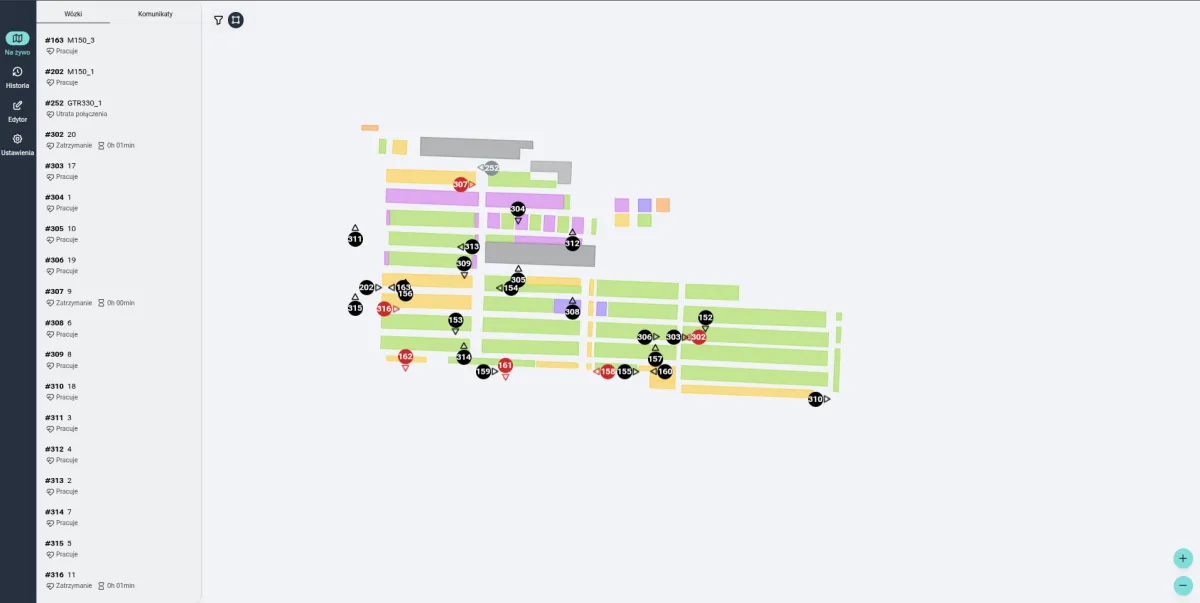
AGV tasks, vehicle assignment, traffic and fleet monitoring.
Explore the system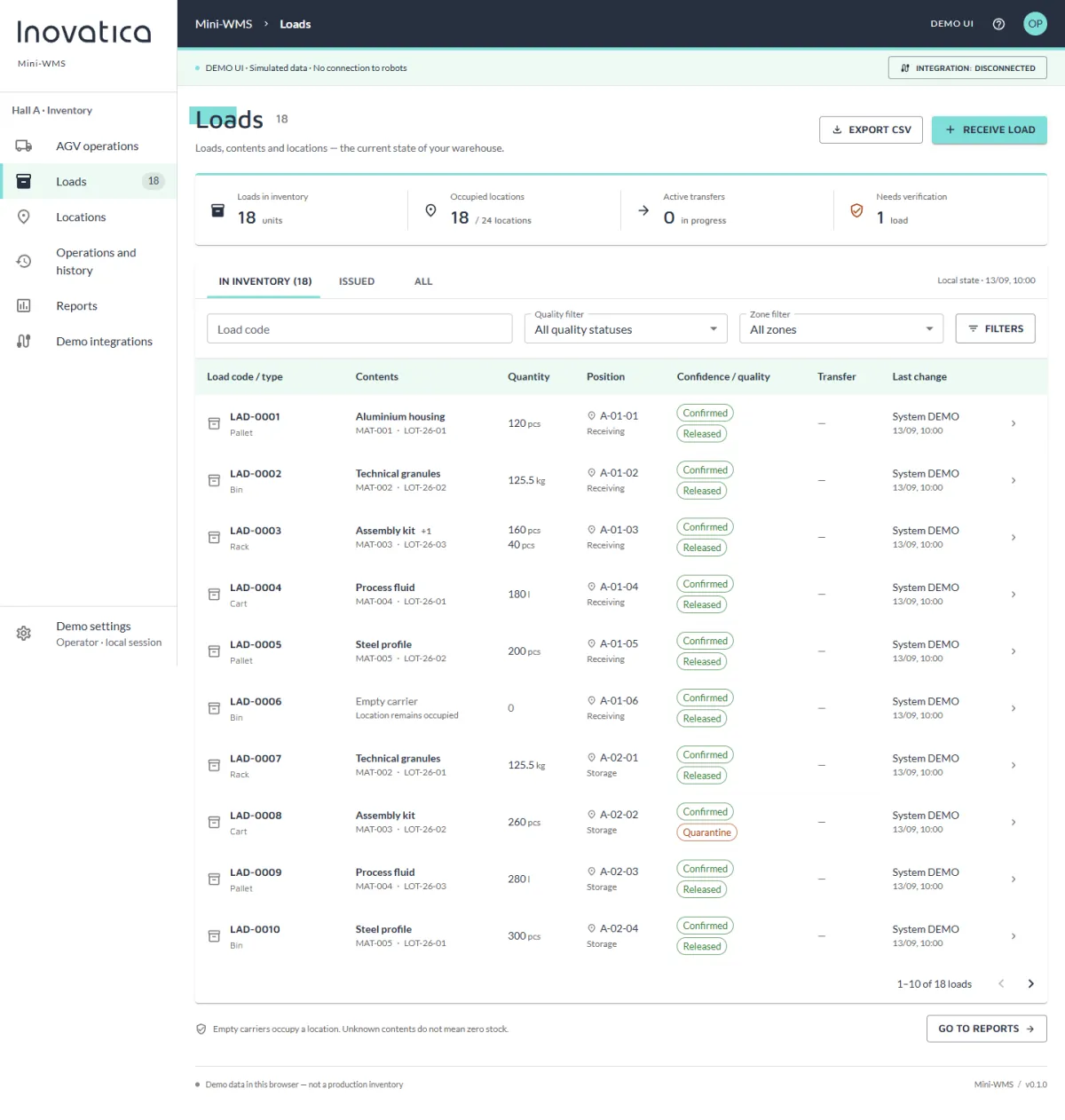
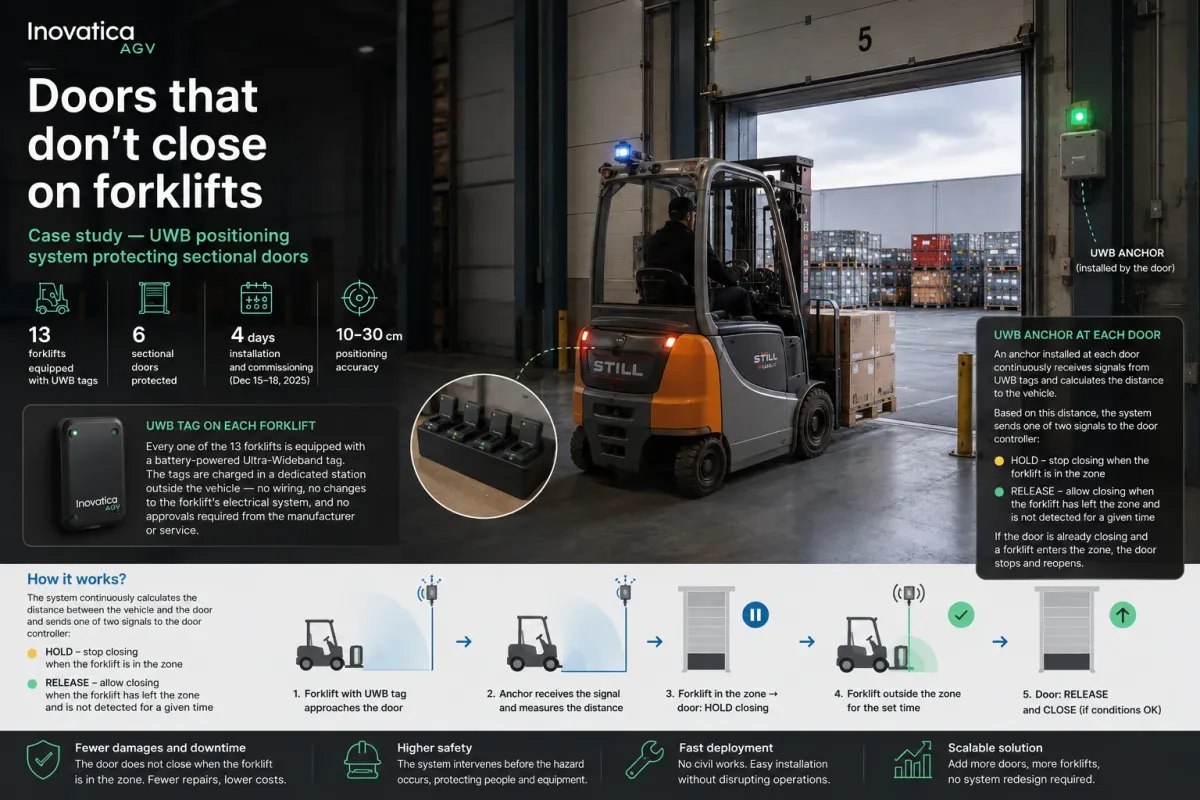
Loads, locations, transport requests and warehouse reports.
Explore the system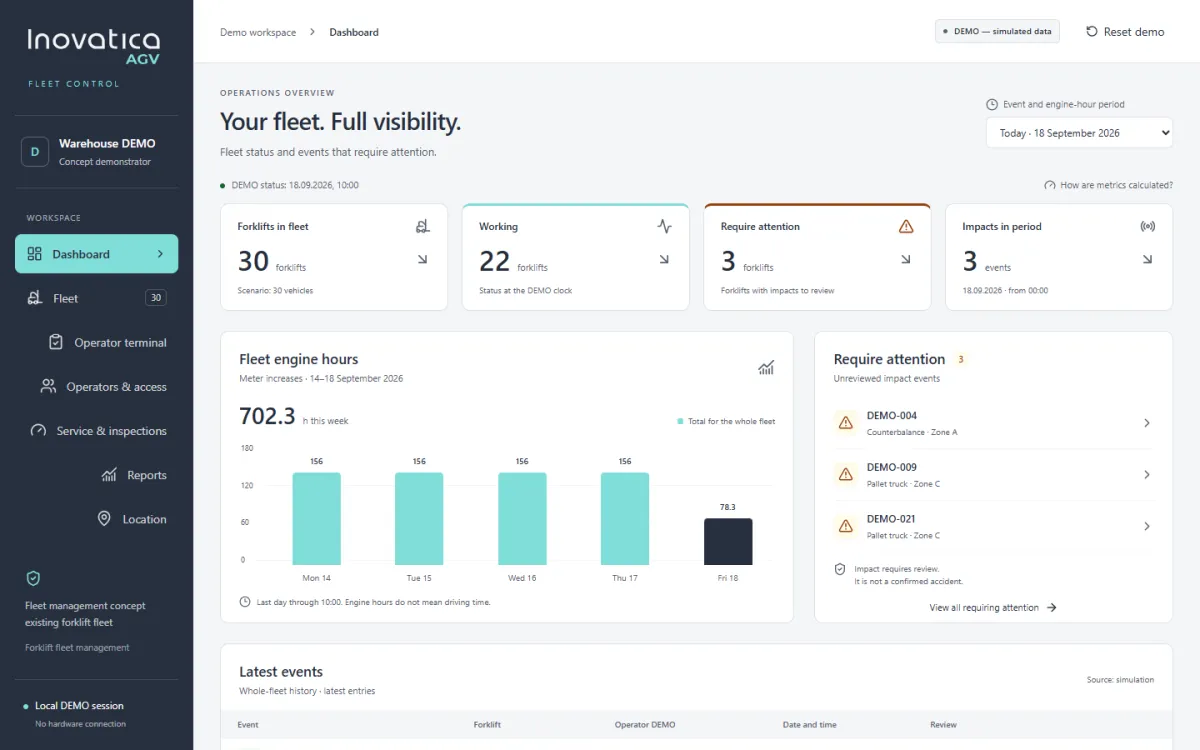
Fleet visibility, operators, checks, service and reporting.
Explore the system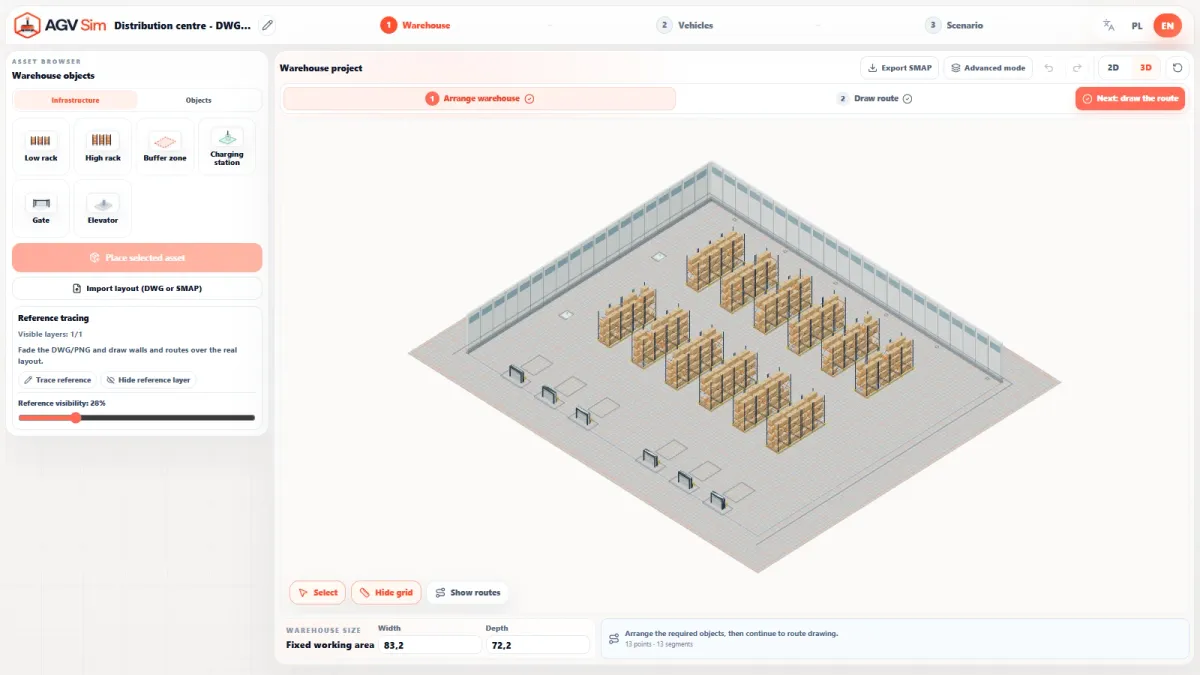
Simulate your warehouse, transport flow and AGV fleet scenarios.
Explore the system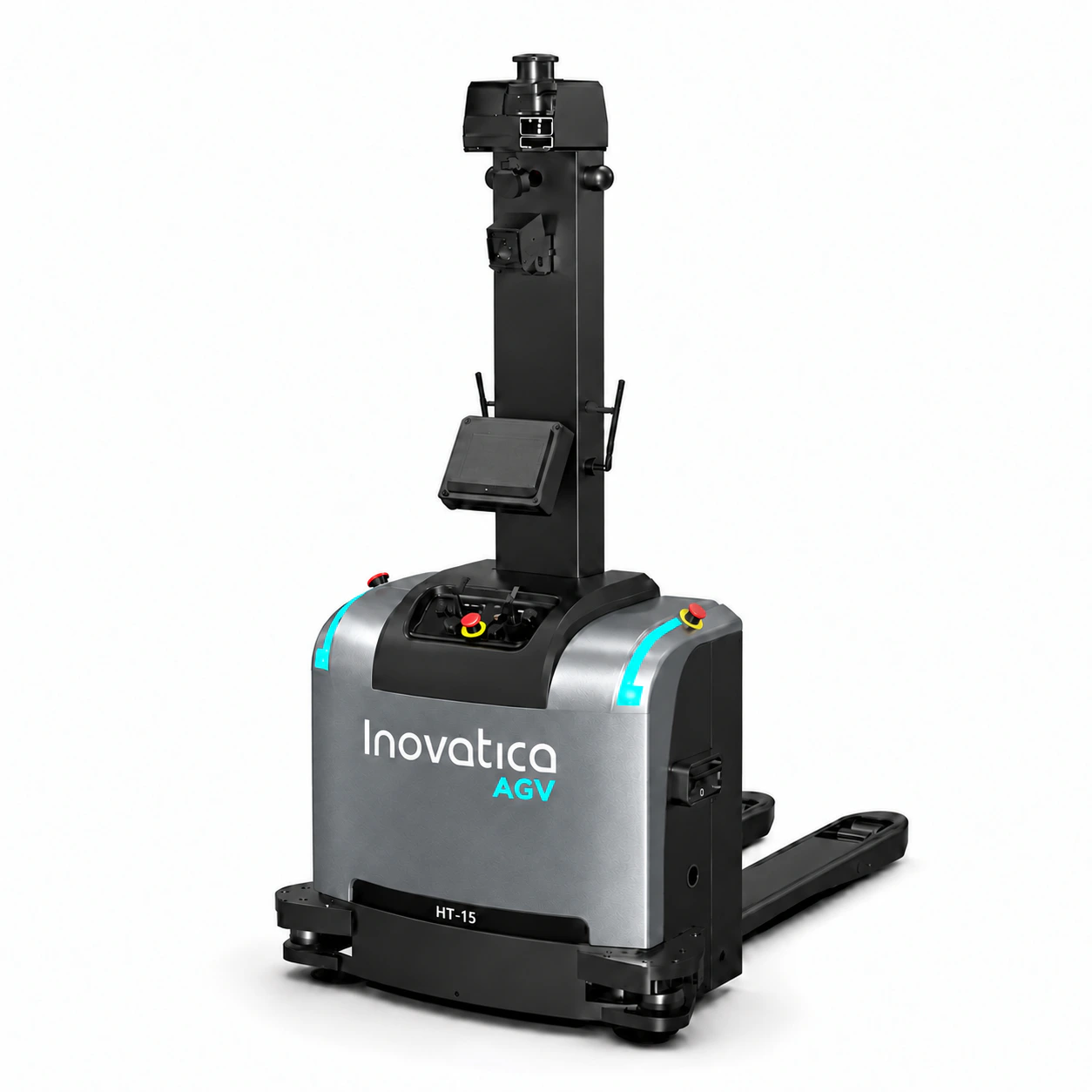 1 / 6
1 / 6 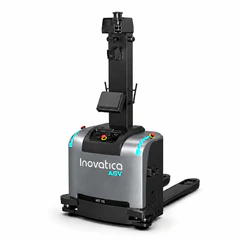 Loading 3D model…
 Delivering materials to designated pickup points.
Collecting loaded pallets and moving them to a buffer area.
Horizontal transport between fixed areas of the facility.
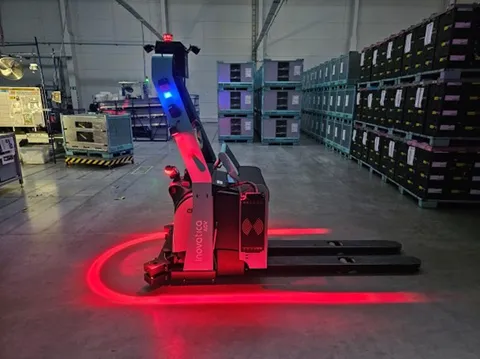
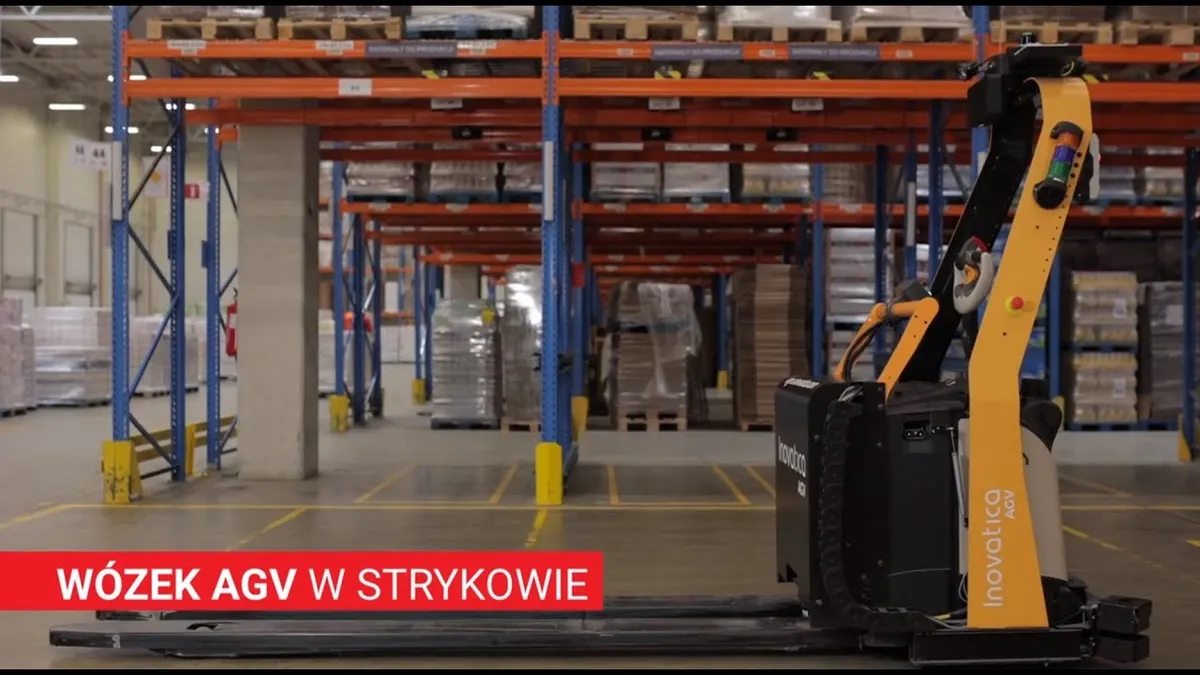
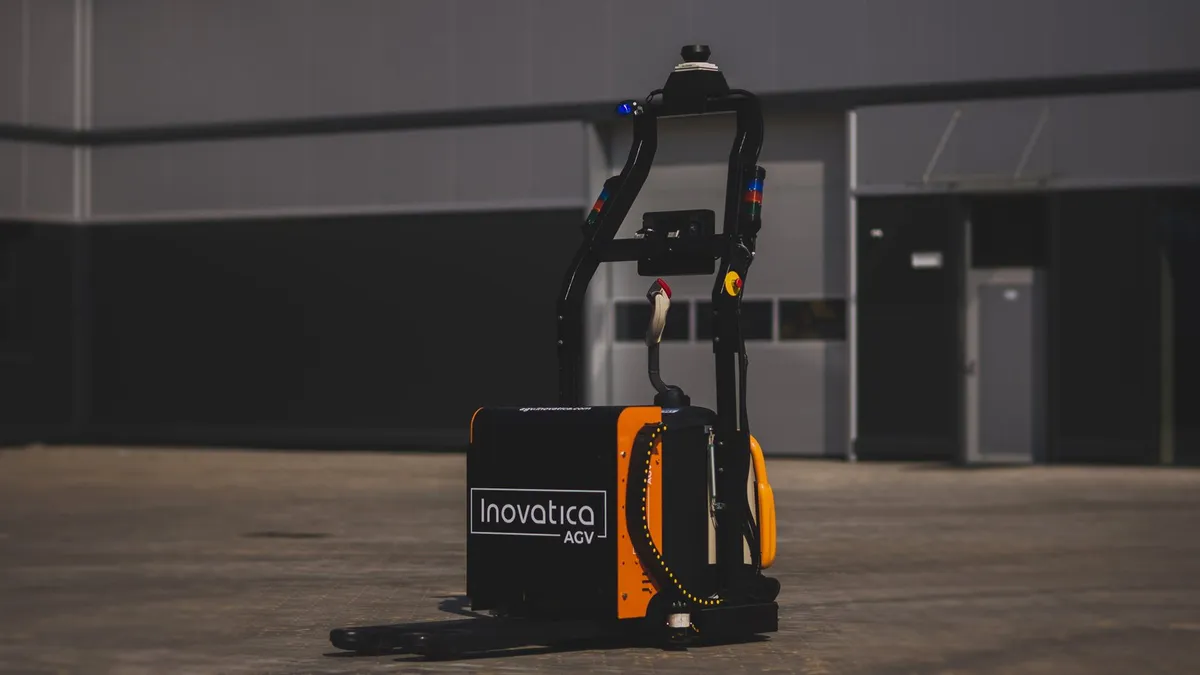
| Product name | Autonomous forklift |
|---|---|
| Operating mode | Autonomous / manual |
| Pallet type | Open pallet |
| Maximum load capacity | 1500 kg |
| Load centre distance | 600 mm |
| Standard lifting height | 205 mm |
| Travel speed (laden / unladen) | 1.4 / 1.4 m/s |
| Weight (including battery) | 403 kg |
|---|---|
| Forklift dimensions (L × W × H) | 1685 × 980 × 1906 mm |
| Fork dimensions (L × W × H) | 1220 × (170+7) × 75 mm; cable panel 7 mm |
| Outer fork width | 550 / 600 / 680 mm |
| Minimum turning radius | 1532 mm |
| Ambient temperature range | 0°C to 50°C |
| Ambient humidity range | 10% to 90%, normal pressure, non-condensing |
| Floor conditions (gradient / step / gap) | <5% / 10 mm / 30 mm |
| Right-angle stacking aisle width, 800 × 1200 pallet (1200 along forks) | 2220+200 mm |
| Right-angle stacking aisle width, 1000 × 1000 pallet (1000 along forks) | 2230+200 mm |
| Right-angle stacking aisle width, 1000 × 1200 pallet (1200 along forks) | 2260+200 mm |
| Navigation type | Laser SLAM |
|---|---|
| Navigation positioning accuracy | ±10 mm |
| Navigation angle accuracy | ±1° |
| Number of lidars | 1x P+F + 2x SICK |
| Wi-Fi roaming | Standard |
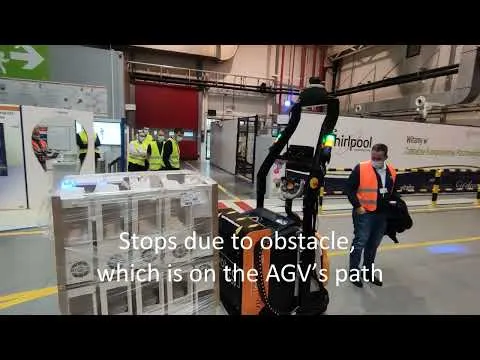
| 3D obstacle avoidance | Standard |
| Pallet recognition | Standard |
| Emergency stop button (E-stop) | Standard |
| Audible and visual signals | Standard |
| Braking distance (1 m/s / 1.5 m/s) | 1 m / 2 m |
| Fork height protection | Standard |
| ISO 3691-4 | Standard |
| EMC / ESD | Standard |
| UN38.3 | Standard |
| RED | Standard |
| Battery specification | 48 V / 46 Ah (LiFePO4) |
|---|---|
| Battery runtime | 8 to 10 h |
| Charging time (10% to 80%) | 1 h |
| Charging method | Manual / Automatic |
In the charger drawing: 150 mm is the gap from the robot, 500 mm is the charging interface height, and 908 mm is the charger height.
The standard 205 mm lift is designed for floor-level transport. For placing pallets on racks, consider an AGV stacker such as the ST-1430.
View ST-1430The product datasheet specifies open pallets. Selection requires confirmation of pallet dimensions, design, condition and load weight distribution.
Route layout and width, turning space, floor condition, transfer points, and pedestrian and vehicle traffic. These details help assess process suitability.
Start with moves per hour, full cycle length and load handling time. Also allow for charging, stops and shared routes.
Go to calculatorsCollect pallet photos and dimensions, maximum load weight, a route plan and transport demand per shift. Identify the system or person that will request tasks.
The budget includes vehicles, process integration, software, infrastructure preparation and support. A quotation requires information about load carriers, routes and throughput. What affects AGV pricing?
This site uses cookies for core functionality and basic analytics. By clicking "Got it", you accept their use.
Privacy policy