
Skip to content
Industry

AGV / AMR for Automotive

In automotive, internal logistics automation must support production stability rather than just replace a single trip. That is why we focus on the transport relationships that have the biggest impact on line continuity and supply timing.

more stable production rhythm

fewer errors and delays in line supply

lower cost of repetitive internal transport

Who it fits

An industry with high pressure on production rhythm, line supply timing and predictable material flow. AGV / AMR in automotive make sense where manual transport starts to destabilize JIT, JIS or regular movement between lines.

Typical use cases
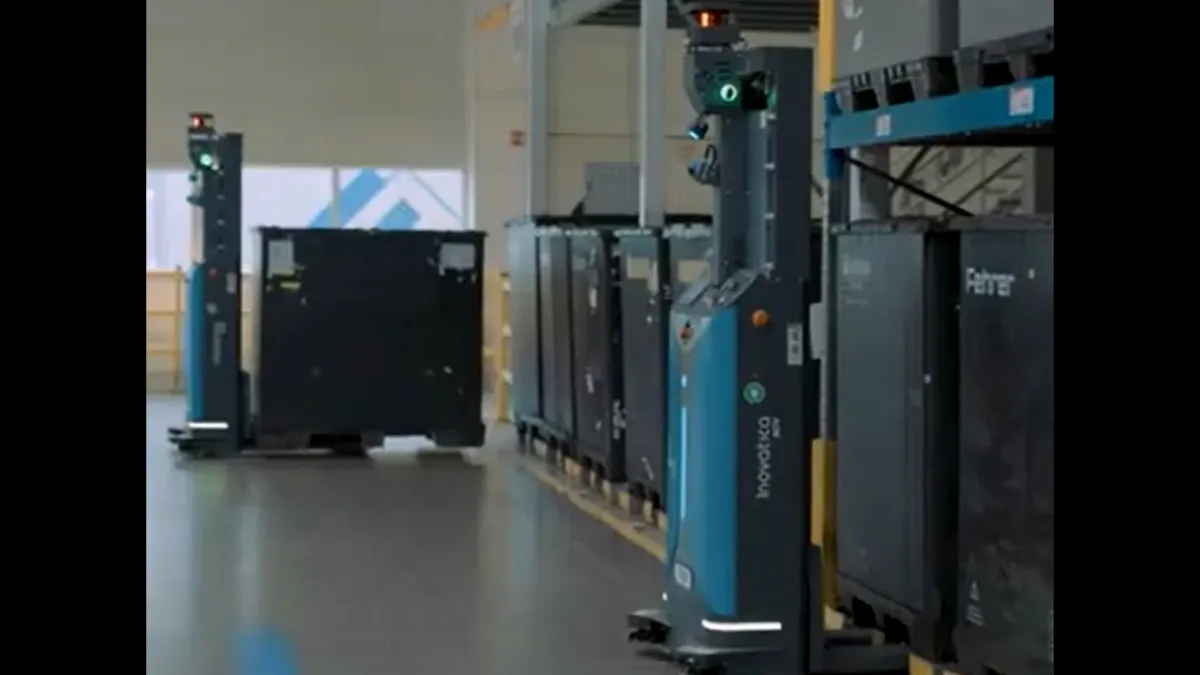
  • transport between lines and assembly areas
  • JIT / JIS line supply
  • pickup of finished goods, empty carriers and components
Business effect
  • more stable production rhythm
  • fewer errors and delays in line supply
  • lower cost of repetitive internal transport
How to evaluate fit

What to validate before choosing AGV / AMR for Automotive

An industry page is most useful when it helps you connect the sector context with your own process. Before narrowing the solution, confirm which transport relation creates the biggest pressure on throughput, labor availability or delivery stability.

The best first-step scenario is usually the one that is repetitive enough to automate, visible enough to measure and important enough to improve the business result quickly. That gives a stronger rollout brief than starting from technology alone.

Transport relation

Identify which route between line, buffer, warehouse or shipping creates the most delay, manual work or avoidable variability.

Carrier logic

Check whether the project depends on pallets, racks, carts or custom carriers, because that changes the vehicle type and station design.

Pilot scope

Choose a first rollout area that can prove process stability and measurable value without forcing full-site automation on day one.

Typical use cases

The scenarios that most often make sense in this industry

transport between lines and assembly areas

JIT / JIS line supply

pickup of finished goods, empty carriers and components

Industry context

What we pay attention to during the rollout

In automotive, predictability creates the biggest value. Even a small delay in delivering material can trigger a chain of problems that ends with line disruption or manual firefighting.

That is why AGV automotive projects usually start where work rhythm, transfer points and priorities can be clearly defined. This gives better production stability and makes future scaling easier.

It is also worth validating how the future system should react to short-term priority changes, empty-carrier returns and the pressure to keep line supply predictable across the whole shift. In automotive, those details often decide whether automation remains a nice demo or becomes part of the operating model.

Related solutions

The use cases we most often start with in this industry

The industry gives the context, but the real rollout begins with a specific scenario. Below you can see the AGV / AMR solutions most closely matched to this sector.

Use case

Automated line supply

Regular delivery of components, empty carriers and material to the line in line with process rhythm.

View solution
Use case

End-of-line outbound handling

Automated removal of finished pallets, bins or batches from the end of the line and transfer to a buffer or warehouse.

View solution
Use case

Transport between halls

Reliable material flow between separated plant areas without manually coordinating every trip.

View solution
Related deployment

Internal transport automation in FicoMirrors

A Tier-1 automotive project showing how organized component transport can become part of the plant operating model.

Next step

Do you want to test this sector against your own company context?

We can review the process, carrier types, trip volume and site constraints to indicate an industry-matched AGV / AMR scenario and the best first rollout scope.