
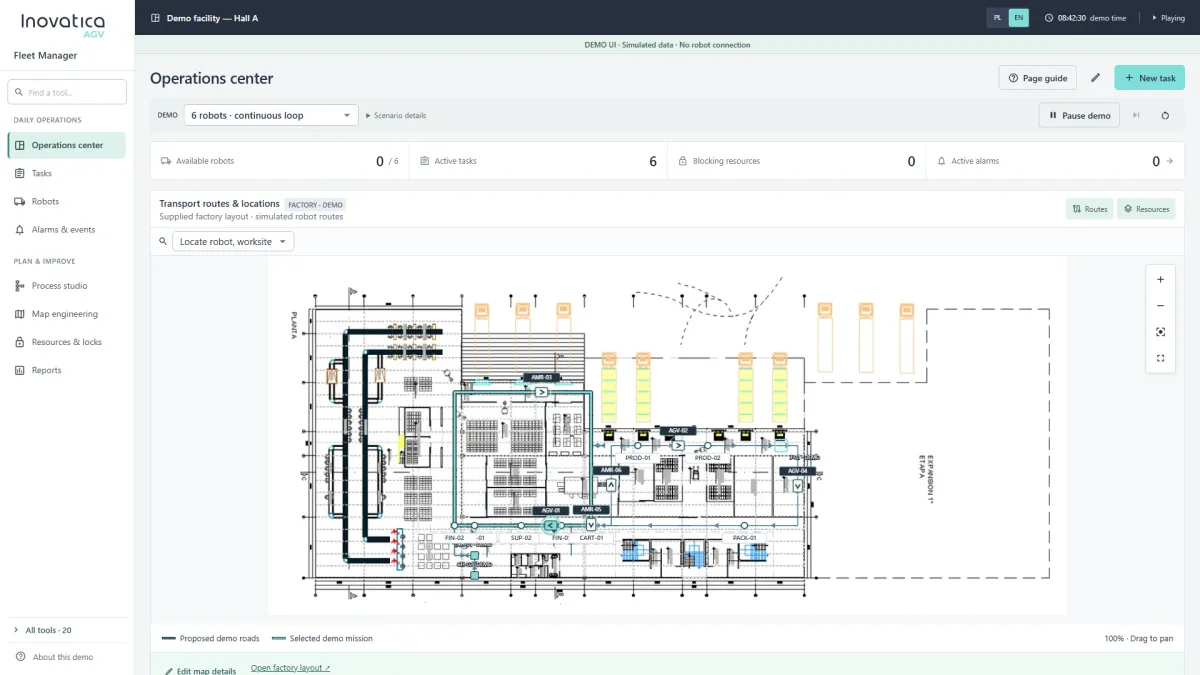
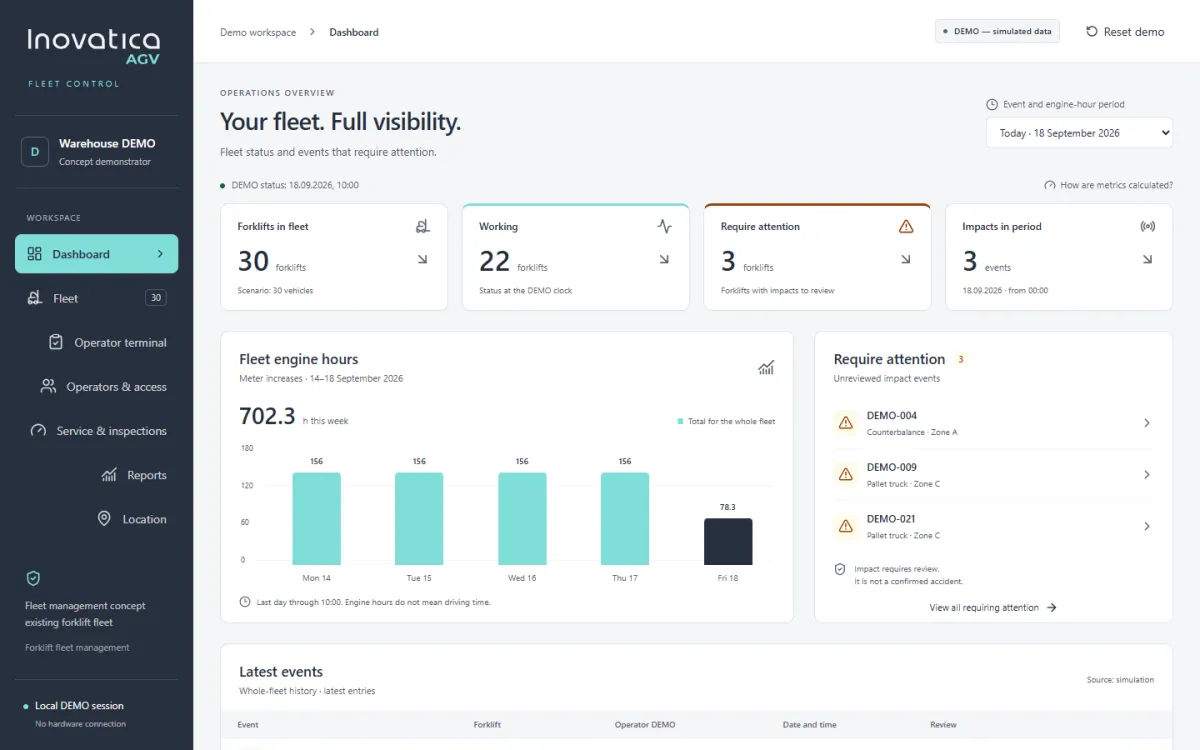
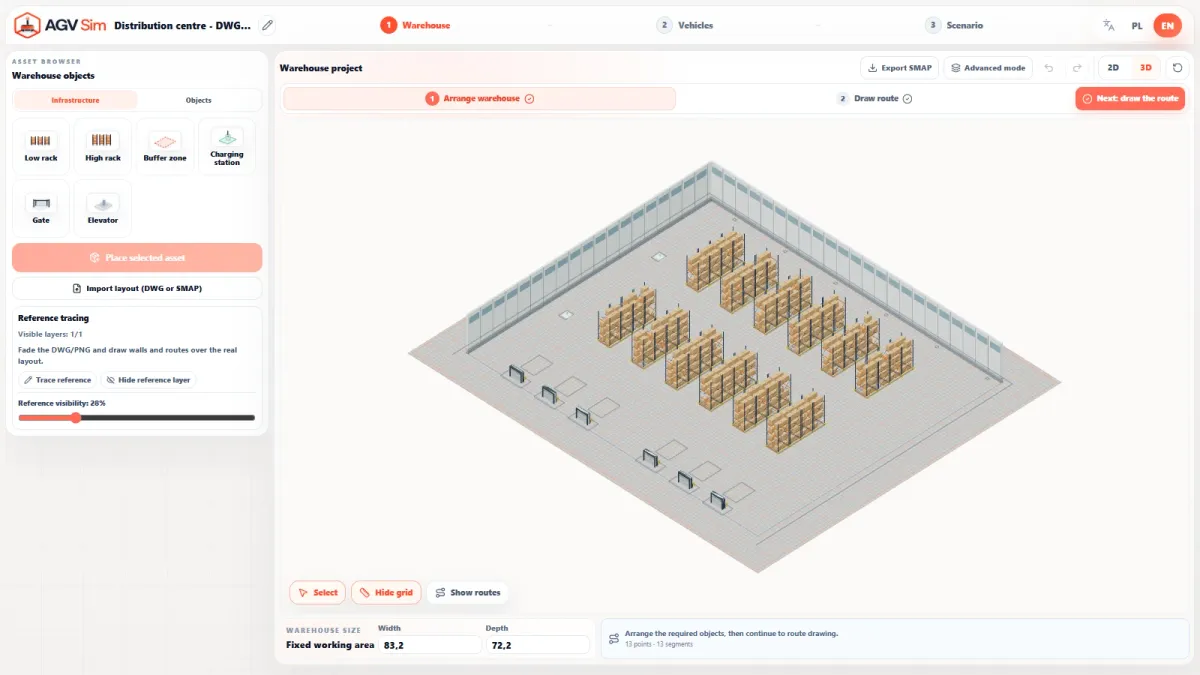
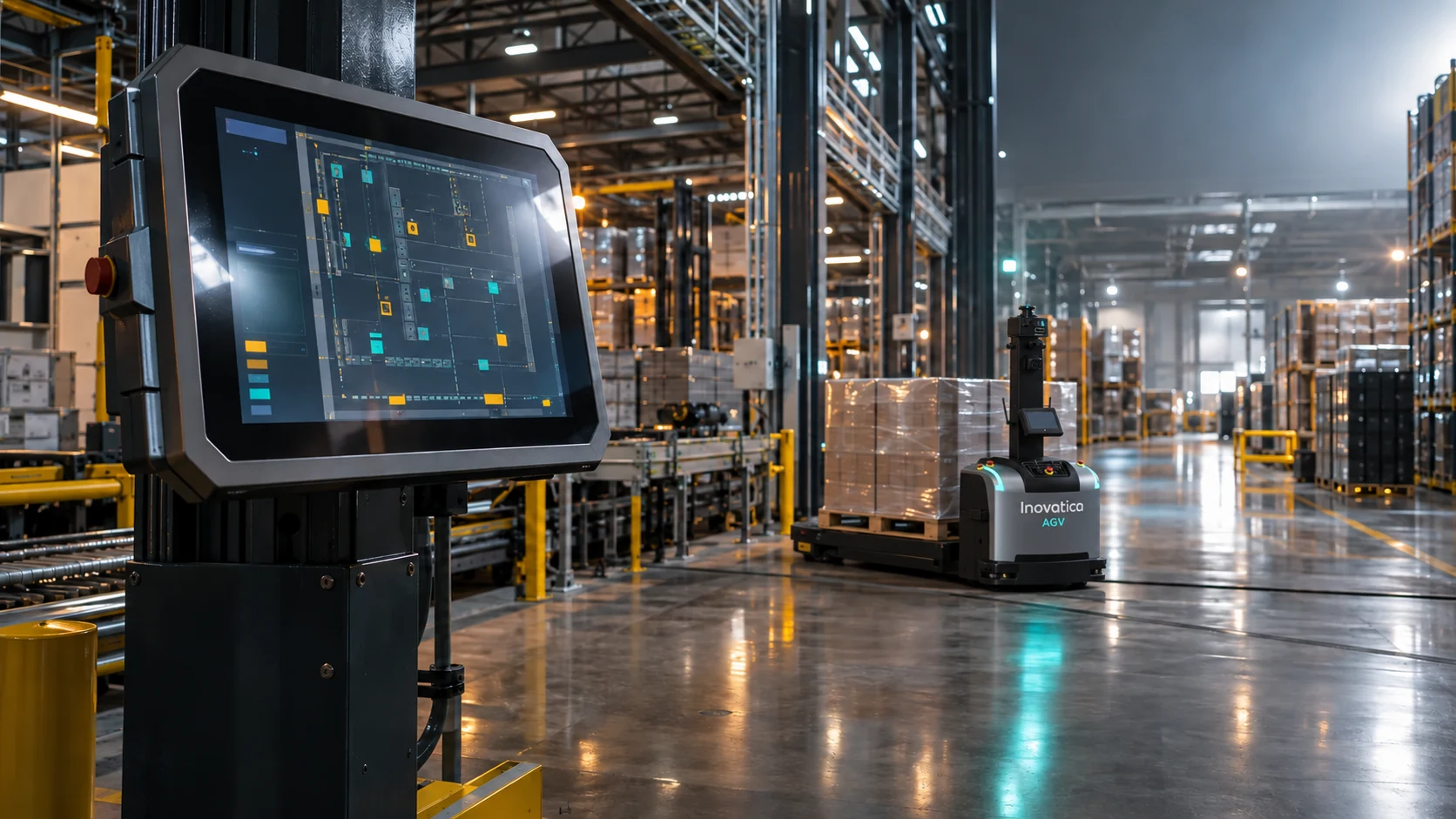
Transport connected to the process
Integration decides whether AGV really support the process or only execute trips without the full operating context.
Integration makes transport react to real process events instead of manual triggering outside the system.
In warehouses and plants, the vehicle should react to upstream data: task status, station readiness, carrier ID, pick confirmation or process block. That is why we treat integrations as part of the rollout logic rather than a technical add-on after the fleet goes live.
We work with both lighter event exchange scenarios and deeper WMS, MES, ERP or SCADA connections. The goal is data consistency and clear responsibility: the upstream system knows when to trigger transport, and the AGV layer knows how to execute it safely and efficiently.
- mapping of events and statuses between AGV and plant IT
- integration with warehouse and production logic
- clear exception handling, blocking and retry model
- fewer empty trips and fewer exceptions handled outside software
- clear responsibility split between AGV and WMS / MES / ERP
How to plan task flow
01 · Process request
Define the event that initiates transport: a ready pallet, station demand or an operator request. The task should identify pickup and drop-off points and the required carrier.
02 · Readiness checks
Agree on readiness conditions, location availability and the ability to accept a load. The data required depends on the facility systems.
03 · Execution and confirmations
The transport system assigns a vehicle. Agreed statuses distinguish acceptance, transport start and completion.
04 · Exception handling
Define responses to a missing load, an occupied destination, lost connectivity or cancellation. Repeating a message should not unintentionally create a second transport.
What to prepare for an integration discussion
- Systems involved and the people responsible for integration.
- Events, load identifiers, locations and status definitions.
- Available interface documentation and a test environment.
- Failure scenarios and acceptance criteria agreed with process users.
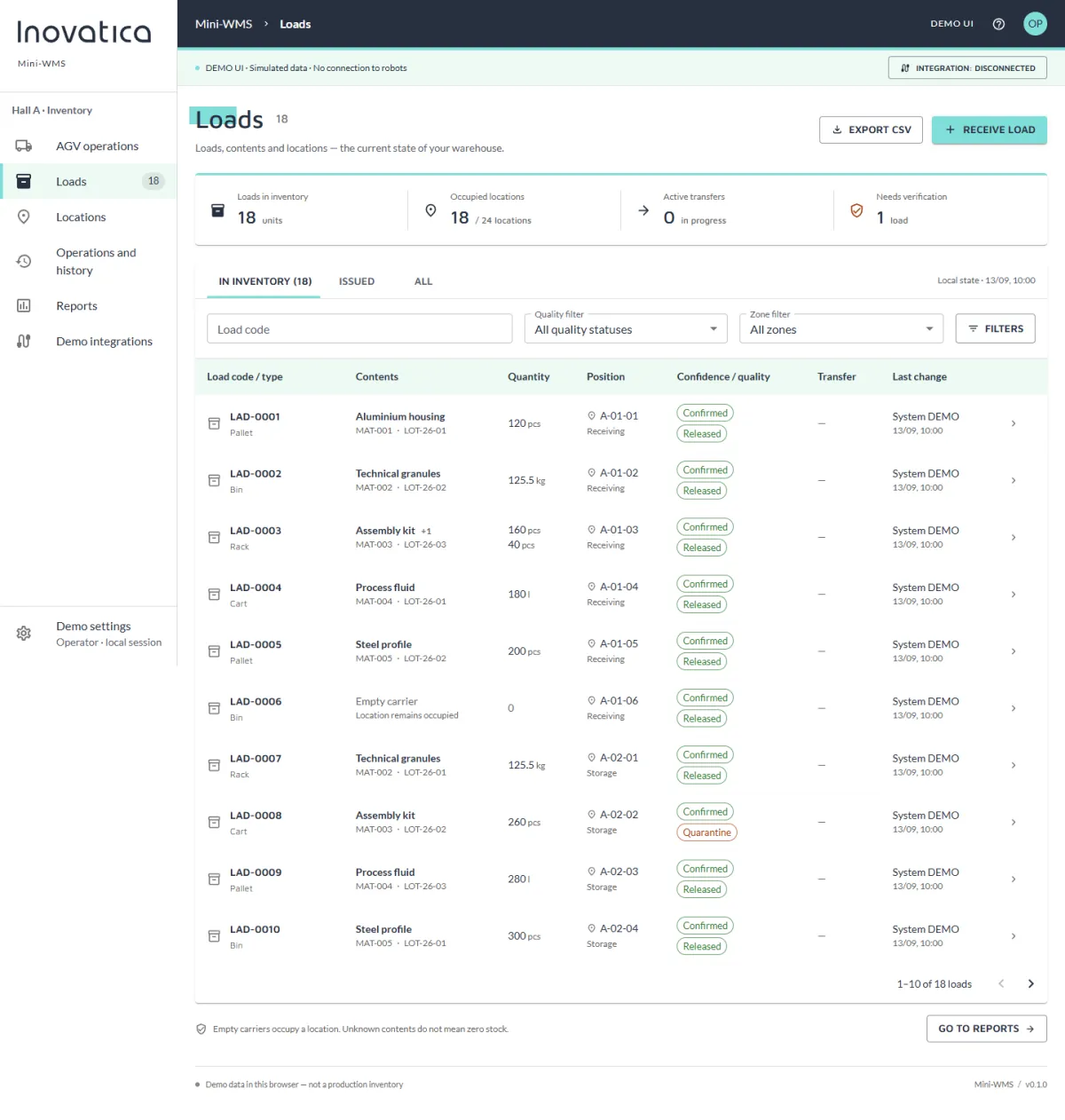
Mini-WMS
See how load and location records can connect to AGV transport requests in the system demo.
Explore Mini-WMS →