
Context and objective
Huhtamaki Foodservice Poland needed a stable way to automate several pallet flows in a demanding manufacturing environment. The project included raw materials, paper rolls and finished goods, so the operating model had to be safe, repeatable and easy to integrate with the daily production rhythm.
The plant was dealing with repetitive pallet movement across a dynamic production area. The target was to reduce manual dependence while keeping the flow predictable and safe in mixed traffic conditions.
Huhtamaki Foodservice is one of the world’s major food-packaging manufacturers. Its Czeladź plant serves Central and Eastern Europe. The site was developing its automation and needed a solution that met demanding safety requirements in an environment shared by operators, production staff and manual vehicles.
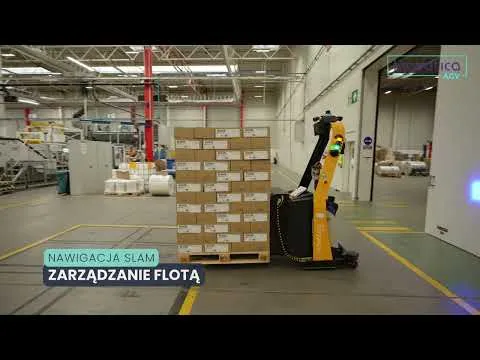
The work involved horizontal pallet movement and paper-roll handling. Matching the system to the facility, production rhythm and accurate load placement was therefore particularly important.
Solution and scope
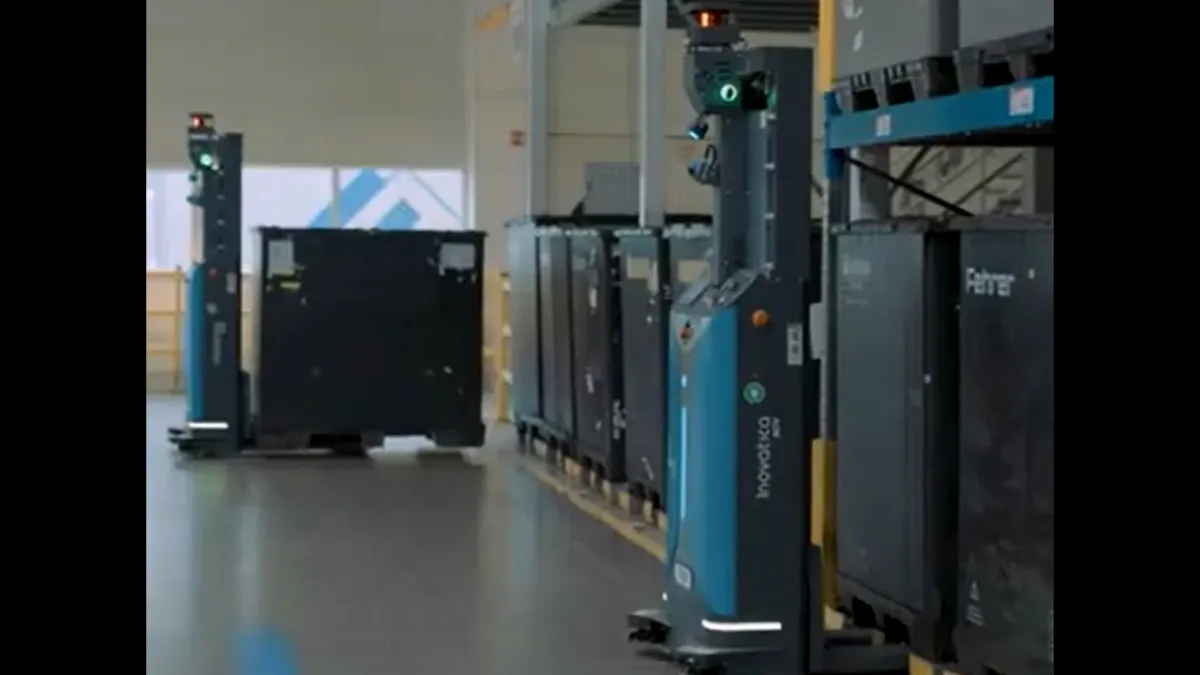
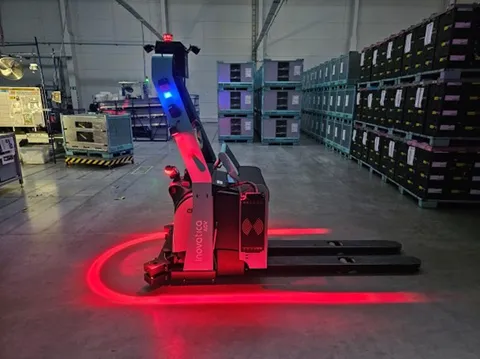
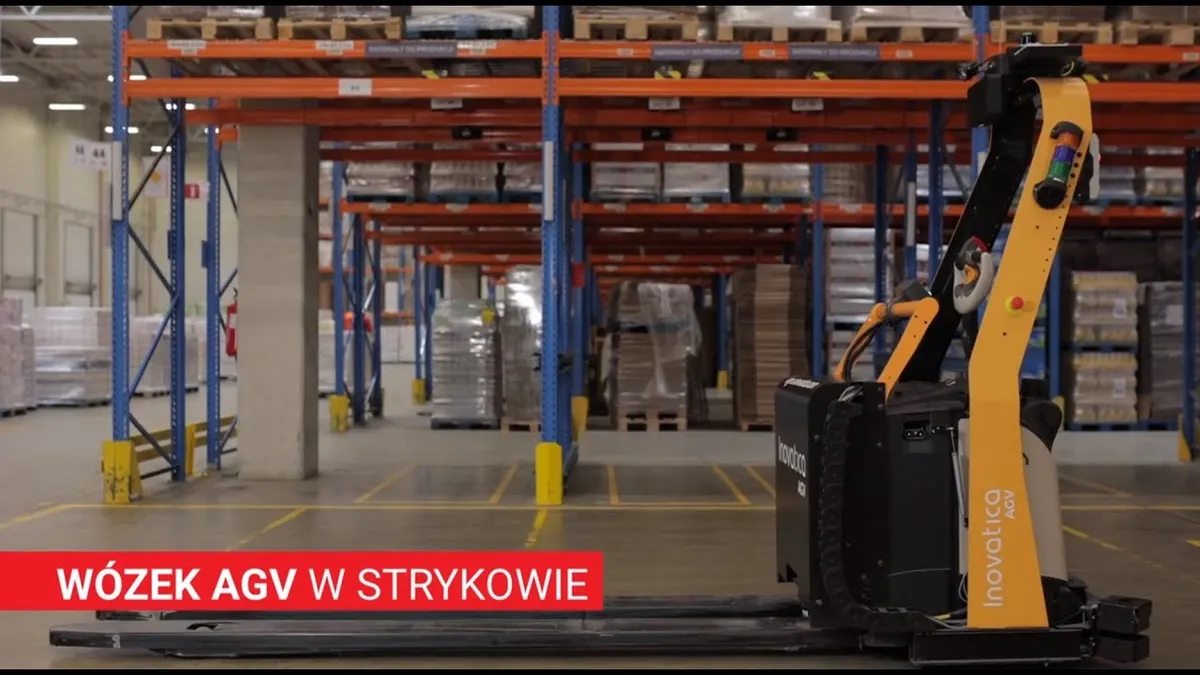
The deployment automated two key internal logistics streams and aligned AGV work with transfer points, production needs and process safety rules. The scope was designed to support real operations rather than a narrow demonstration scenario.
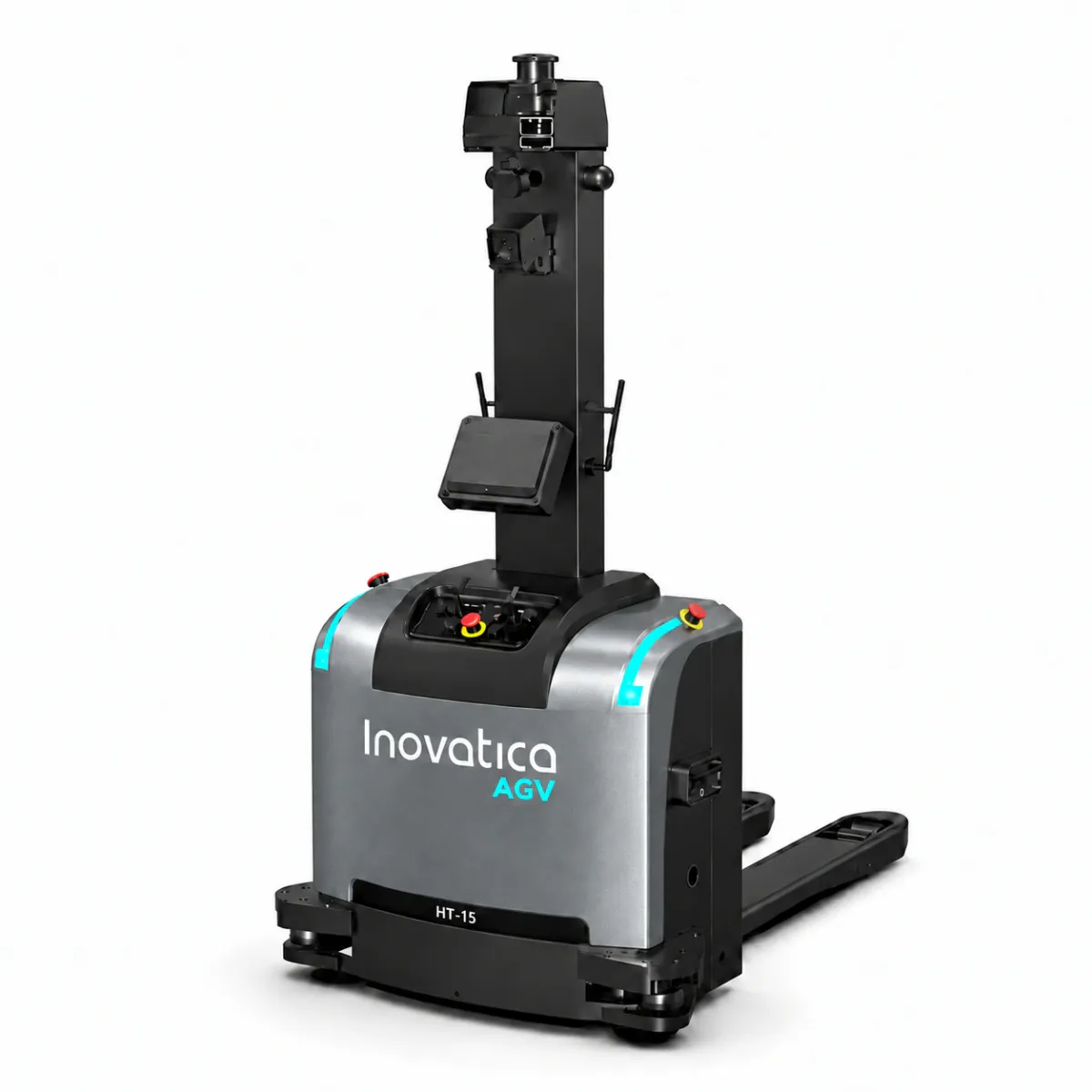
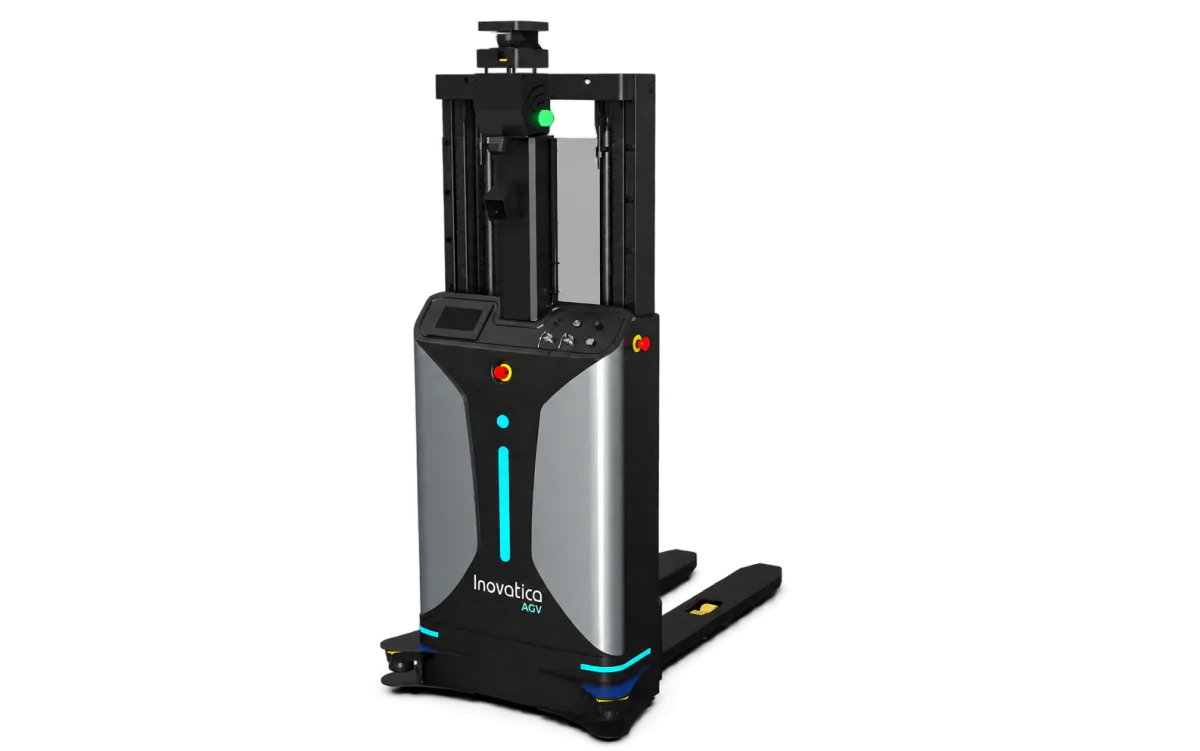
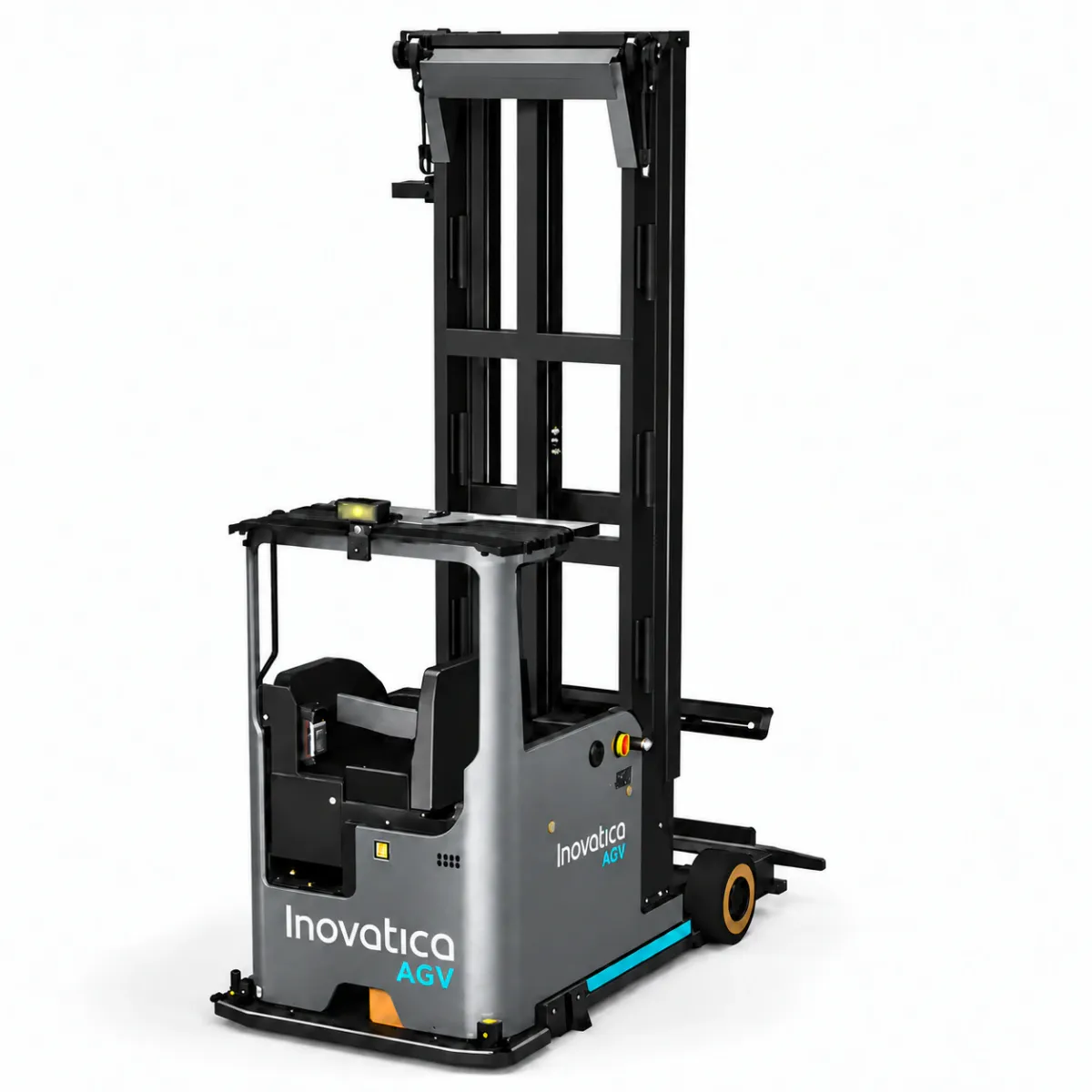
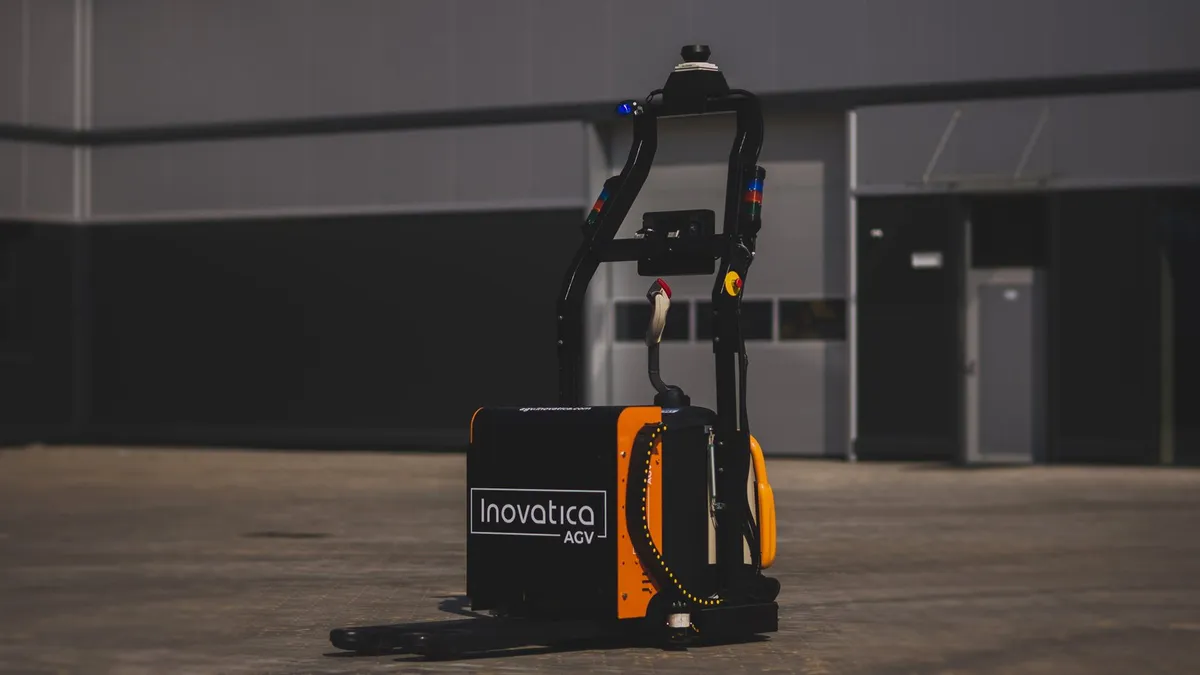
The proposed flow supplied raw-material pallets to production halls and paper rolls to printing machines, then collected finished goods and printed rolls. After the needs assessment and process measurements, Huhtamaki commissioned a pre-deployment analysis and subsequently selected Inovatica AGV to supply vehicles adapted to the warehouse and production conditions.
Deployment
The project at Czeladź was delivered together with WDX S.A. It covered process analysis, route and transfer-point planning, infrastructure adaptation and tablets for requesting tasks. Vehicle configuration and tests were followed by staff training and a pilot in a selected operating area.
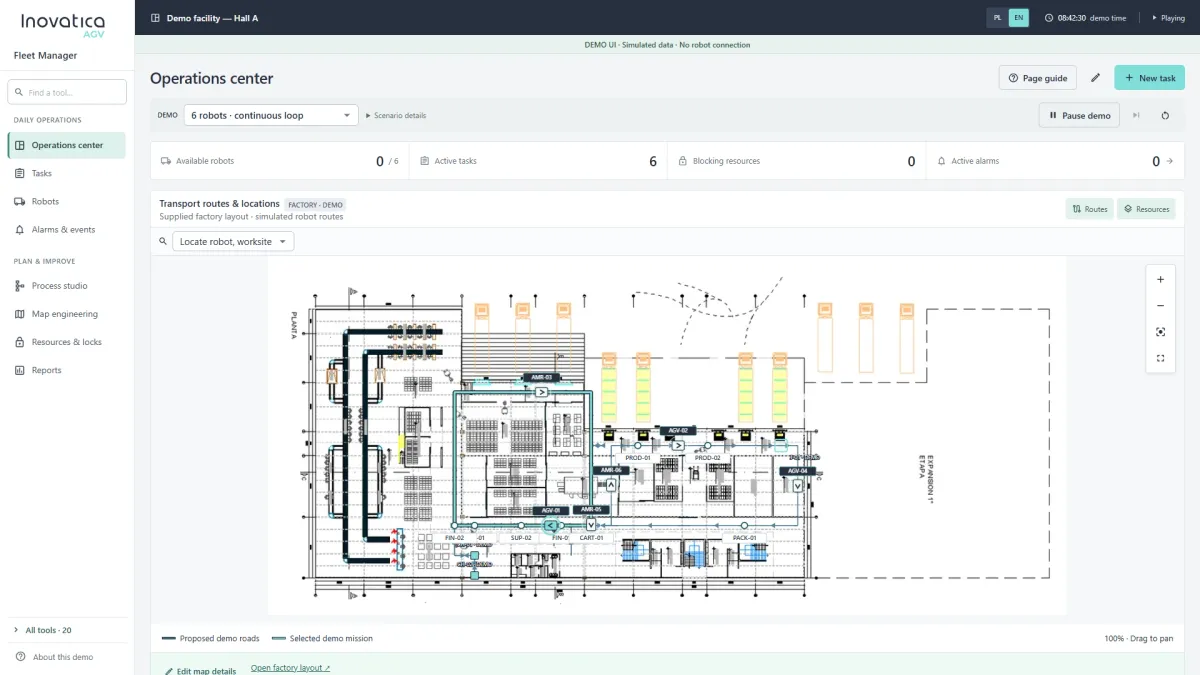
The five stages comprised analysis and planning, infrastructure integration, vehicle programming and tests, staff training, and a pilot. Planning defined routes, loading and unloading points and vehicle motion parameters. Infrastructure work covered route markings, space organization and request tablets.
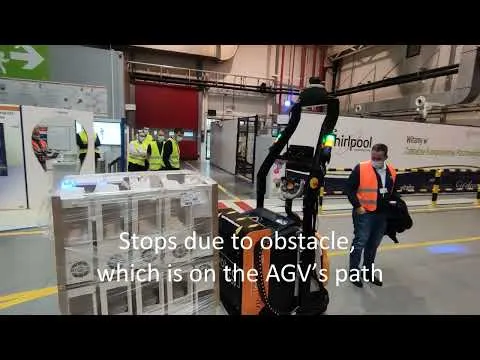
Vehicle configuration addressed the selected tasks, obstacle response and safety rules, followed by tests in actual operating conditions. Warehouse and production teams were trained to work safely with AGVs. The pilot monitored throughput, safety and the way operators interacted with the new system.
Outcomes
The result was a cleaner transport model, better timing of pallet movement and a more stable internal logistics process. The project also created a stronger foundation for further automation steps within the plant.
Following the improvement in efficiency, Huhtamaki decided to continue the project. The operational outcomes also included better organization of goods movement and storage, more attention to correctly placed pallets and clear aisles, fewer errors and accidental damage — particularly when handling paper rolls — and improved safety and quality of internal logistics.