
Loads and contents
The list connects each carrier code with product, batch, quantity, location and quality status. Filters help find a specific load and flag records that need attention.
Open full screenshot ↗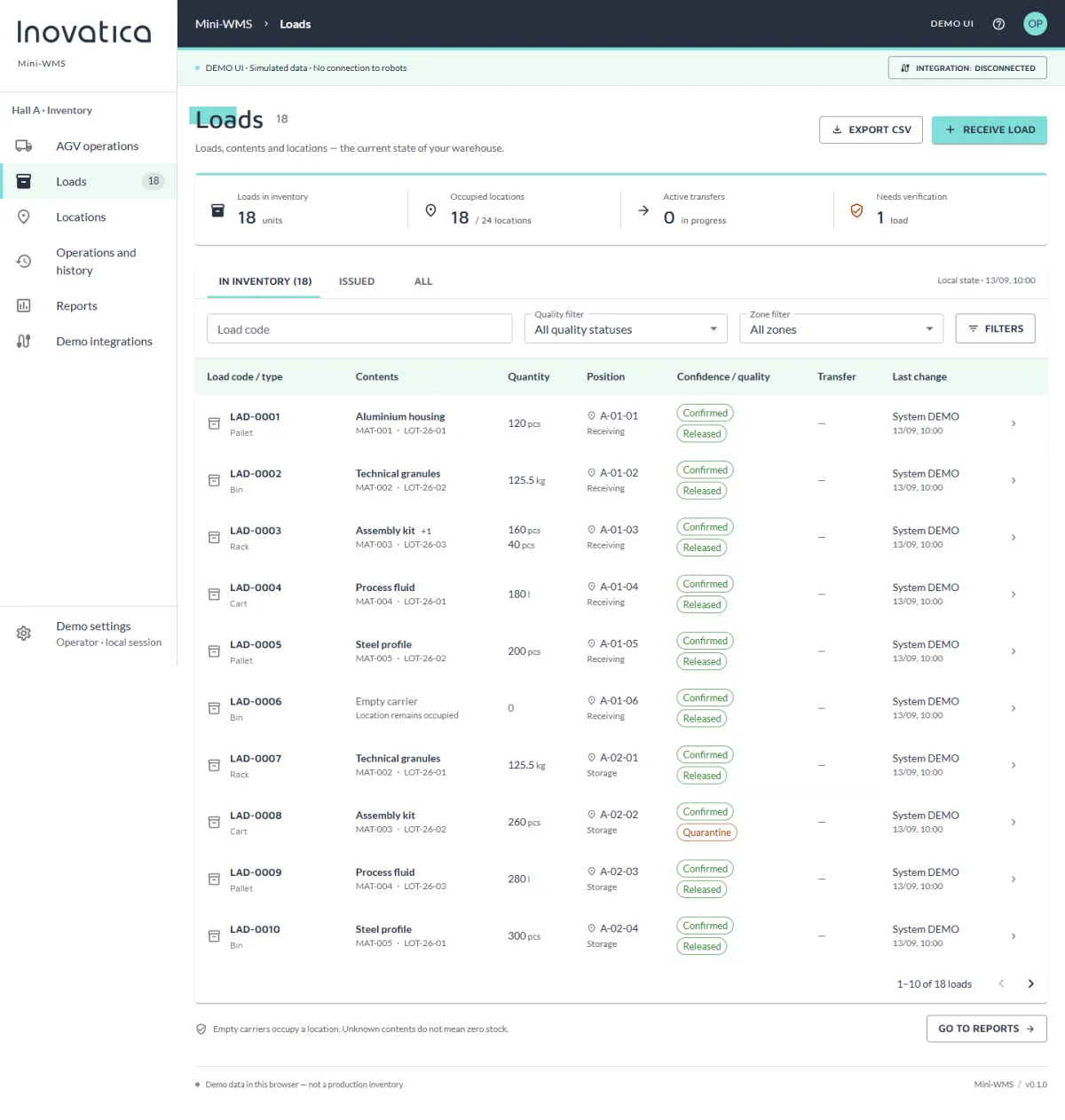
When transport requests live outside inventory, it becomes harder to answer three questions: what is on a pallet, where is the load, and is the destination free? Mini‑WMS brings those facts into one workflow. Operators can inspect loads and locations, prepare an AGV request, and use pickup and delivery confirmations to update the recorded state.
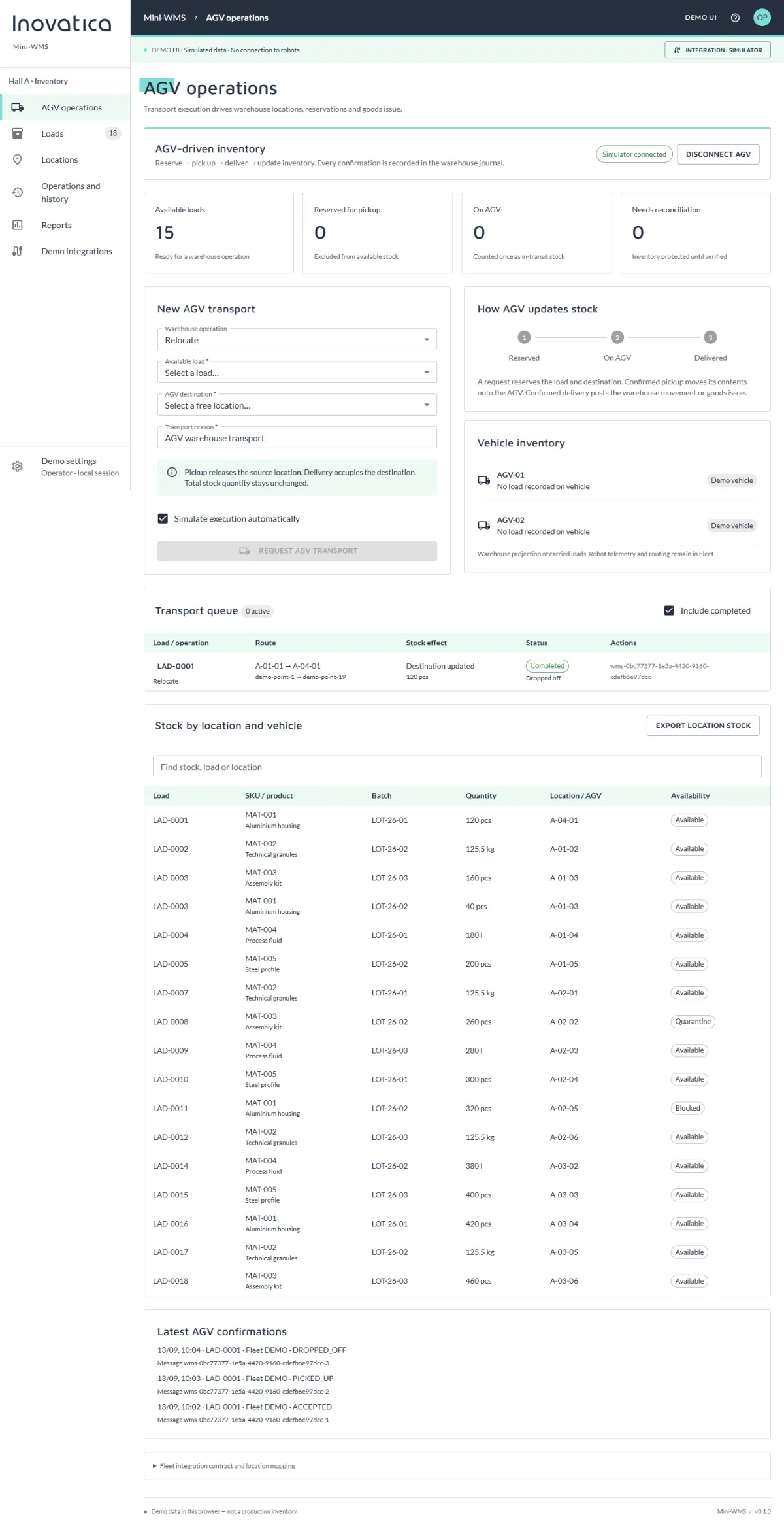
A request reserves the load and destination. Subsequent confirmations show whether the load is waiting, on a vehicle or delivered.
Carrier, product, batch, quantity and quality status create a coherent inventory record.
A floor plan and location list show occupancy, availability and fleet-point mapping.
The system reserves the load and destination before a mission reaches the AGV execution layer.
Pickup moves the load onto the vehicle; confirmed delivery updates its location or goods issue.
The list connects each carrier code with product, batch, quantity, location and quality status. Filters help find a specific load and flag records that need attention.
Open full screenshot ↗The hall view shows which places are occupied or available. Location details reveal inventory, transport reservation and the related fleet point.
Open full screenshot ↗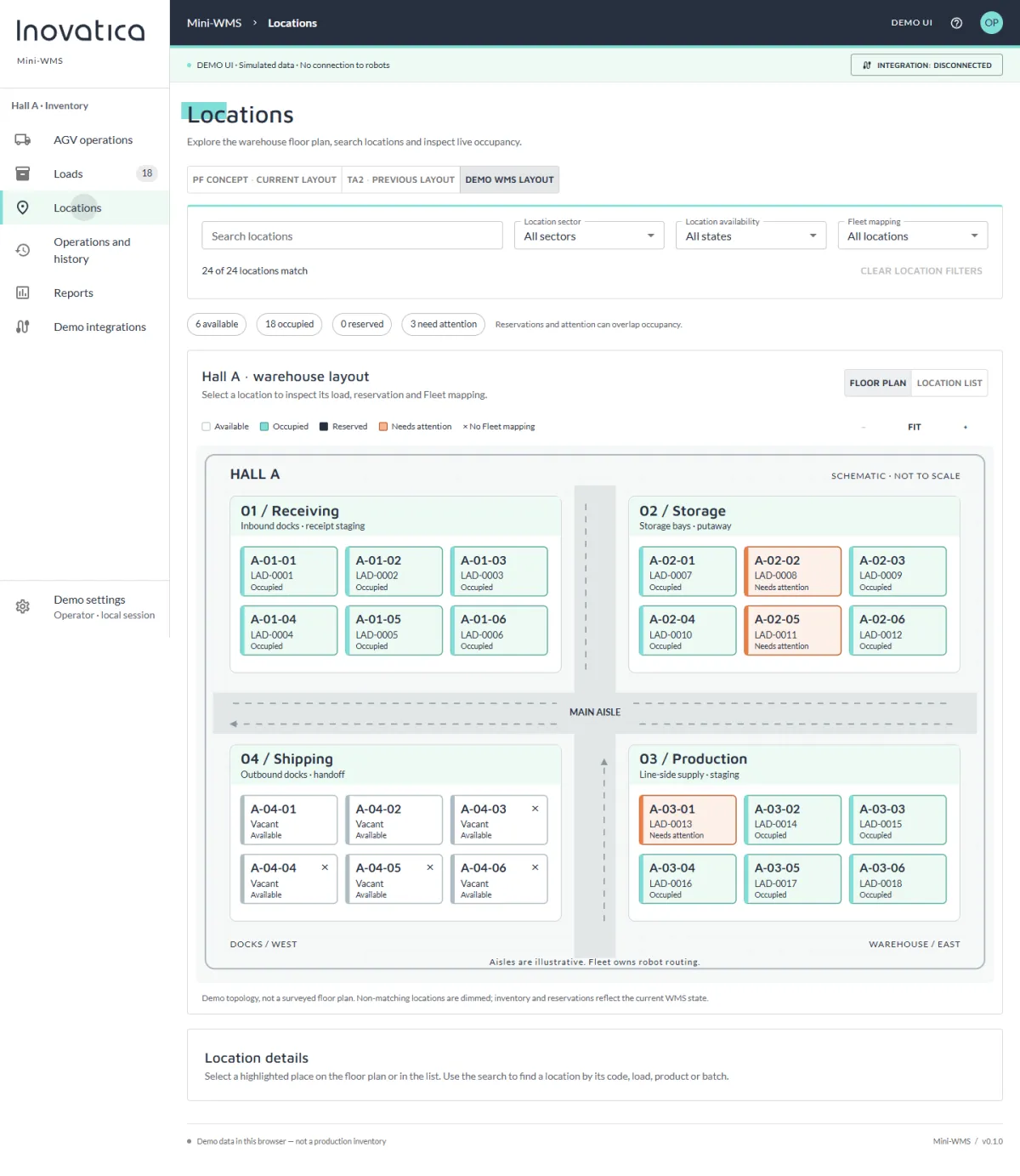
The stock report separates total, available, reserved and in-transit quantities. Data can be filtered, reconstructed for a chosen time and exported.
Open full screenshot ↗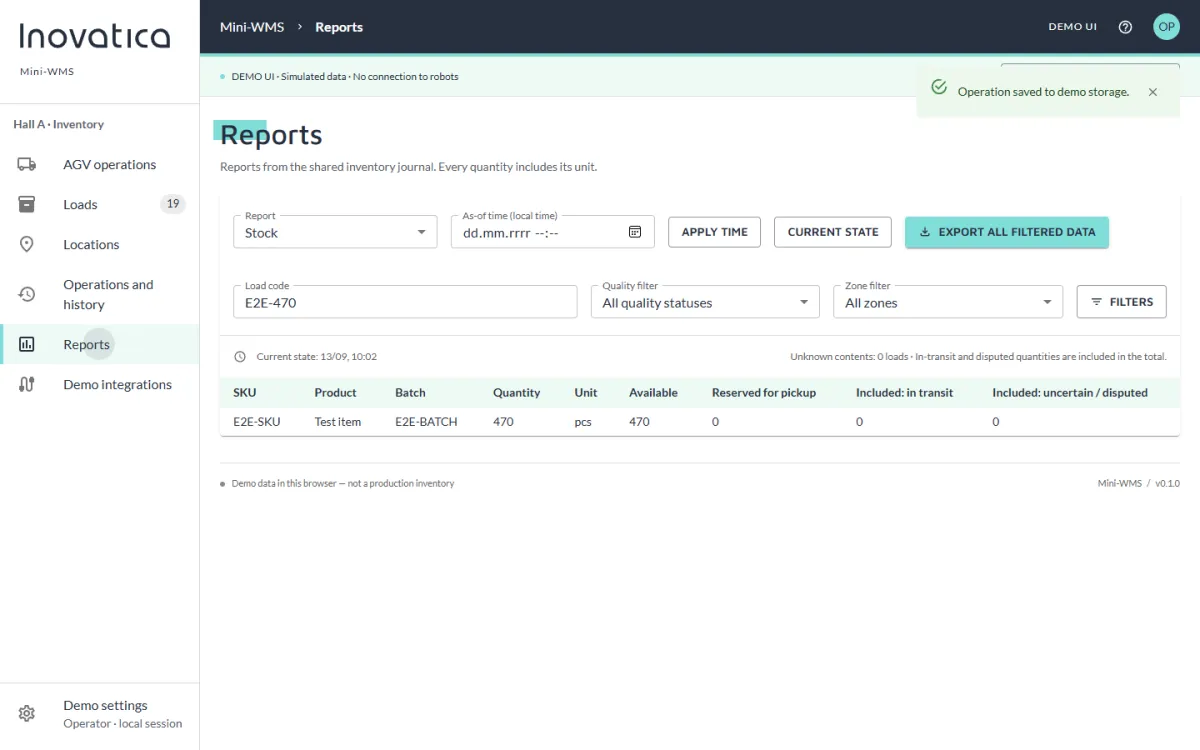
Mini‑WMS owns loads, addresses, reservations, availability and the change journal. Fleet management assigns missions to vehicles and directs their movement on site. Connecting the layers ties physical transport to the current inventory state.
Execution confirmations return to Mini‑WMS inventory.
These screenshots come from a standalone UI demo with simulated data. Fleet and ERP connections are simulators; the application is not connected to physical robots or a production database. Connecting a target system requires an adapter for its API, server-side inventory and agreed operating rules.
We can review loads, warehouse addresses, transport requests and the responsibilities of the warehouse and AGV fleet layers.
This site uses cookies for core functionality and basic analytics. By clicking "Got it", you accept their use.
Privacy policy