
Discussions about automation often start with a question: how much does an AGV actually cost in Poland? A single figure rarely captures the whole picture. One vehicle carrying pallets along a simple route has a different budget from a system comprising several robots, integrations, traffic logic and safety measures for mixed traffic.
It helps to distinguish the price of the vehicle from the budget for the complete deployment. The latter matters most to the customer, because the whole project determines the return on investment.
What affects the price of an AGV?
The main cost factors usually include:
- vehicle type and load capacity;
- lifting height and attachments;
- navigation system and operating accuracy;
- number of pickup and placement points;
- integration with doors, conveyors, PLCs, WMS or ERP;
- safety requirements and mixed-traffic rules;
- commissioning, testing and support after commissioning.
Two projects described simply as “an AGV for pallets” can therefore have very different budgets.
Example 1: simple horizontal pallet transport
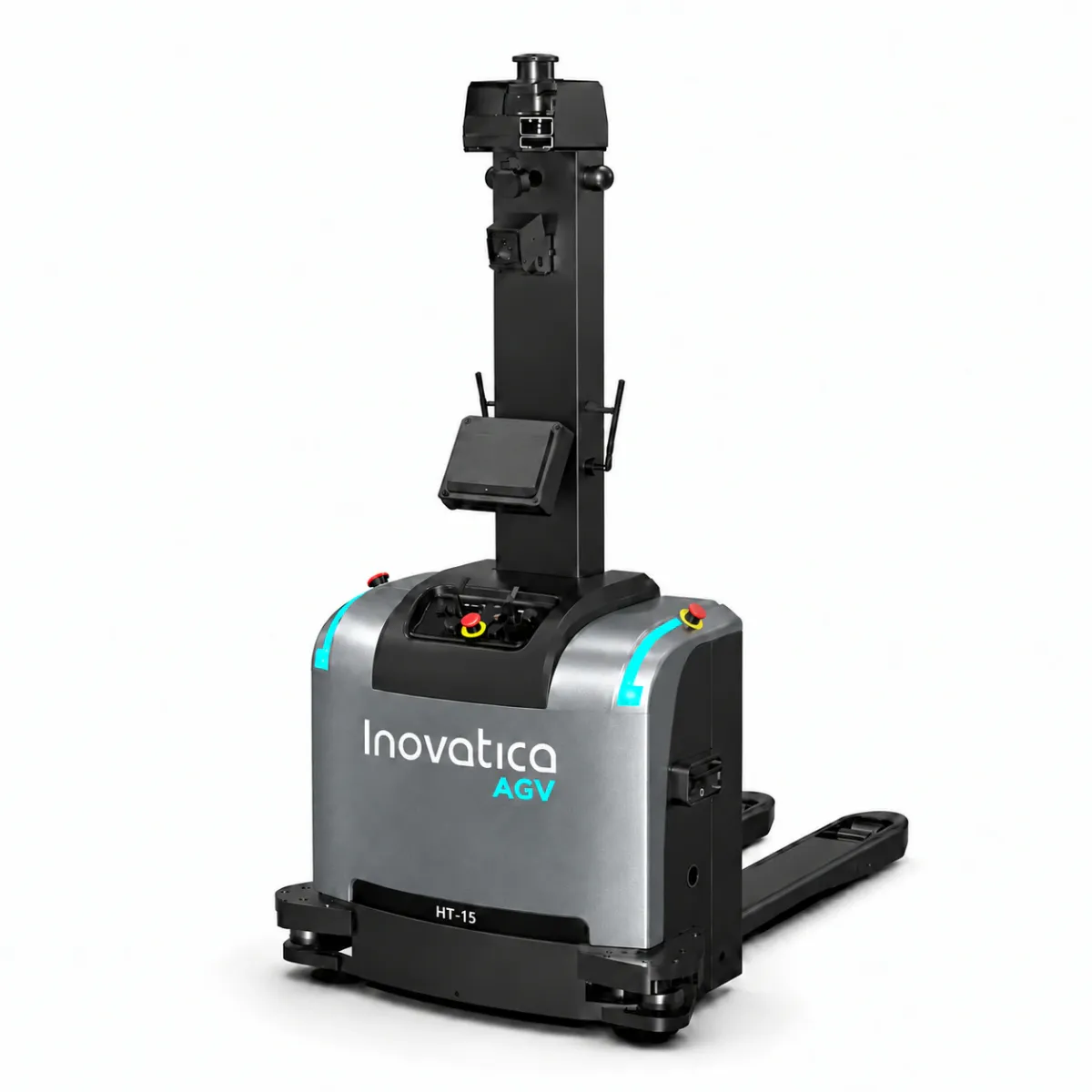
A straightforward starting scenario is a single AGV regularly carrying pallets along a defined route between two or three areas. This usually involves a limited number of pickup and delivery points and relatively simple integration logic.
The vehicle alone may have a budget of around EUR 60,000. With a simple deployment scope, the first project stage in Poland may fall within approximately PLN 300,000–450,000 net.
This can be a useful starting point for companies assessing whether a process has potential for further automation.
Example 2: an autonomous pallet truck or stacker
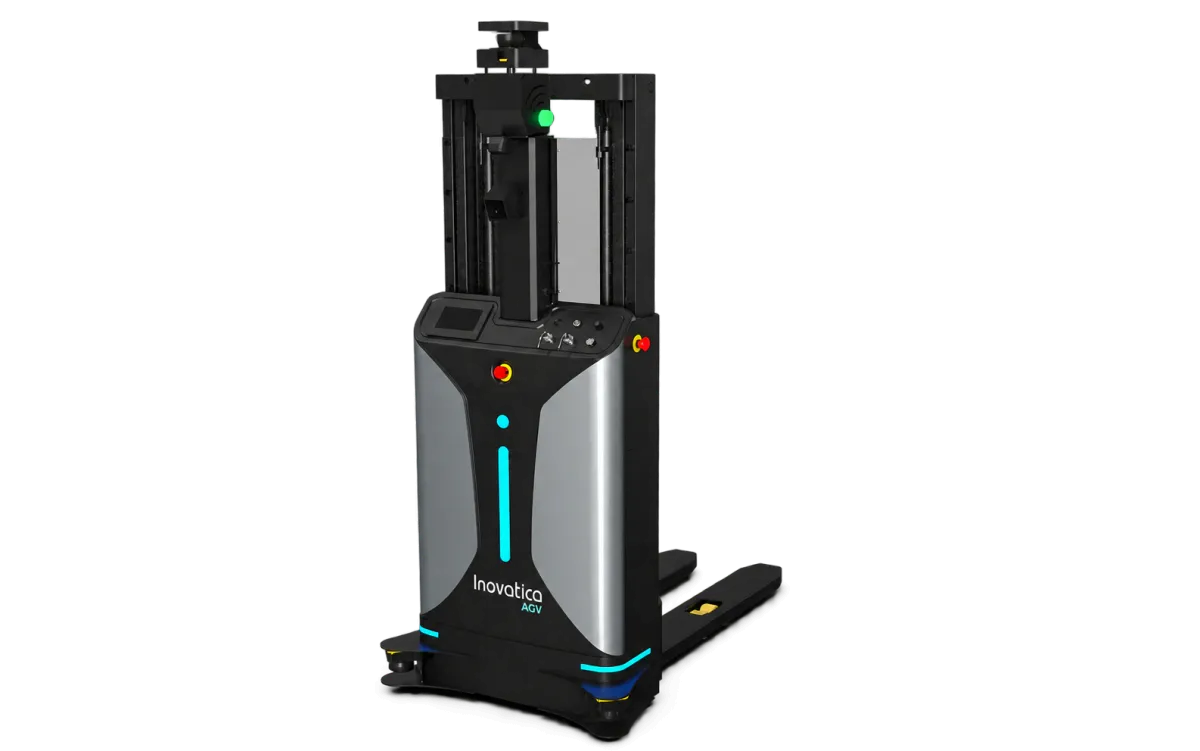
When a project requires pallet pickup and placement as well as travel, the price increases with process requirements. This is particularly relevant where precise placement, rack operations or several buffer areas are involved.
In these cases, the vehicle price can range from approximately EUR 75,000 to EUR 200,000. The complete deployment budget in Poland, including integration, safety and commissioning, can exceed PLN 500,000 net, reaching PLN 1–1.5 million net for more extensive scenarios.
At this stage, the robot’s price alone is not enough to assess the project. The number of trips the system will handle each day and the resulting effect on process costs become more significant.
Example 3: high-bay AGVs and more complex process logic
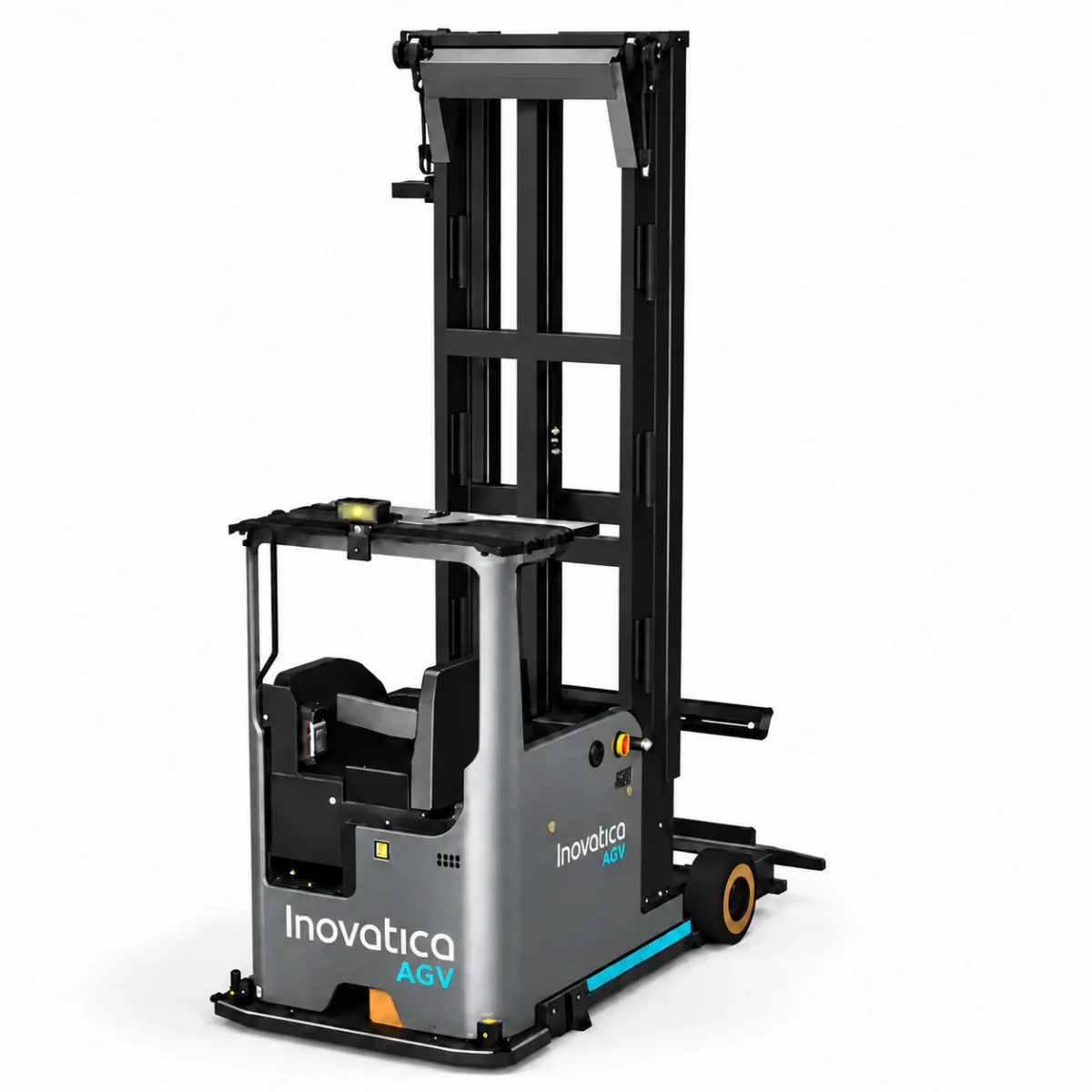
More demanding projects involve higher storage levels, additional process dependencies or synchronisation with site infrastructure.
The vehicle alone may cost approximately EUR 150,000–200,000, while the deployment budget in Poland can reach PLN 1.5 million or more, particularly where the project includes several vehicles, traffic logic, integrations and FAT/SAT acceptance tests.
These projects make the distinction between the price of an AGV and the cost of an AGV system especially clear.
What can be missing from a simplified quotation?
An initial focus on the vehicle’s list price can overlook parts of the project budget:
- fleet manager configuration;
- site mapping and route preparation;
- pallet drop-off stations and pickup interfaces;
- integration with external equipment;
- FAT/SAT acceptance tests;
- training for operators and maintenance teams;
- service support after commissioning.
These are parts of the deployment needed to achieve stable operation.
How to interpret these budgets
Treat the ranges as indicative starting points for a discussion, rather than a price list. Prices depend on exchange rates, component availability, integration scope and the supplier’s responsibilities.
Useful questions include:
- What does a practical first stage of automation cost?
- How many staff hours or trips should the system take over?
- What payback period is expected for that scope?
- Can the deployment be expanded without rebuilding the entire architecture?
If staffing is expressed as full-time-equivalent positions, relate it to the working time actually covered by the selected flow. Trip counts, operator hours and full-time equivalents describe different measures of that scope, rather than an automatically achieved saving.
Assess the complete process
Simpler AGV projects in Poland may start at several hundred thousand zloty, while more extensive deployments can exceed one million. The vehicle price is only part of the budget. Integration, safety, commissioning and the actual operating model also determine the project’s outcome.
Start with the process when discussing AGV costs. This connects the budget to a realistic return-on-investment calculation.