New technologies in the context of 5G
The expression “cutting-edge technology” often describes devices or technological achievements that use the latest, advanced IT solutions. In other words, technology at the frontier of knowledge.
The use of 5G networks in industry and logistics in Poland certainly fits that description. The distinction matters: it is the application, rather than the network itself. At the time of writing, we see no other practical wireless-network alternative offering the same promises as 5G:
- Enhanced Mobile Broadband (eMBB): the promise of download rates of up to 20 Gbps.
- Ultra Reliable Low Latency Communications (URLLC): the promise of radio-interface latency below 1 millisecond, with 99% reliability and, we hope, several more nines after the decimal point.
- Massive Machine Type Communications (mMTC): the promise of supporting up to one million internet-connected devices within one square kilometre.
These parameters are not delivered by the consumer 5G networks available from many operators as of November 2021. One reason is the use of frequencies that were not originally intended for this technology. Operators are using their existing frequency allocations to provide 5G, which also prevents the network from reaching its target parameters. Here, however, we are discussing the breakthrough expected from 2023 and the prospect of private 5G networks in the 3400–3800 MHz band. Businesses would be able to use 5G on a licensed frequency as a private network covering a selected part of their premises. We consider this a genuine technological breakthrough, hence the reference to cutting-edge technology for Industry 4.0 and logistics in Poland. The following arguments draw on tests we carried out during the S5 acceleration programme at the Łódź Special Economic Zone. We used Polkomtel's 5G network for autonomous-forklift control, monitoring and safety systems.
1. Low latency in the 5G radio interface
Low latency results not only from the quality of suppliers' equipment or the technical specification of the new 5G wireless technology, but above all from operation in a licensed band. This protects the band from other signals of the kind that frequently interfere with Wi-Fi. At customer sites, we regularly observe overlapping network frequencies or channels disrupting one another, compounded by beacons and other devices operating at Wi-Fi frequencies. By contrast, 5G uses licensed spectrum allocated directly by Poland's Office of Electronic Communications (UKE) and protected by telecommunications regulations.
Wi-Fi networks are very good solutions and will probably remain with us for a long time, but the coming change is already visible, particularly for critical services. It is also worth addressing the belief that transfer speed is 5G's main advantage. Speed matters, but there is another factor. As unlicensed networks, Wi-Fi networks use a “listen before talk” procedure: first they check channel availability, then transmit the message. This makes an enormous difference in robotics, where timing in the control loop matters greatly, especially for a two-tonne autonomous forklift travelling at 10 km/h.
2. High 5G reliability and critical safety systems
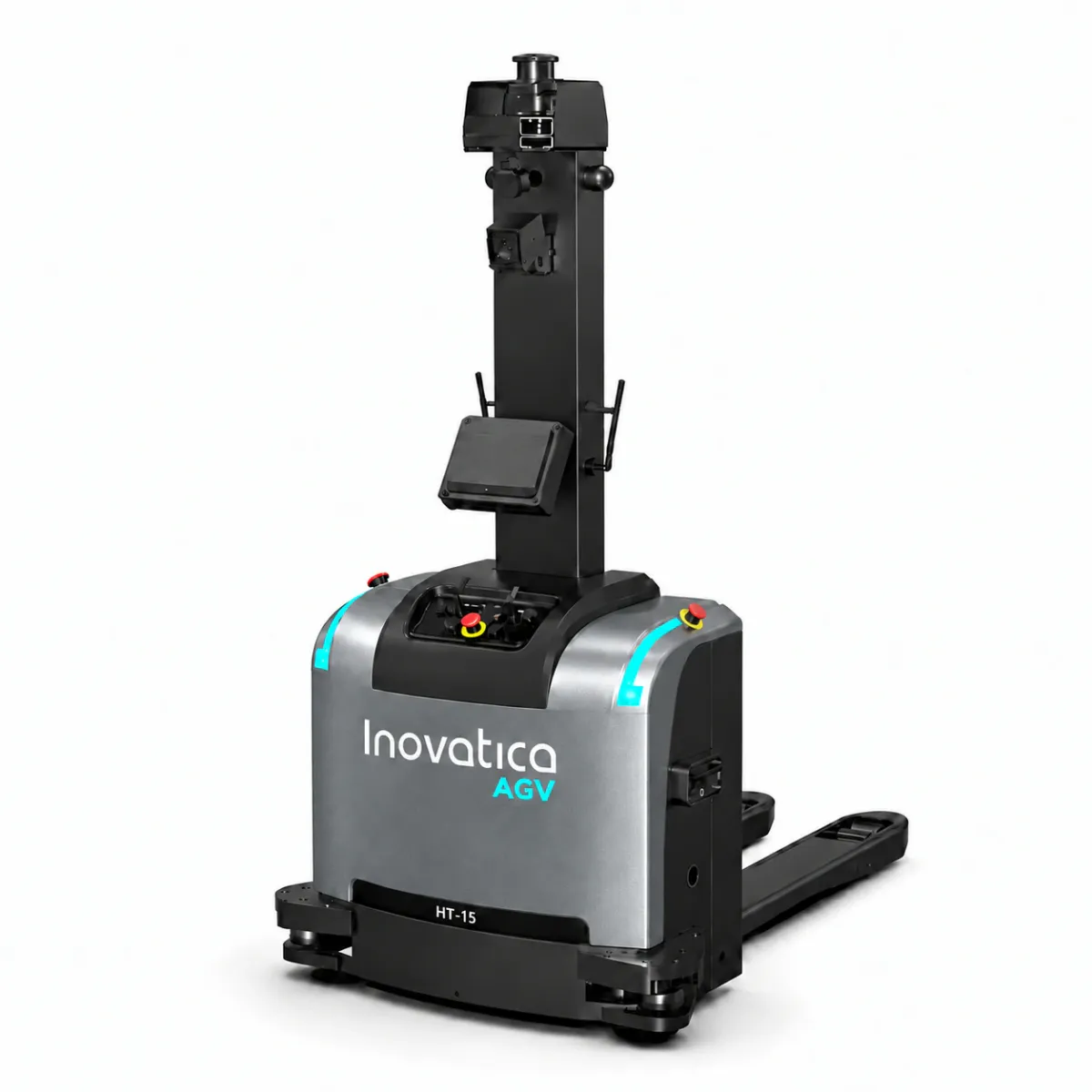
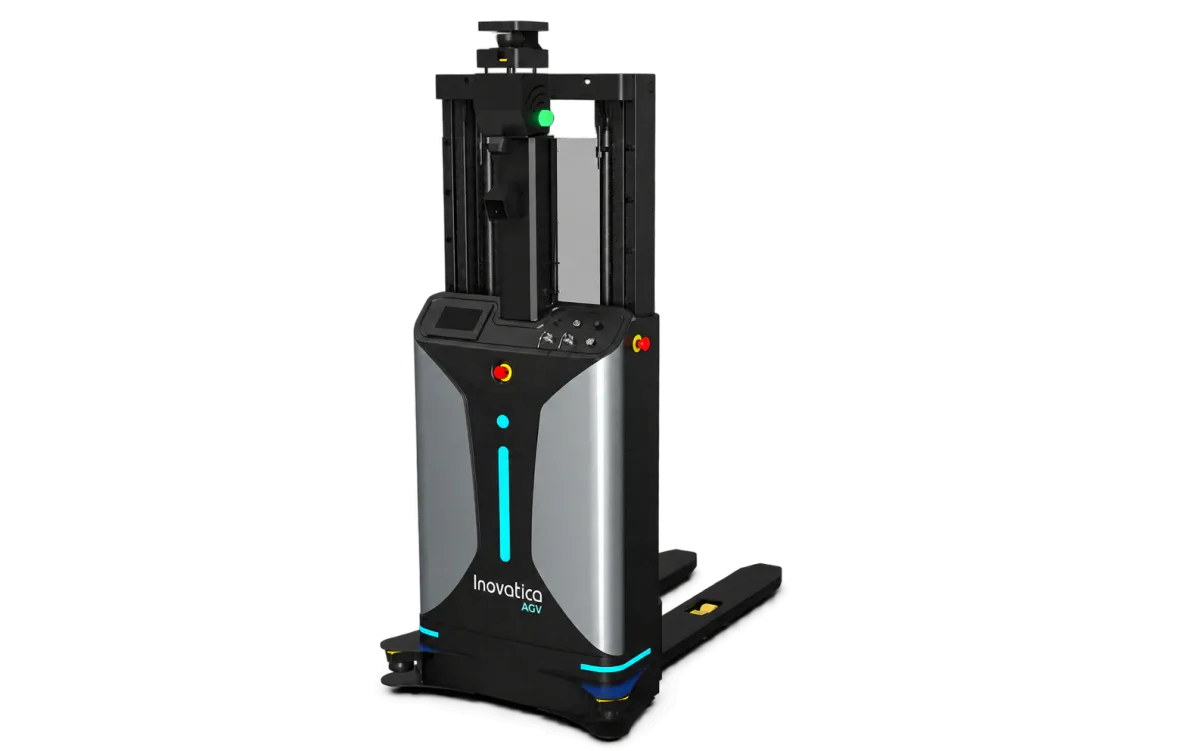
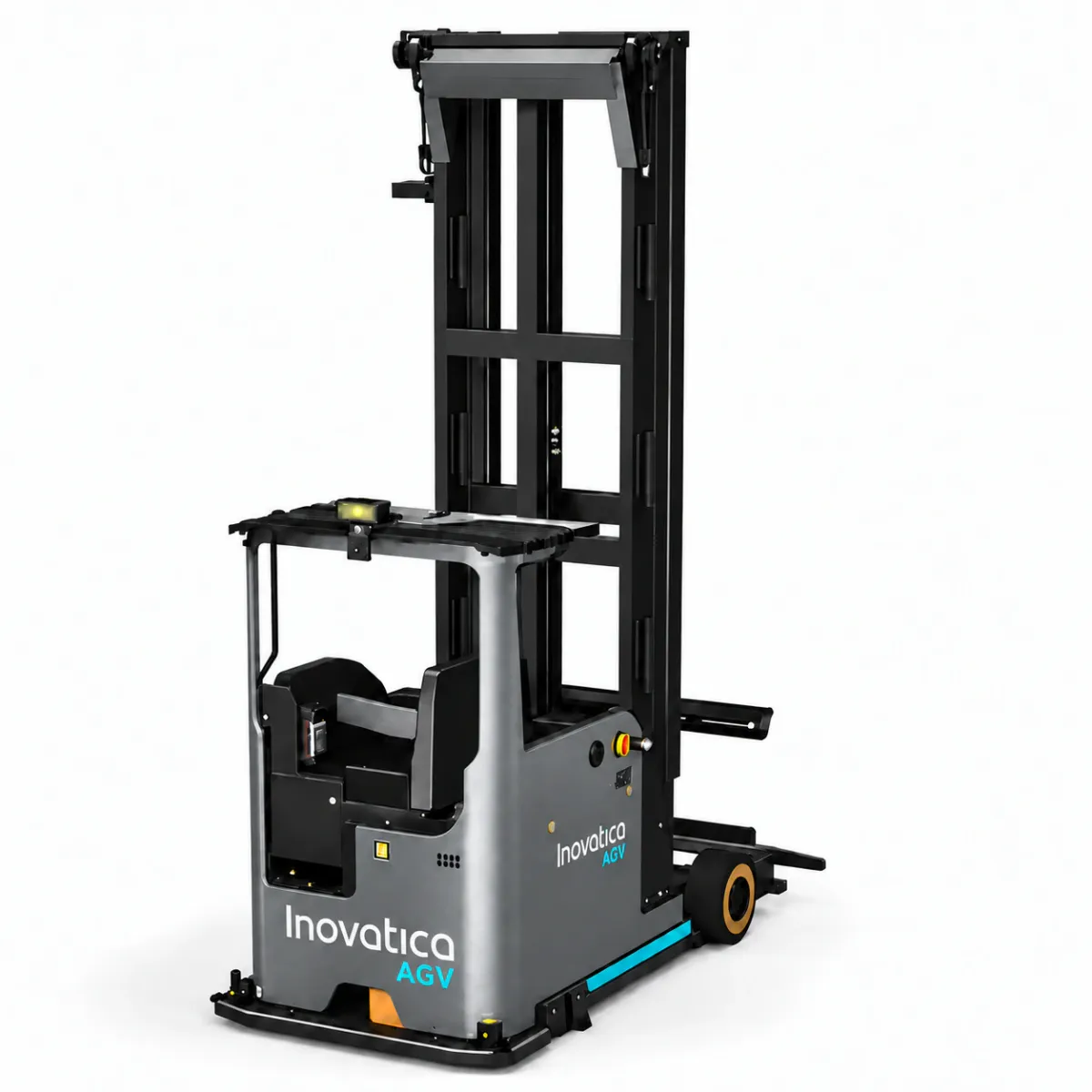
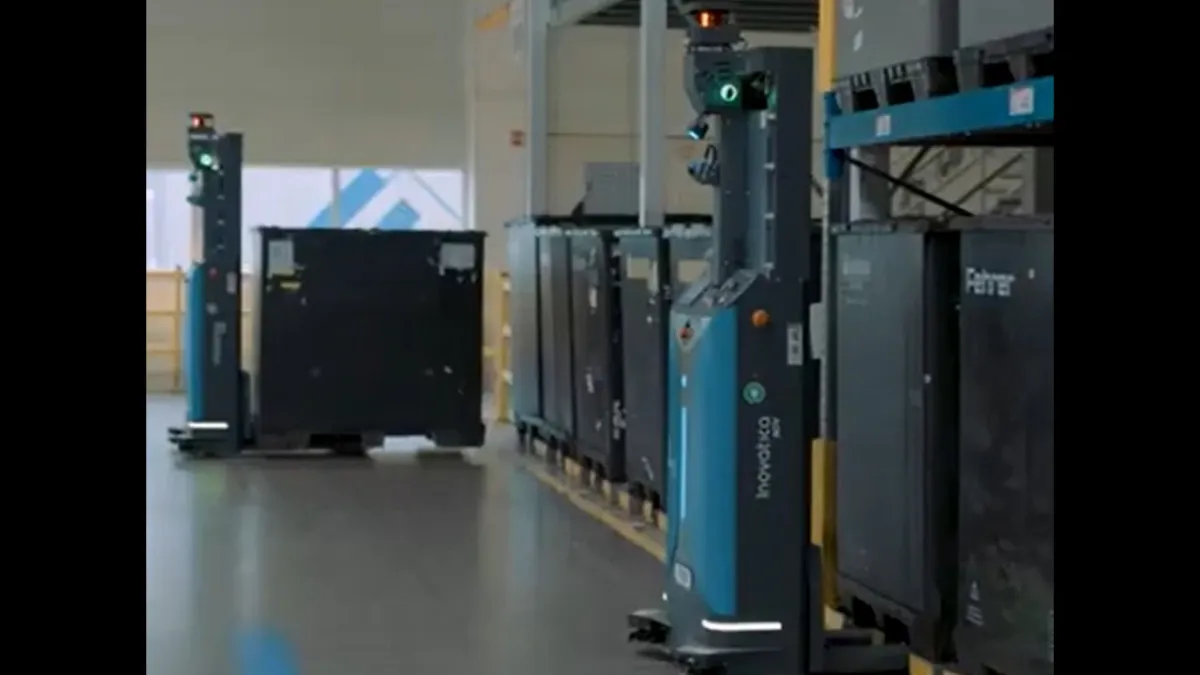
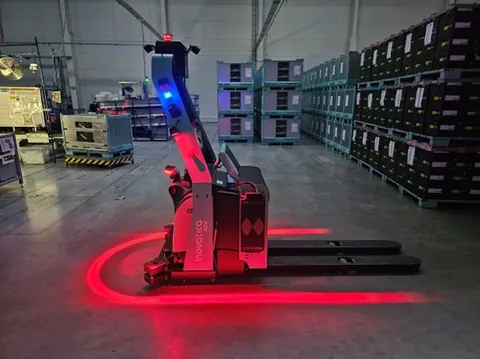
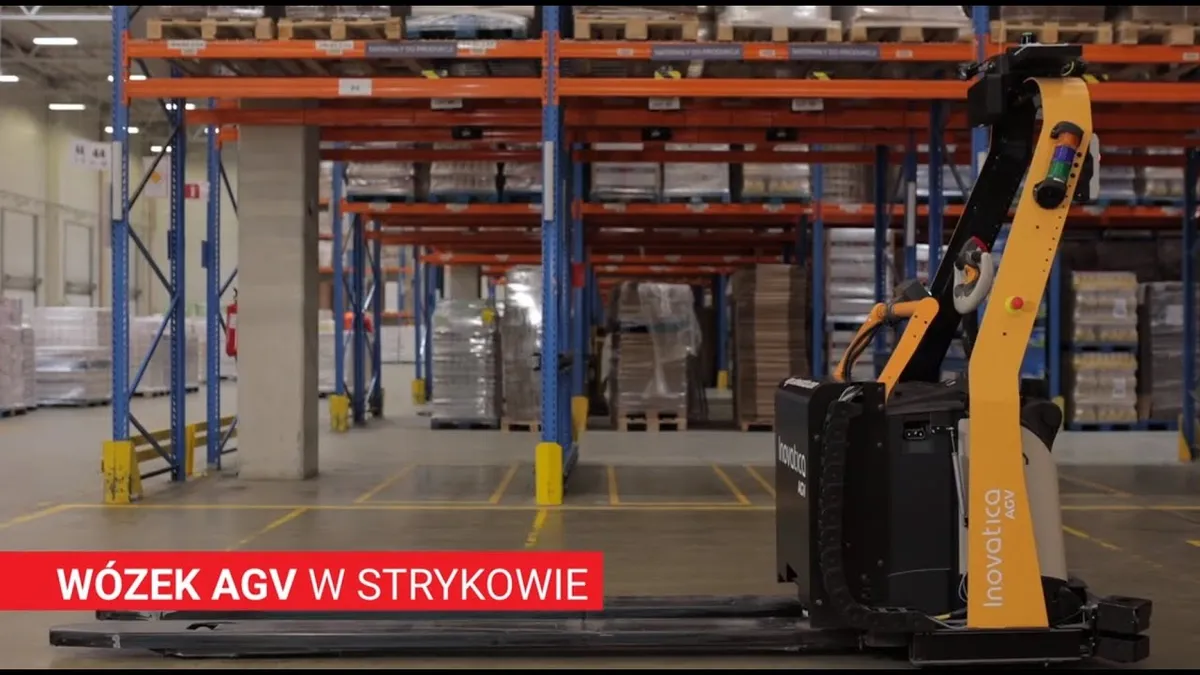
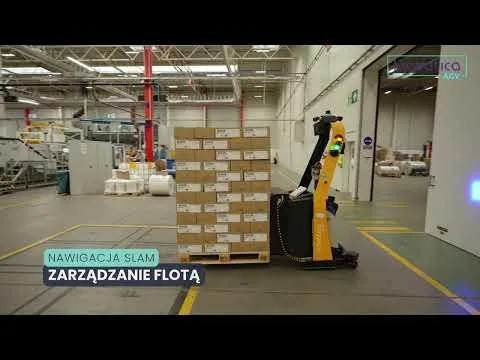
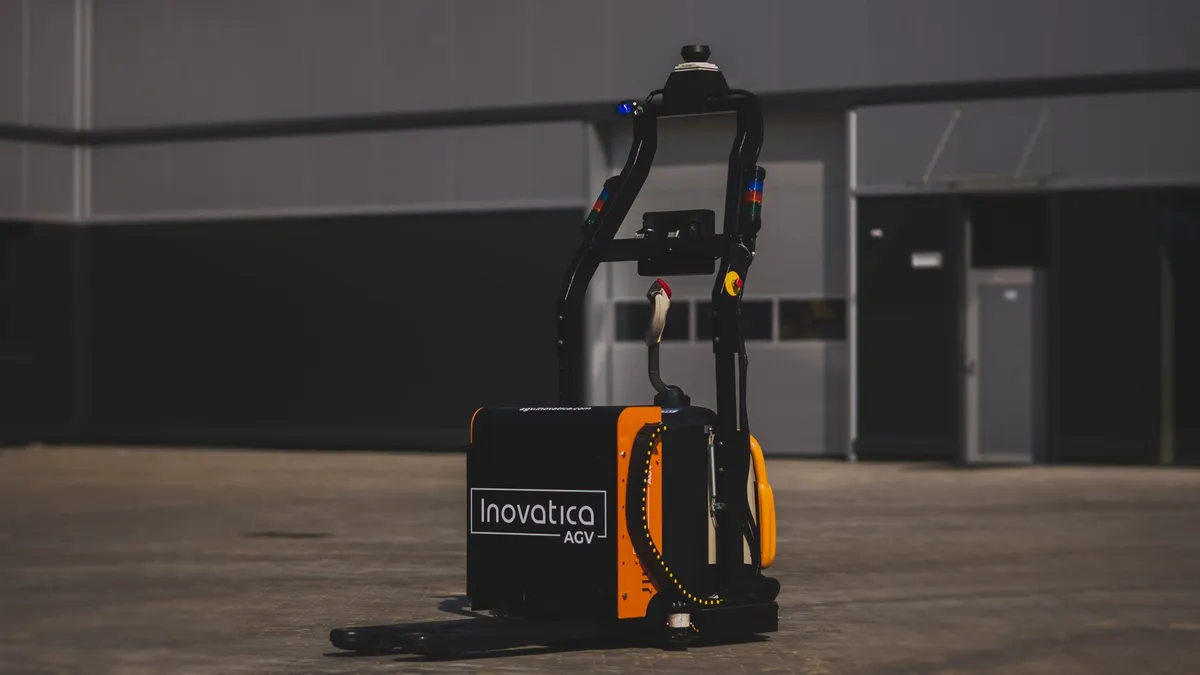
We conducted our tests using an autonomous forklift. A machine that weighs over a tonne on its own, transports loads and, above all, works among people creates considerable responsibility and challenges for safety and communication systems.
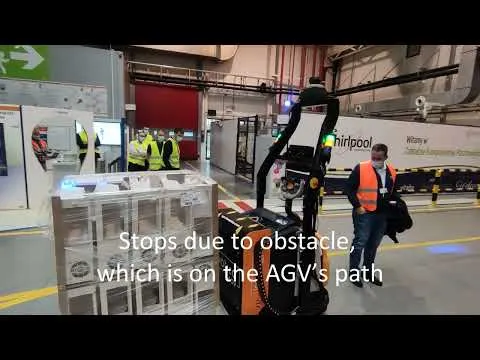
A machine or production line introduced into Poland, or a machine manufactured or substantially modernised or modified in Poland, must carry CE marking. Preparing a CE declaration requires appropriate safety analysis based on a risk assessment. Accident-risk assessment considers every element affecting safety, including reliable wireless communication. In our assessment, 5G was a wireless-transmission network that allowed the risk to be estimated at a level permitting its use in mobile-robot safety systems. This resulted from the reliability of both the network and the transmission equipment. Our risk analysis required a forklift weighing two tonnes, including its pallet, to stop immediately when a virtual emergency “STOP” button was used. Fractions of a second matter in an industrial environment. A forklift's typical warehouse speed is 8–10 km/h, so even an additional 50 ms of signal-transfer time may be too much to avoid an accident. We observed that switching between Wi-Fi routers could take considerably longer. The risk of a forklift stopping too frequently because of slow Wi-Fi communication is a significant difficulty in AGV deployment. Even the shortest loss of signal availability immediately activates safety procedures and brings the vehicle to a stop.
3. Private 5G networks for business expected in 2023
At the time of writing, no other available wireless network offers response times as fast as 5G. The control loop — signal transmission and processing by every element involved in the process — requires the lowest possible data-transfer latency. This is why enabling private 5G networks is so important.
The Office of Electronic Communications is working towards publishing clear, simple rules by the end of the following year for commercial allocation of access to the 3400–3800 MHz 5G band to businesses.
“We want every business to be able to apply very simply, for example by completing a questionnaire and sending it to UKE,” confirmed Jacek Oko, President of UKE, at the 5G Summit organised by the Łódź Special Economic Zone.
This would allow companies to create a private 5G network within a defined area, such as a factory or warehouse, replacing existing Wi-Fi with very high-quality wireless connectivity. Moreover, 5G's parameters and reliability make it realistic to consider replacing wired connections such as Ethernet. This matters because an increasing number of warehouse machines are freely moving robots, for which wired communication is impractical.
Summary
Equipment manufacturers are already prepared for these changes. At the 5G Summit, Martin Mellor, Ericsson's country manager for Poland, assured us that the company offered suitable equipment for private 5G networks. We received a similar assurance from representatives of a leading mobile operator, which was ready to introduce a private 5G service as soon as the regulator, UKE, began issuing permits for its use at industrial sites. Industry 4.0 is happening here and now, supported by cutting-edge technology: the 5G network.
English transcript of the original infographic
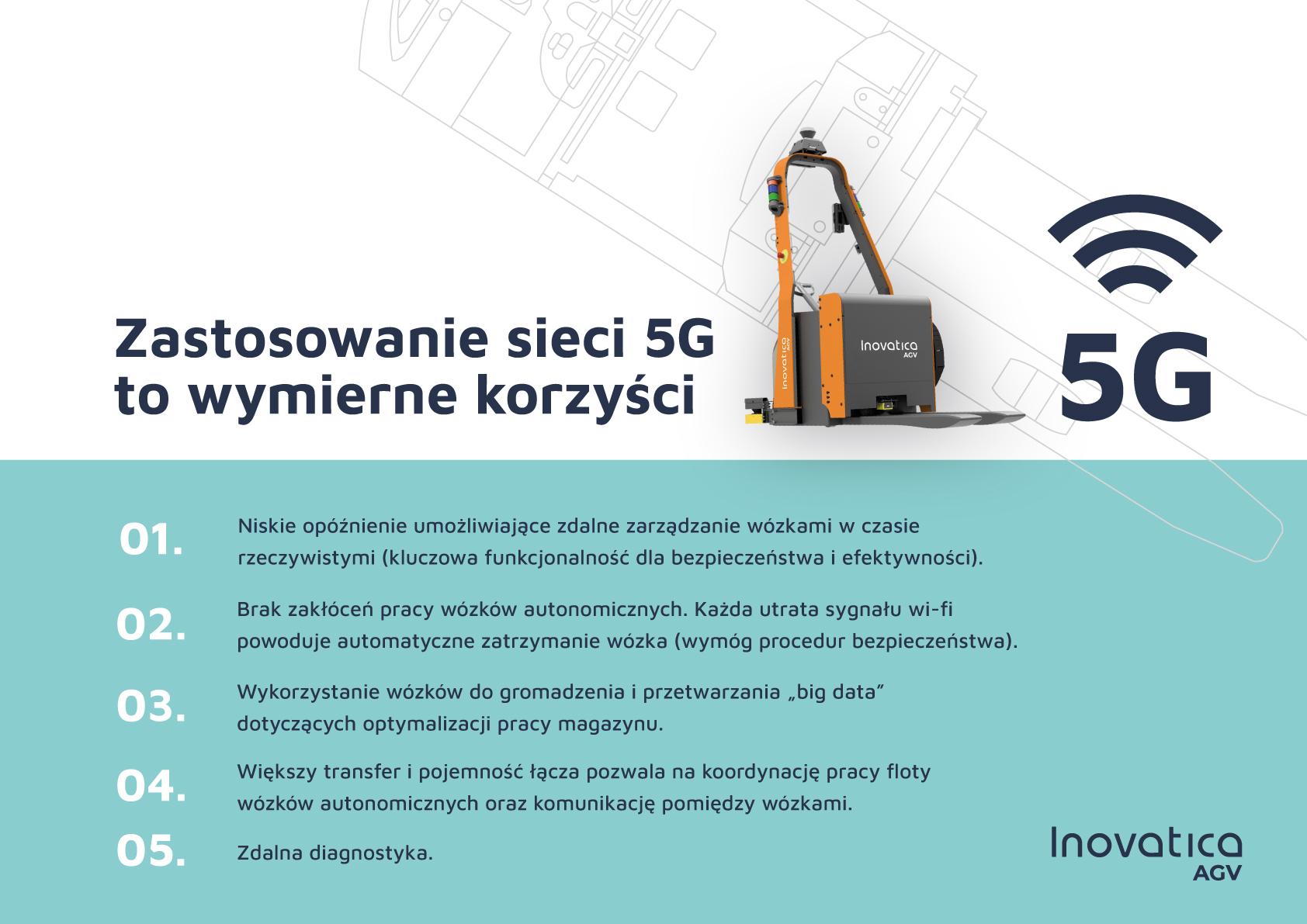
The original Polish illustrations read “5G network for Industry 4.0” and “Using a 5G network brings measurable benefits”. The second infographic summarises five benefits described in the historical material:
- Low latency enables real-time remote management of forklifts, a key function for safety and efficiency.
- Uninterrupted autonomous-forklift operation: each loss of Wi-Fi signal causes the forklift to stop automatically, as required by the safety procedures.
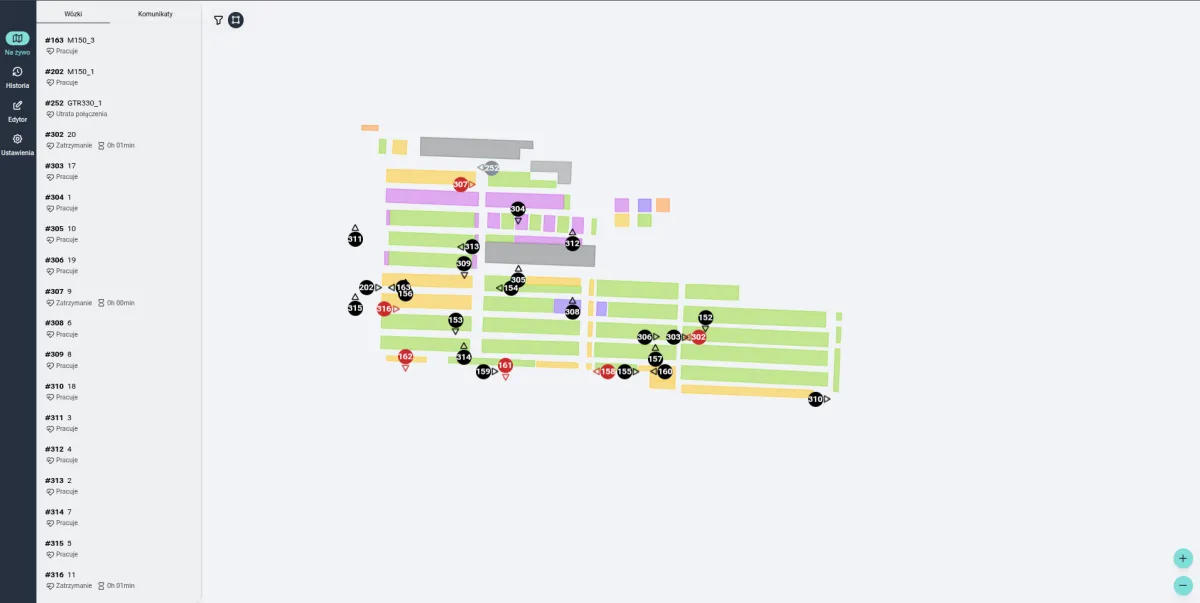
- Using forklifts to collect and process “big data” for warehouse-operation optimisation.
- Greater transfer rates and connection capacity enable coordination of the autonomous-forklift fleet and communication between vehicles.
- Remote diagnostics.