
The discussion around AGV and AMR used to focus mainly on labour replacement and the direct cost of internal transport. That is still important, but it is no longer the whole story. Today, more companies evaluate automation through a wider lens: throughput, resilience, energy efficiency, process stability and the long-term environmental footprint of plant operations.
Efficiency is no longer only about speed
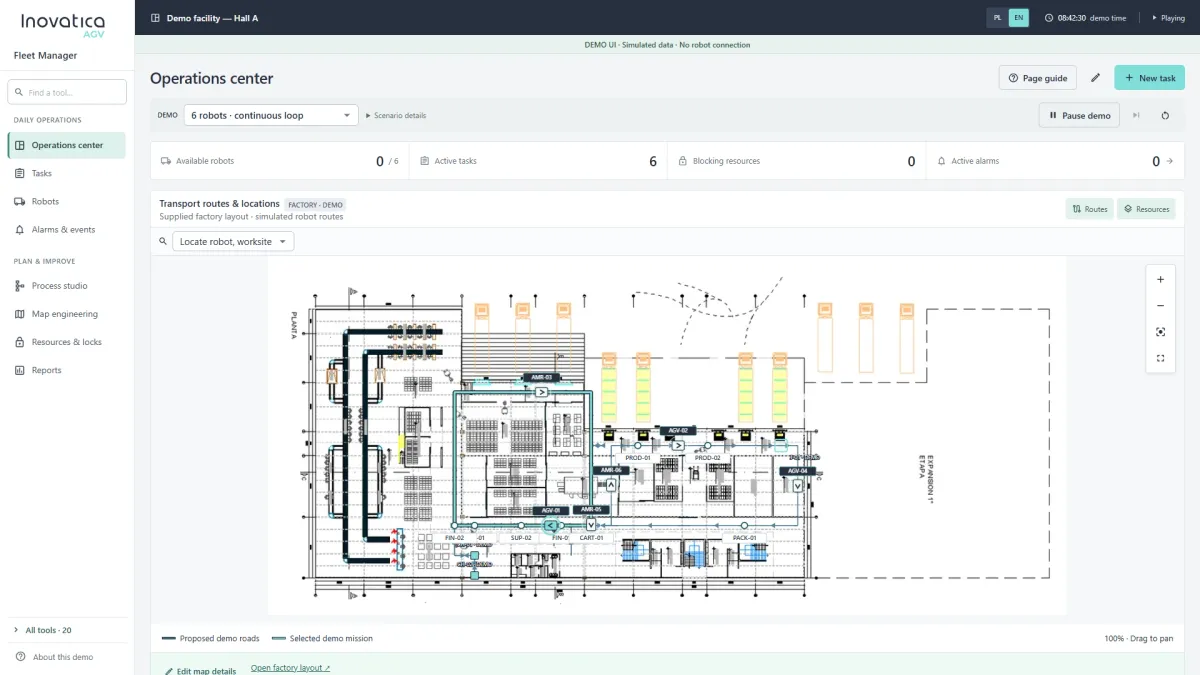
In many internal logistics flows, the biggest losses do not come from one vehicle moving too slowly. They come from waiting, interruptions, route conflicts, repeated handling and the constant need for human coordination. A well-designed AGV system reduces those hidden inefficiencies by turning internal transport into a predictable and orchestrated process.
That means fewer unplanned delays between production and warehouse areas, better route discipline and more stable material flow across shifts. In practice, the real gain often comes not from maximum speed, but from fewer process disturbances and better use of transport capacity over time.
A greener future is driven by better flow, not only by batteries
Sustainability in AGV projects is often reduced to electrification. But a greener operating model is created by something broader: fewer unnecessary trips, lower empty travel, less congestion, less idle time and a better match between transport demand and vehicle movement.
If a plant uses automation only to repeat the same inefficient pattern with a different vehicle type, the environmental benefit stays limited. The real improvement appears when the deployment changes the transport logic itself and removes waste from the flow.
Where AGV can improve both productivity and sustainability
The strongest overlap between efficiency and sustainability usually appears in repetitive flows such as supermarket supply, end-of-line pickup, buffer transport, inter-zone pallet movement or internal warehouse replenishment. These are the processes where unnecessary motion and waiting accumulate quickly and where route orchestration has a measurable effect.
- More predictable transport without constant manual coordination
- Lower empty travel and better use of every route
- Cleaner process data for optimization and future scaling
- A practical path to reducing energy waste inside the plant
Data matters because it changes future decisions
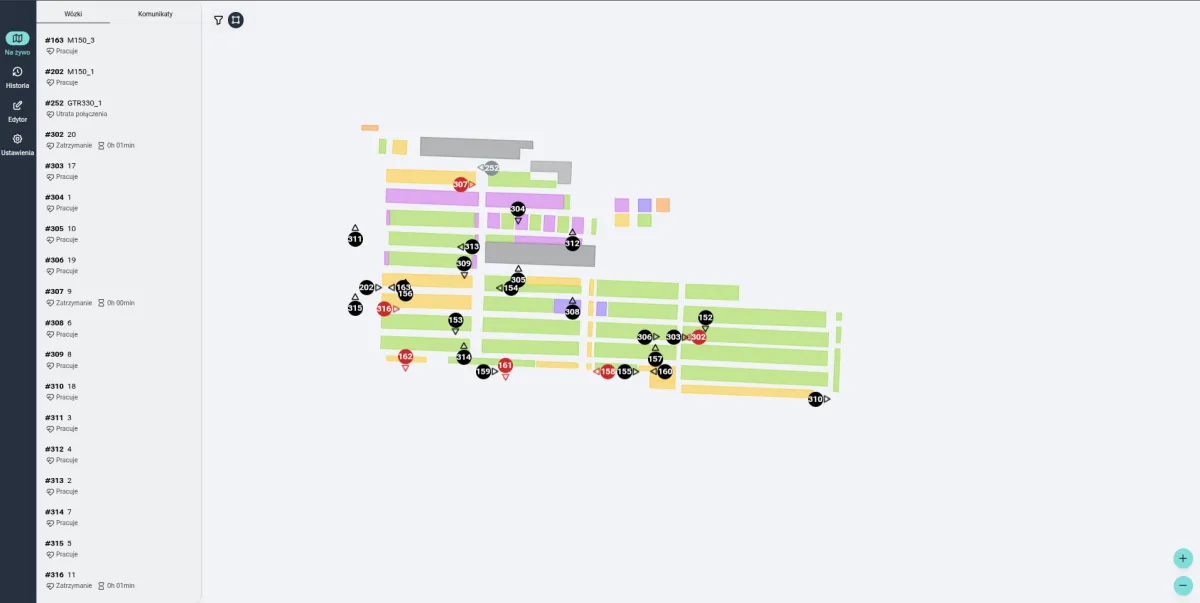
Another reason AGV supports a greener future is visibility. Once transport becomes system-driven, the operation gains data about real trip frequency, waiting times, congestion points, route usage and exception patterns. That creates a much stronger base for future optimization than a process that depends on manual habits and fragmented supervision.
Better data does not only improve the current deployment. It also helps the plant decide where to scale next, which routes should be redesigned and where the next increment of automation can produce the highest operational and environmental return.
Questions worth asking before a rollout
If the goal is to build a system that is both more efficient and more sustainable, the project should start from the process rather than from the robot itself. A useful first step is to evaluate a few practical questions:
- How much time is currently lost in waiting, searching and reassigning transport tasks?
- Which routes create the highest volume of repetitive internal movements?
- How much empty travel can be removed through better orchestration?
- Where does process instability create waste, extra handling or urgent interventions?
- Which transport flows could be made both faster and less energy-intensive at the same time?
Conclusion
AGV and AMR can support a greener future, but not because automation is automatically green by default. The real value appears when the system reduces wasted motion, improves route discipline, lowers instability and gives the plant better control over how internal transport actually works.
When the deployment is designed around process logic instead of equipment alone, higher efficiency and a greener operating model stop being separate goals. They start reinforcing each other.