

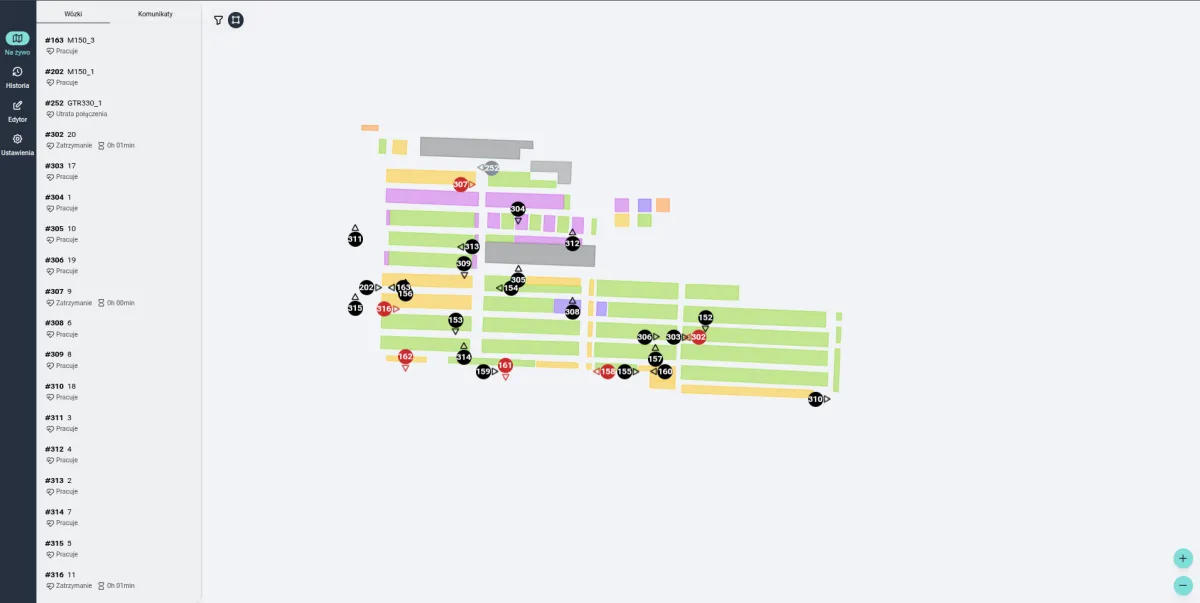

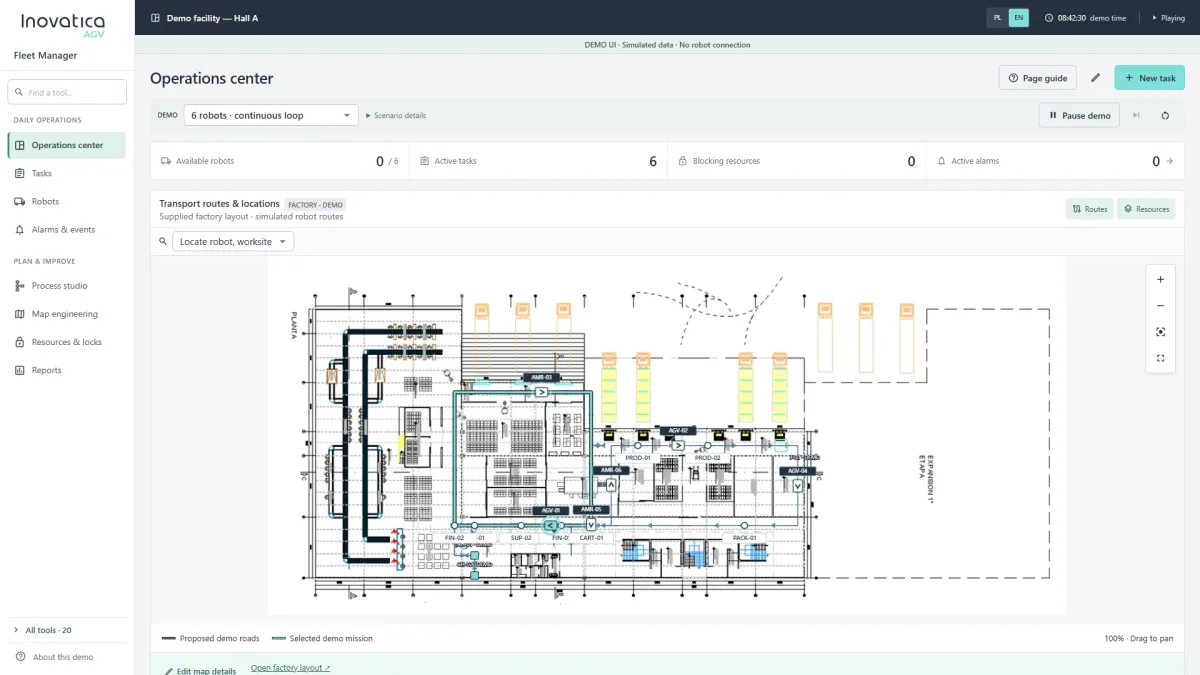
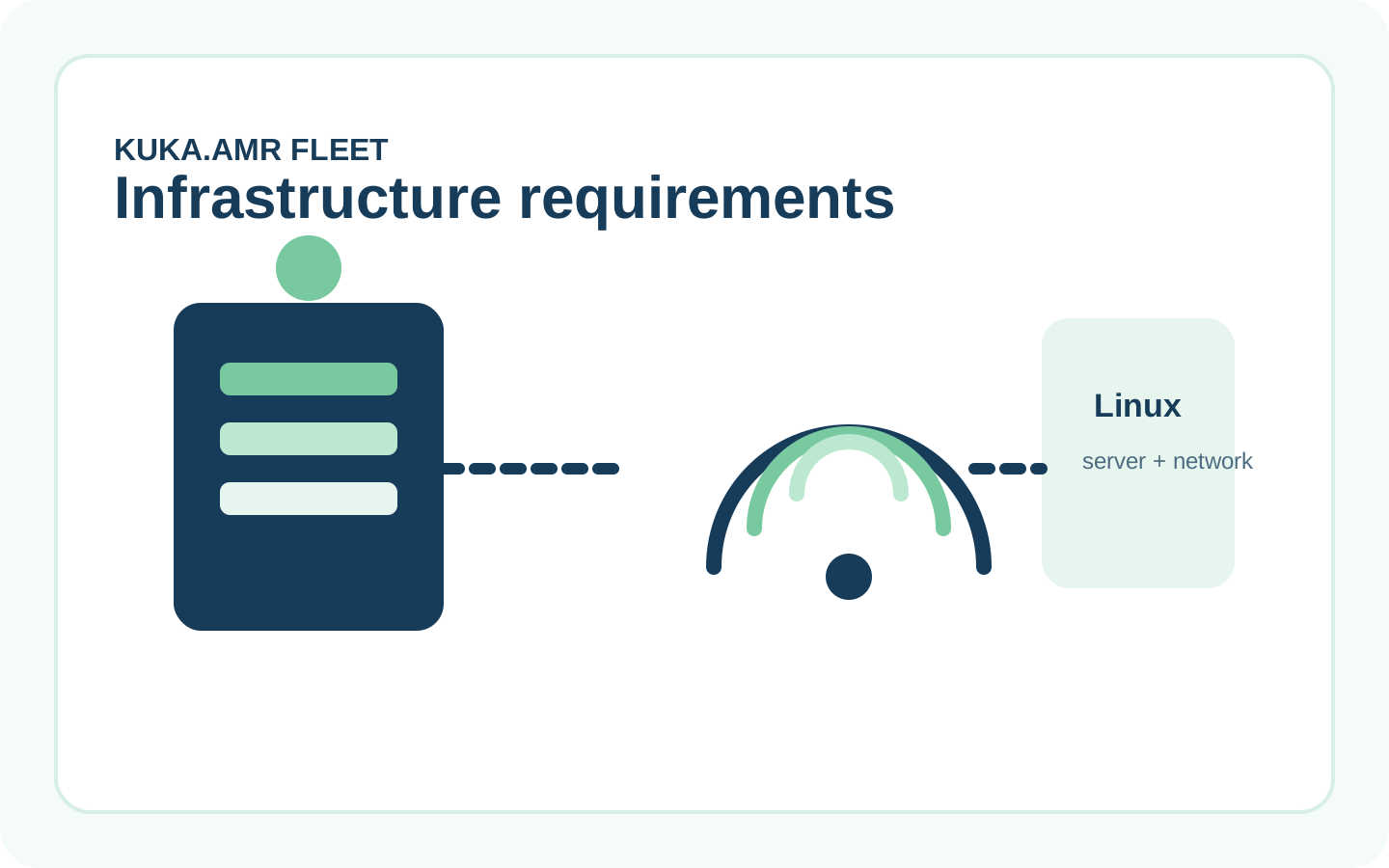
Fleet software stability depends on infrastructure discipline. Server performance, network quality, access rules and the operating environment all influence how reliably tasks, statuses and vehicle communication are handled.
That is why infrastructure planning should be treated as a deployment topic, not only as an IT checklist. A weak environment can become the main limit on AMR fleet performance long after the software is installed.
Deploying an AMR fleet begins with preparing an environment that can support stable operation over many months. For KUKA.AMR Fleet, server infrastructure, the Linux environment and wireless-network quality are important parts of that preparation.
The server layer matters
The described Fleet environment needs a dedicated server or a properly prepared virtual machine with a controlled operating system. Installing it on shared infrastructure without clear administration rules creates avoidable operating risk.
An undersized server or an unclear IT owner can lead to slower responses, harder diagnosis and uncertainty about who should handle incidents. Server planning is therefore part of the operating design, not simply a software-installation step.
Wi-Fi is part of the AGV system
Wireless coverage, signal quality and connection stability affect communication with fleet management and therefore task execution, status updates and responses to changing conditions.
Predictability and low jitter can be more important than peak bandwidth. Assess the network along the robots’ actual routes and through their roaming transitions, rather than relying only on coverage suitable for laptops or handheld scanners.
Software and access security
The infrastructure description includes Linux, containers, a database, a reverse proxy and controlled administrative access. It illustrates why an AGV or AMR rollout is both a logistics project and an IT project.
Operations, integration and infrastructure teams need to agree on those layers. Gaps between their responsibilities can delay commissioning or cause problems after startup. The exact operating-system, container and network requirements must be checked for the installed Fleet release; they are not identical specifications for every version.
What to prepare before deployment
Review the following areas in advance:
- available computing capacity and server space;
- operating-system compatibility;
- Wi-Fi coverage throughout the actual robot operating area;
- IP addressing and network segmentation;
- backups, uninterruptible power and remote-access rules.
This preparation can shorten commissioning and reduce problems that might otherwise be wrongly attributed to the robots themselves.
Key takeaway
KUKA.AMR Fleet deployment is more than a software purchase. It requires an environment in which fleet management can operate predictably, securely and within the plant’s requirements. Good preparation reduces deployment risk, simplifies service and supports stable operating results after launch.
Version-specific reference: KUKA.AMR Fleet 2.15 — system requirements. The linked requirements identify a particular release; confirm the appropriate documentation for your installation.
Supporting material: Original source ↗